


Listen to the article
College Students Pivot Career Plans as AI Transforms Job Market
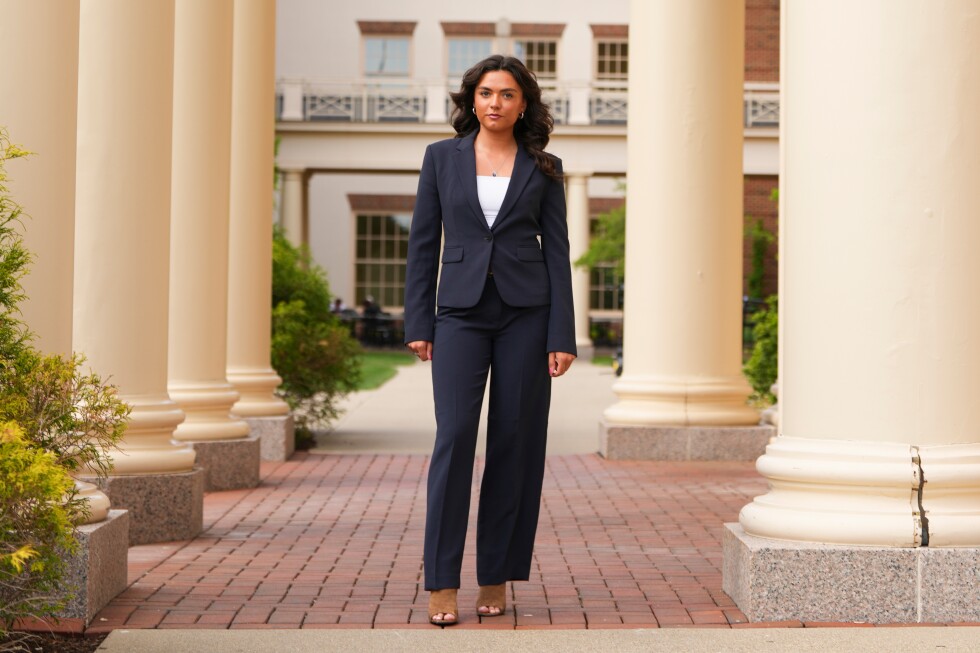
Two years ago, Josephine Timperman entered Miami University in Ohio with a clear strategy. She declared a major in business analytics, believing specialized skills would distinguish her resume and secure employment after graduation.
Today, the 20-year-old has switched to marketing. Her reasoning? The rapid advancement of artificial intelligence has fundamentally changed her career calculus.
“The basic skills I was learning in statistical analysis and coding can now easily be automated,” Timperman explains. “Everyone has a fear that entry-level jobs will be taken by AI.”
Timperman isn’t abandoning analytics entirely—she’s keeping it as a minor and plans to pursue a one-year master’s program in the field. But her undergraduate focus has shifted toward developing what she sees as uniquely human capabilities.
“You don’t just want to be able to code. You want to be able to have a conversation, form relationships and think critically, because at the end of the day, that’s the thing that AI can’t replace,” she says.
Her concerns reflect a growing anxiety among college students across America. According to a 2023 poll by the Institute of Politics at Harvard Kennedy School, approximately 70% of college students view AI as a threat to their job prospects. This mirrors broader workforce trends captured in Gallup polling, which shows increasing concern among U.S. workers about technological displacement.
The uncertainty appears particularly acute for students in technology and vocational fields. These students face a paradoxical challenge: they need to develop expertise in AI while simultaneously fearing replacement by it. A recent Quinnipiac poll found that most Americans believe it’s important for college students to learn AI skills, even as Gallup data shows technology-related fields experiencing the highest rates of AI adoption.
“We see students change majors all the time. That’s not new,” notes Courtney Brown, vice president at Lumina, an education nonprofit. “But the fact that so many students say it’s because of AI—that is startling.”
Generation Z displays particular ambivalence toward artificial intelligence. While half of Gen Z adults report using AI weekly, and teenagers show even higher usage rates, approximately 48% of Gen Z workers believe AI’s risks in the workforce outweigh potential benefits, according to Gallup research.
Students face this uncertainty largely without guidance. “Students are having to navigate this on their own, without a GPS,” Brown observes. Traditional sources of career advice—professors, advisers, parents—often lack answers themselves in this rapidly evolving landscape.
This knowledge gap was evident at a recent Stanford University panel discussion where university presidents grappled with AI’s implications for higher education. Brown University President Christina Paxson acknowledged the challenge directly: “We need to think really hard about what students need to learn to be successful in the job market in 10, 20, 30 years. And none of us know the answer to that.”
Paxson suggested a return to fundamentals: “I think it’s communication, it’s critical thought. The fundamentals of a liberal education are probably more important than learning how to code in Java right now.”
Even computer science graduates aren’t immune to these concerns. Ben Aybar, 22, a University of Chicago graduate, applied for approximately 50 software engineering positions without securing a single interview. He pivoted to pursuing a master’s degree while doing AI consulting work.
“People who know how to use AI will be very valuable,” Aybar says, noting emerging opportunities for those who can translate AI complexities for non-technical audiences. “Being able to talk to people and interact in a very human way is more valuable than ever.”
At the University of Virginia, data science major Ava Lawless confronts similar questions about her field’s future. She receives conflicting signals—some advisers assure her that data scientists who build AI models will remain in demand, while job market reports suggest otherwise.
“It makes me feel a bit hopeless,” Lawless admits. She’s now considering switching to studio art, her minor. “I’m thinking if I can’t get a job being a data scientist, I might as well pursue art. Because if I’m going to be unemployed, I might as well do something I love.”
As AI capabilities continue expanding, college students face unprecedented uncertainty about which skills will remain relevant by graduation. For many, the solution involves developing both technical knowledge and distinctly human abilities that may prove more resistant to automation—at least for now.
Fact Checker
Verify the accuracy of this article using The Disinformation Commission analysis and real-time sources.

6 Comments
Fascinating to see how AI is disrupting traditional career paths. Developing ‘uniquely human’ skills like critical thinking and relationship-building seems like a smart strategy as automation advances. I wonder how else the job market will evolve as AI capabilities expand.
Agreed. As AI becomes more sophisticated, the premium on soft skills and adaptive learning will only grow. Colleges will need to rethink curricula to stay relevant.
Interesting to see the ripple effects of AI on higher ed. Students shifting away from purely technical majors to focus on more ‘human’ capabilities. I wonder if we’ll see a similar trend across other industries as automation takes hold.
Absolutely. Adaptability and critical thinking will likely become even more valuable in the job market. Colleges may need to rethink their offerings to stay ahead of the curve.
The rise of AI is clearly causing anxiety among college students, but it’s good to see them proactively seeking out ‘AI-proof’ skills. Developing deeper interpersonal and creative abilities could give them an edge. Curious to see how this plays out across different academic disciplines.
This anxiety over AI is understandable, but it’s great to see students being proactive. Diversifying skillsets and embracing the ‘human touch’ could be a competitive edge. Curious to see what other ‘AI-proof’ majors emerge as the tech landscape shifts.