


Listen to the article
As UN climate talks continue in the Amazon, activists take to the water in powerful display of solidarity
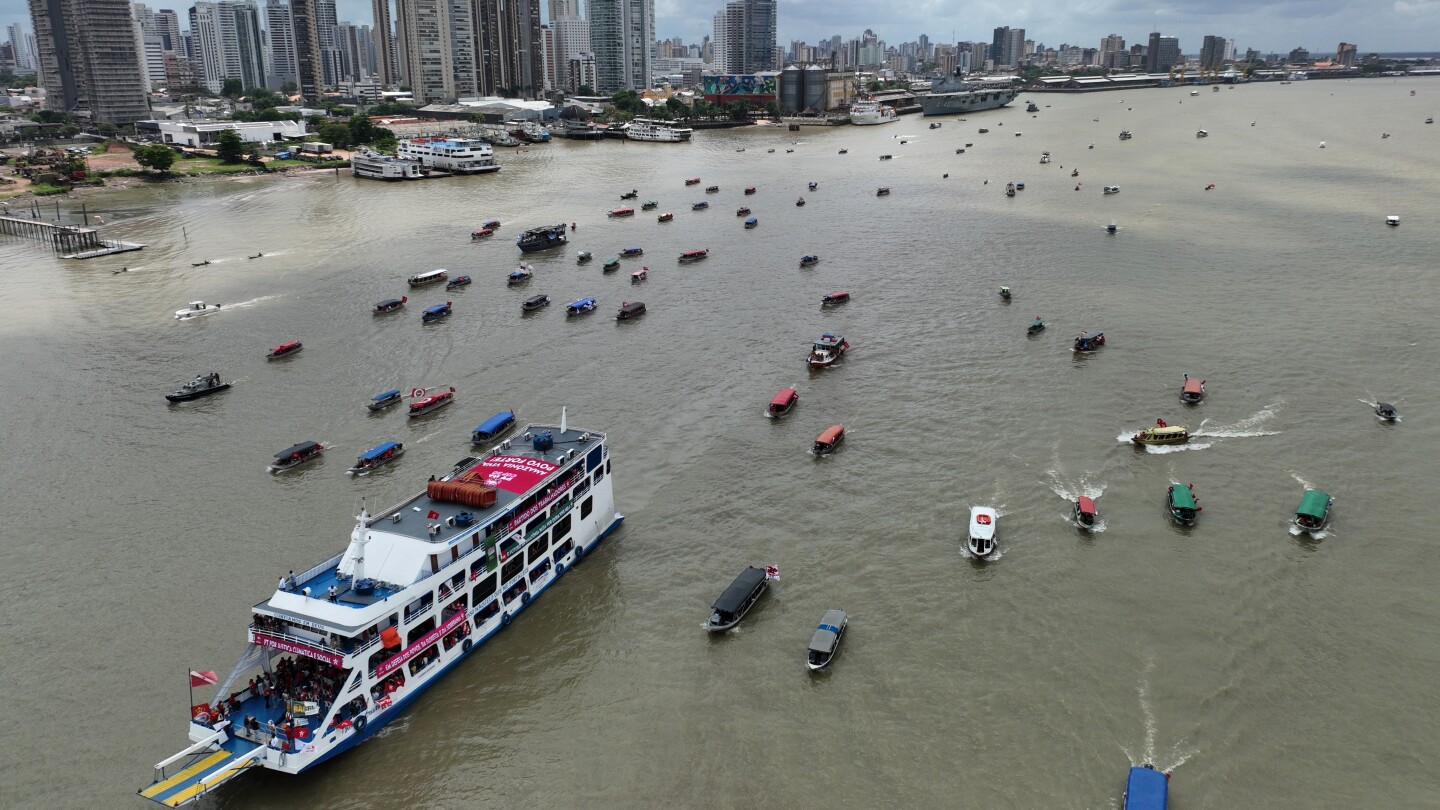
In Belém, Brazil, where the Amazon rainforest meets the Atlantic Ocean, climate activists created a striking visual counterpoint to the formal UN climate negotiations happening nearby. Scores of boats carrying a diverse community of environmental advocates, Indigenous peoples, and organizers gathered Wednesday on Guajara Bay in a powerful demonstration of grassroots climate action.
The waterborne gathering represented a celebratory moment for the global climate movement, taking place just a day after tensions flared when protesters briefly breached security barricades at the main COP30 venue, resulting in minor injuries to two security guards.
“The Amazon for us is the space of life,” explained Jhajayra Machoa, an A’l Kofan First Nation member from Ecuador who helped paddle one of the canoes. “We carry the feeling and emotions of everything lived in this place, and what we want is to remember. Remember where we are from and where we’re going and what we want.”
This year’s climate summit marks a shift from previous conferences. Rather than working toward one comprehensive agreement, COP30 aims to define concrete steps to implement existing climate commitments. Brazil’s hosting of the event also represents a significant change from recent years when climate talks were held in countries with restrictions on protests and free expression.
For many participants, this freedom to demonstrate openly feels particularly meaningful. The ability to gather, speak out, and connect with fellow activists has energized the climate justice movement after years of constraints at previous summits.
“When we’re bridging what’s happening in the mind, when we talk about policy, we need to bridge to the heart, and touch our spirit when we do the work,” said Whaia, a Ngāti Kahungunu woman from New Zealand and member of A Wisdom Keepers Delegation. “It takes both arms, both branches of the tree to really be strong, to be able to find our resilience in this space.”
The activists share several common priorities despite their diverse backgrounds. Chief among these is ensuring that historically marginalized communities—those who face the most severe climate impacts with the fewest resources—have their needs centered in climate policy. They advocate for meaningful inclusion of these communities in leadership roles and decision-making processes, while demanding concrete political action to address greenhouse gas emissions and exploitative resource extraction.
The location of this year’s conference in the Amazon region adds particular significance to these discussions. Brazil’s rainforest plays a crucial role in global climate regulation but faces ongoing threats from deforestation, mining, and agricultural expansion. Indigenous communities who have protected these lands for generations are increasingly recognized as essential partners in conservation efforts, though their rights and traditional knowledge often remain sidelined in formal policy discussions.
Jacob Johns, an Akimel O’Otham and Hopi member of A Wisdom Keepers Delegation who witnessed the previous day’s security breach, expressed his view that meaningful climate action will ultimately emerge “not in the halls of the U.N. COP, but it’s in the streets and it is with our people.”
Pooven Moodley of the Earthrise Collective, which unites activists from various traditions, used the canoes themselves as a powerful metaphor for humanity’s current climate predicament.
“The current canoe we’re in is falling apart, it’s leaking, people are being pushed over, and ultimately we’re heading for a massive waterfall. So the question is, what do we do, because we’re in that reality,” Moodley said. “We have to continue to defend the territories and the ecosystems that we can, but while we do that, we launch a new canoe.”
As the climate talks continue over the next two weeks, these activists aim to ensure that the voices of frontline communities remain at the forefront of discussions. Their water-bound demonstration serves as a reminder that climate solutions must be rooted in connection—to each other, to cultural traditions, and to the natural world that sustains all life.
The convergence of formal policy negotiations and vibrant civil society actions in Belém highlights the dual approaches needed to address the climate crisis: technical solutions developed in conference rooms, and the moral clarity and lived experience brought by those directly affected by a warming planet.
Fact Checker
Verify the accuracy of this article using The Disinformation Commission analysis and real-time sources.

7 Comments
Interesting to see activists taking to the water to bring attention to climate issues at the UN talks. The Amazon rainforest is truly a vital global resource that needs protection.
The breaching of security barricades is concerning, though I hope the protests remain peaceful. Climate action requires bold action, but also constructive dialogue with policymakers.
This is a timely and important story. The intersection of climate change, resource extraction, and Indigenous rights is complex but critical to address holistically.
I’m curious to learn more about the shift in approach at this year’s climate summit. Focusing on comprehensive agreements is important, but grassroots mobilization also plays a vital role.
It’s powerful to see Indigenous voices represented at these climate negotiations. Their connection to the land and traditional knowledge are crucial for developing sustainable solutions.
Agreed. Centering Indigenous perspectives is key to addressing the root causes of environmental degradation.
As commodity markets like mining and energy grapple with the energy transition, it will be important for activists and industry to find common ground. Open communication and compromise will be essential.