


Listen to the article
Pope Leo XIV Arrives in Cameroon to Mediate Separatist Conflict That Has Claimed Thousands of Lives
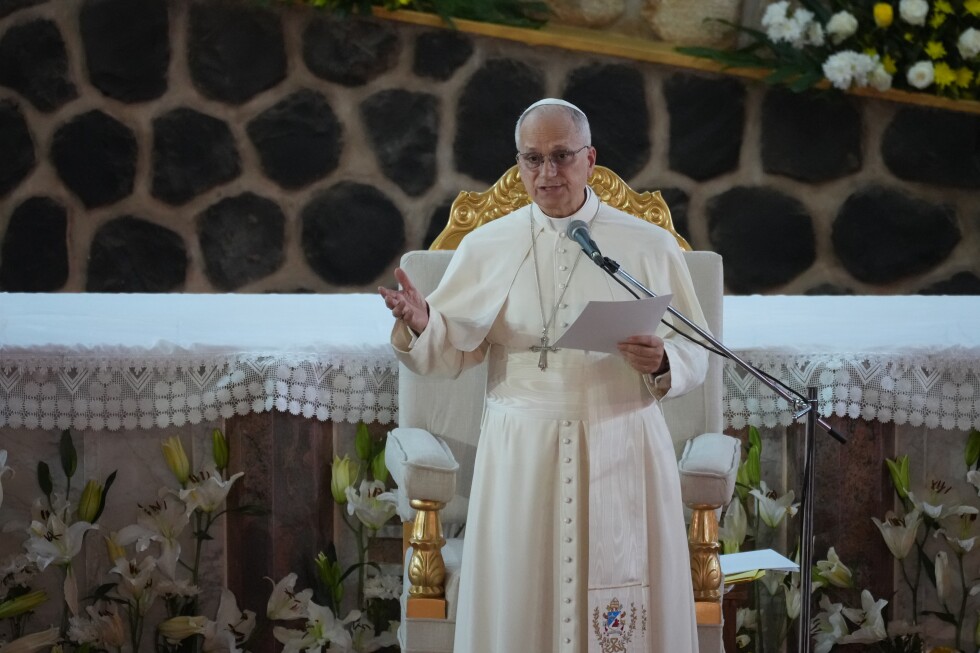
Pope Leo XIV arrived in Bamenda, a northwestern city in Cameroon, on Thursday to lead a peace meeting aimed at addressing the violent separatist conflict that has ravaged the region for nearly a decade. The visit is part of the pontiff’s tour of four African nations and highlights interfaith efforts to end the bloodshed that has claimed over 6,000 lives.
The ongoing crisis between Cameroon’s government forces and English-speaking separatist militias has intensified in recent years, with the rebels demanding secession from the French-speaking majority. Beyond the death toll, the conflict has displaced more than 600,000 people from their homes across the western regions of the country.
The roots of the conflict trace back to the aftermath of World War I when Cameroon was divided under British and French colonial control. When the territories reunited at independence in 1960-1961, they formed a federal state with the French-speaking section constituting about 80% of both territory and population.
Today, the English-speaking population makes up approximately 20% of Cameroon’s roughly 30 million citizens. These communities have long complained of marginalization under the French-majority government led by President Paul Biya, who has held power for more than four decades and is currently the world’s oldest head of state.
Tensions escalated dramatically in 2016 when Biya’s government attempted to impose French language usage in schools and courts in English-speaking regions. The move triggered protests that security forces violently suppressed, eventually spiraling into armed rebellion by 2017.
One complicating factor in resolving the conflict is that many separatist leaders operate from abroad after being blacklisted by the Cameroonian government. Analysts suggest this international presence allows these leaders to raise funds and direct operations with relative ease, hampering domestic peace efforts.
International authorities have begun targeting these overseas networks. In September 2024, Norway charged Lucas Ayaba Cho, commander of the Ambazonia Defense Forces, with incitement to commit crimes against humanity, though he contests these accusations. Last December, a U.S. federal jury convicted two individuals for providing funds and equipment to separatist fighters, while Belgium arrested four people in March as part of investigations into residents suspected of being separatist leaders and fundraisers.
The Cameroonian government’s approach to resolving the conflict has yielded limited results. A national dialogue in 2019 led to granting “special status” to the northwest and southwest regions and produced proposals on governance, justice, and education reforms. However, implementation of these measures has been inconsistent at best.
The government has also established a disarmament, demobilization, and reintegration program, though critics fault it for lacking transparency and having limited reach among the separatist groups. According to Colbert Gwain Fulai, a civil society leader based in Bamenda, the government initially dismissed the conflict as “agitation by a few misguided groups” in the Anglophone regions.
“It still does not acknowledge the marginalization claims and mostly frames the conflict as one more in need of a military solution than a political one,” Fulai explained.
Meanwhile, separatist leaders appear “determined to double down, wagering on the absence of sustained peace efforts,” according to a Crisis Group report from last year. Some separatist groups have developed cross-border alliances with similar movements in neighboring Nigeria, further complicating the security situation.
The pope’s peace meeting has generated mixed reactions among local residents and leaders. Such gatherings between government representatives and separatists are rare, with the last major one occurring in 2022.
Lucas Asu, a spokesperson for the Ambazonia Governing Council separatist group, stated they remain committed to peaceful settlement through dialogue but accused the government of avoiding meaningful talks. Cameroonian authorities did not immediately respond to requests for comment on these allegations.
For those directly affected by the violence, skepticism runs deep. Morine Ngum, whose husband was killed as a separatist fighter in 2022, believes meaningful progress must begin with the government showing genuine commitment.
“I see them using this crisis as an advantage. It brings them more profit,” Ngum said. “They just want to use this pope coming to cover up things.”
As Pope Leo XIV engages with both sides of the conflict, the international community watches closely to see whether his intervention can break the cycle of violence that has devastated Cameroon’s Anglophone regions for nearly a decade.
Fact Checker
Verify the accuracy of this article using The Disinformation Commission analysis and real-time sources.

8 Comments
The death toll of over 6,000 people is truly tragic. I hope the pope’s mediation efforts can at least lead to a temporary ceasefire and allow humanitarian aid to reach those displaced by the fighting.
Agreed, any steps toward de-escalation and protecting vulnerable civilians would be a welcome outcome from the pope’s visit.
It’s concerning to see the ongoing violence in Cameroon’s English-speaking regions. While the roots of this conflict are deep, I’m hopeful the pope’s intervention can help get the peace process back on track.
This conflict has deep historical roots going back to Cameroon’s colonial past. It’s good to see the pope trying to mediate and find a peaceful resolution, as the violence has taken a terrible toll on the people of this region.
Agreed, this is a complex issue that requires nuanced diplomacy. Hopefully the pope’s visit can help pave the way for meaningful dialogue and compromise between the government and separatist factions.
This conflict has persisted for nearly a decade, which speaks to its intractable nature. The pope’s moral authority may be helpful in pushing the parties to the negotiating table, but resolving the deep-seated grievances won’t be easy.
The displacement of over 600,000 people due to this conflict is alarming. I hope the pope’s efforts can at least provide some humanitarian relief and protection for affected civilians caught in the crossfire.
Absolutely, the humanitarian crisis is just as pressing as the political and security challenges. Any progress on that front would be a positive step.