


Listen to the article
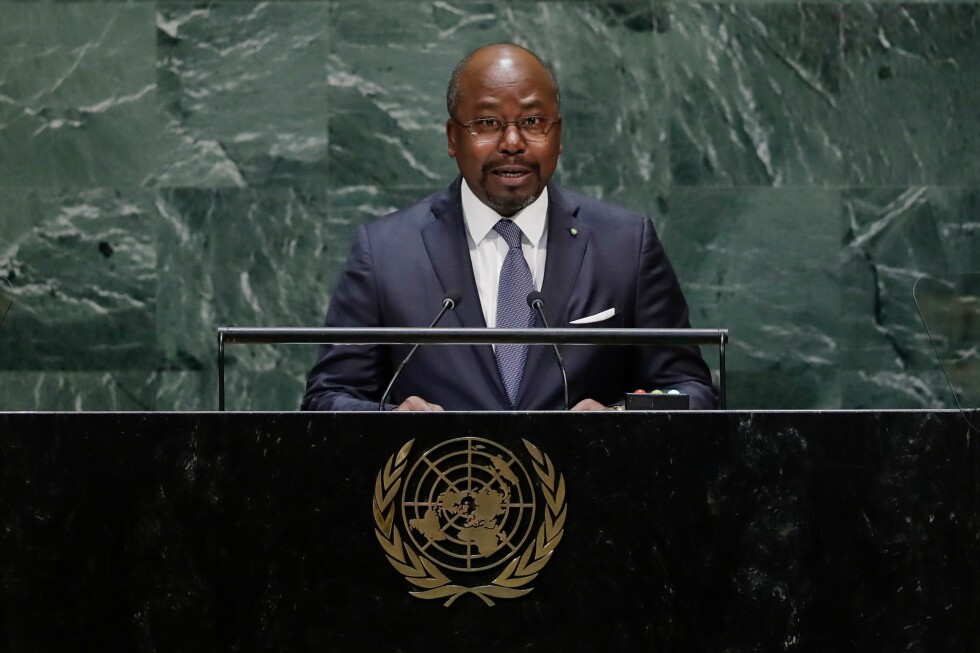
Gabon’s security forces have detained former Prime Minister Alain-Claude Bilie-By-Nze, a prominent opposition leader, according to a statement released Thursday by his political party, Ensemble pour le Gabon (EPG).
The arrest occurred Wednesday when agents from the General Directorate of Investigations (DGR), Gabon’s intelligence agency, took Bilie-By-Nze into custody at his home. EPG condemned the detention as “arbitrary, brutal, and manifestly contrary to the fundamental principles of the rule of law.”
According to the party’s statement, the 58-year-old politician was arrested over an unpaid debt of five million Central African francs (approximately $8,999) dating back to 2008. The debt allegedly stems from Bilie-By-Nze’s role as an organizer of the National Cultural Festival, a public celebration of Gabonese cultural heritage, where a service provider claims they were never paid.
Bilie-By-Nze served as the last prime minister under former President Ali Bongo Ondimba, whose 14-year rule ended abruptly in August 2023 when military officers seized power in a coup. The military intervention came shortly after Bongo had been declared the winner of a controversial election that opposition figures and international observers had questioned.
Following the coup, General Brice Oligui Nguema assumed leadership of the country as head of the transitional government. The junta organized elections last year in which Bilie-By-Nze participated as a candidate, finishing second to Nguema, who secured his position through the ballot box after initially taking power by force.
The arrest raises concerns about political freedom in Gabon during its transition period. The Central African nation, with a population of approximately 2.3 million people, has been controlled by the Bongo family for more than five decades before the 2023 coup. Ali Bongo had succeeded his father, Omar Bongo, who ruled the oil-rich nation for 42 years until his death in 2009.
Gabon is one of Africa’s most significant oil producers, with petroleum accounting for nearly 80% of exports and providing substantial government revenue. Despite its natural resource wealth, economic inequality remains high, with a substantial portion of the population living in poverty while political elites have enjoyed considerable wealth.
The country has witnessed a pattern of political instability common to the region, with several West and Central African nations experiencing coups in recent years, including Mali, Burkina Faso, Guinea, and Niger. These military takeovers have raised international concerns about democratic backsliding in the region.
In its statement, EPG called on Gabonese authorities “to act responsibly and guarantee a peaceful democratic framework, in accordance with Gabon’s national and international commitments.” The party’s plea reflects broader concerns about whether the post-coup government will uphold democratic principles or revert to authoritarian practices that characterized much of the Bongo era.
International human rights organizations have previously documented political repression in Gabon, including arbitrary detentions of opposition figures and restrictions on freedom of assembly and expression. The arrest of Bilie-By-Nze may indicate that such practices continue under the new leadership.
Regional and international bodies, including the African Union and the Economic Community of Central African States (ECCAS), have encouraged Gabon’s transitional authorities to adhere to democratic norms and ensure political inclusivity during this period of change.
As the situation develops, observers will be watching closely to see if this arrest represents an isolated incident or signals a more systematic approach to managing political opposition in post-coup Gabon.
Fact Checker
Verify the accuracy of this article using The Disinformation Commission analysis and real-time sources.

12 Comments
This news from Gabon is deeply troubling. The detention of an opposition leader undermines the democratic process and could fuel further unrest in the country.
I hope the international community will closely monitor the situation and take appropriate actions to ensure the protection of human rights and the rule of law in Gabon.
The timing of this arrest, following the recent coup, is particularly troubling. Maintaining political stability and protecting the integrity of democratic institutions should be a priority for the new authorities.
I hope that the military leadership in Gabon will uphold the principles of fair and transparent governance, and refrain from using coercive measures against political opponents.
The arrest of Bilie-By-Nze raises concerns about the potential for further political instability in Gabon. A peaceful and inclusive transition of power should be the priority for the new government.
I hope that the authorities in Gabon will act with restraint and engage in constructive dialogue with all political stakeholders to address the country’s challenges.
This is a concerning development in Gabon’s political landscape. The arrest of the opposition leader raises questions about the government’s commitment to democratic processes and the rule of law.
It will be important to closely monitor the situation and ensure that Bilie-By-Nze’s rights are protected during his detention.
This case highlights the fragility of democratic processes in parts of Africa. The international community should closely follow developments in Gabon and press for the protection of civil liberties and the rule of law.
It is crucial that the military authorities in Gabon respect the rights of all citizens, regardless of their political affiliations.
The arrest of Bilie-By-Nze is a concerning development that deserves close scrutiny. It is crucial that the new authorities in Gabon uphold the principles of democratic governance and protect the rights of all citizens.
I hope that this incident will not escalate tensions and that a peaceful resolution can be found through constructive dialogue and negotiations.