


Listen to the article
The entire jury of the Venice Biennale abruptly resigned on Thursday, just nine days before the prestigious contemporary art exhibition was set to open, amid escalating tensions over Russia’s participation and the panel’s controversial decision regarding prize eligibility.
The five-member jury, led by president Solange Farkas and including Zoe Butt, Elvira Dyangani Ose, Marta Kuzma, and Giovanna Zapperi, stepped down collectively, though the Biennale’s official statement offered no explanation for this unprecedented development.
The resignation follows a contentious announcement by the jury that they would not award prizes to countries facing charges of crimes against humanity by the International Criminal Court, a decision that would have affected both Israel and Russia. The inclusion of Russia has been particularly controversial, given the ongoing war in Ukraine that began with Russia’s 2022 invasion.
Italian Culture Minister Alessandro Giuli had already announced he would boycott the exhibition’s previews and opening day on May 9 in protest of Russia’s participation. Despite mounting pressure, Biennale director Pietrangelo Buttafuoco has steadfastly defended the decision to allow Russian involvement in the world’s oldest contemporary art fair.
The situation intensified when the European Union withdrew €2 million in funding to the Biennale last week specifically over Russia’s participation. In response, Italian cultural ministry officials visited Venice on Wednesday to gather documentation about the reopening of the Russian Pavilion, though the ministry has denied any role in the jury’s subsequent resignation.
Amid these tensions, Minister Giuli has demonstrated strong support for Israel. He recently spoke with Israeli Pavilion artist Belu-Simion Fainaru to express solidarity against what he termed “recent attacks” and reaffirmed “the Italian government’s commitment against every form of discrimination and antisemitism in Italian cultural institutions.”
Fainaru subsequently released a statement emphasizing his opposition to “discrimination, racism, and boycotts in all their forms,” while advocating for “the fundamental principles of freedom of creation and freedom of expression, which must remain at the core of any artistic platform.”
The jury’s departure has forced a significant change in how awards will be determined at this year’s Biennale. Rather than the traditional selection process, where the jury would have chosen winners for the prestigious Golden Lion for best national pavilion and best participant in the main exhibition, visitors will now vote on these honors. The winners will be announced on November 22, the exhibition’s closing day.
Italian Prime Minister Giorgia Meloni, addressing the controversy, reiterated her government’s disagreement with allowing Russian participation while acknowledging the Biennale’s autonomous status. Cabinet Minister Matteo Salvini framed the visitor voting positively, calling it “autonomous and democratic.”
The Biennale has historically resisted pressure to exclude nations from participating, including previous calls to bar Iran and Israel. This year, organizers emphasized that they “do not have the authority to prevent a country from participating. Any country recognized by the Italian Republic may request to participate.”
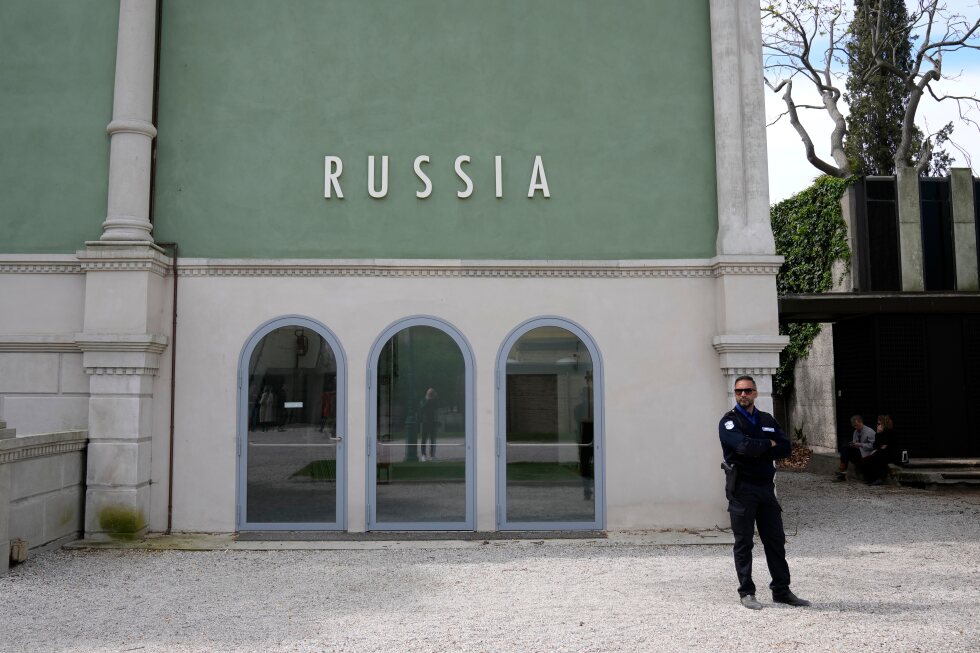
Russia’s situation is particularly complex because it owns its pavilion in the historic Giardini, constructed in 1914. Under Biennale rules, this means Russia only needed to notify organizers of its intent to participate. However, Russian artists withdrew in 2022 following the invasion of Ukraine, and Russia has not presented an exhibition in its permanent pavilion for 2024, instead lending the space to Bolivia. The country last participated in the International Art Exhibition in 2019.
The Venice Biennale remains the world’s most significant contemporary art exhibition, featuring both a central curated show and numerous national pavilions independently organized by participating countries. This year’s event is scheduled to run from May 9 through November 22, now under a cloud of controversy and with a radically altered award structure following the jury’s unprecedented resignation.
Fact Checker
Verify the accuracy of this article using The Disinformation Commission analysis and real-time sources.

25 Comments
This situation highlights the delicate balance that cultural institutions must strike when navigating sensitive global issues. The Venice Biennale jury’s resignation is a stark reminder of the pressures and difficult decisions they face.
Well said. Major international art events like the Biennale inevitably become entangled in broader political and social debates. It will be intriguing to see how the organizers respond and move forward.
The decision to allow Russia’s participation in the Biennale is sure to be a point of contention, given the ongoing war in Ukraine. The Biennale will need to carefully balance artistic freedom with political realities.
The Biennale’s decision to allow Russia’s participation despite the ongoing war in Ukraine is certainly a controversial one. It will be fascinating to see how this unfolds and what impact it has on the event.
I agree, this is a complex and sensitive issue. The Biennale will need to carefully navigate the political landscape while upholding the integrity of the event.
The Venice Biennale is such an important cultural event, so this last-minute upheaval is quite surprising. I’m curious to see how the organizers respond and whether they can resolve the issues before the opening.
Agreed, the Biennale is a prestigious platform and this resignation casts a cloud over the proceedings. It will be interesting to see if they can find a way forward that satisfies all stakeholders.
The Venice Biennale is known for tackling complex social and political themes, so this controversy over Russia’s participation is not entirely surprising. However, the jury’s resignation just days before the opening is quite dramatic.
Absolutely, the Biennale has a history of addressing contentious global issues. This latest development underscores the challenges of balancing artistic expression with geopolitical realities.
The Biennale’s decision not to award prizes to countries facing charges of crimes against humanity is a bold and principled stance, though it’s likely to be controversial. I’m curious to see how this plays out in the context of the event.
The resignation of the Biennale’s jury is a significant development that highlights the challenges of hosting a major international art event in the midst of geopolitical tensions. It will be interesting to see how the Biennale moves forward from here.
The inclusion of Russia in the Biennale is a highly sensitive and politically charged issue, given the ongoing war in Ukraine. I’m curious to see how the organizers will navigate this complex situation.
Interesting development with the Venice Biennale jury resigning. Seems like there were some difficult decisions to make around Russia’s participation given the ongoing war in Ukraine. I wonder what the underlying tensions and pressures were that led to this unprecedented move.
Yes, it’s a complex and sensitive situation. The jury’s decision not to award prizes to countries facing ICC charges was certainly controversial and likely a factor in their resignation.
The Venice Biennale jury resignation is a surprising and high-profile development. It underscores the challenges of navigating sensitive geopolitical issues within the realm of international art and culture. I’m curious to see how the Biennale organizers respond and whether they can find a way forward.
Absolutely. The Biennale has a long history of addressing complex global themes, but this latest situation presents unique challenges. It will be interesting to see if they can resolve the issues and maintain the integrity of the event.
The Venice Biennale jury’s resignation is certainly an unexpected turn of events. I wonder if this will impact the overall program and reception of the art fair, or if the organizers will be able to quickly resolve the issues and move forward.
That’s a good question. The timing, just days before the opening, makes this a particularly challenging situation for the Biennale’s leadership. Their ability to manage this crisis will be closely watched.
The Biennale’s decision not to award prizes to countries facing charges of crimes against humanity is an interesting stance, though it’s sure to be controversial. It will be important to see how this plays out and what impact it has on the event.
This news about the Venice Biennale jury resignation is quite fascinating. It speaks to the complex interplay between the arts, politics, and global affairs. I’m curious to see how this all unfolds in the coming days and weeks.
Agreed, it’s a complex and intriguing situation. The Biennale is such an influential platform, so this last-minute shakeup will certainly be closely scrutinized by the art world and beyond.
Interesting development at the Venice Biennale. The jury’s resignation over Russia’s participation and controversial prize eligibility decisions highlights the political complexities surrounding major art events.
The abrupt resignation of the entire jury is an unprecedented move, and it speaks to the deep divisions and tensions surrounding this year’s Biennale. I’m curious to see how the organizers will address this situation.
From the details provided, it seems the jury’s stance on not awarding prizes to certain countries was the catalyst for their collective resignation. This highlights the delicate geopolitical issues that can intersect with the arts.
Yes, the arts and politics often collide, especially in major international events like the Venice Biennale. It will be important for the organizers to navigate this sensitively.