


Listen to the article
US Launches “Project Freedom” Amid Escalating Tensions in Strait of Hormuz
A new U.S.-backed initiative to secure the Strait of Hormuz is gaining momentum as Iran’s threats to commercial shipping expose a critical vulnerability in the global energy system.
President Donald Trump has launched “Project Freedom,” a mission to ensure freedom of navigation through the strategic waterway, where approximately one-third of the world’s seaborne oil travels. The White House has framed the crisis in global terms, with spokeswoman Taylor Rogers stating, “The President will not allow Iran to hold the global economy hostage and undermine the free flow of energy.”
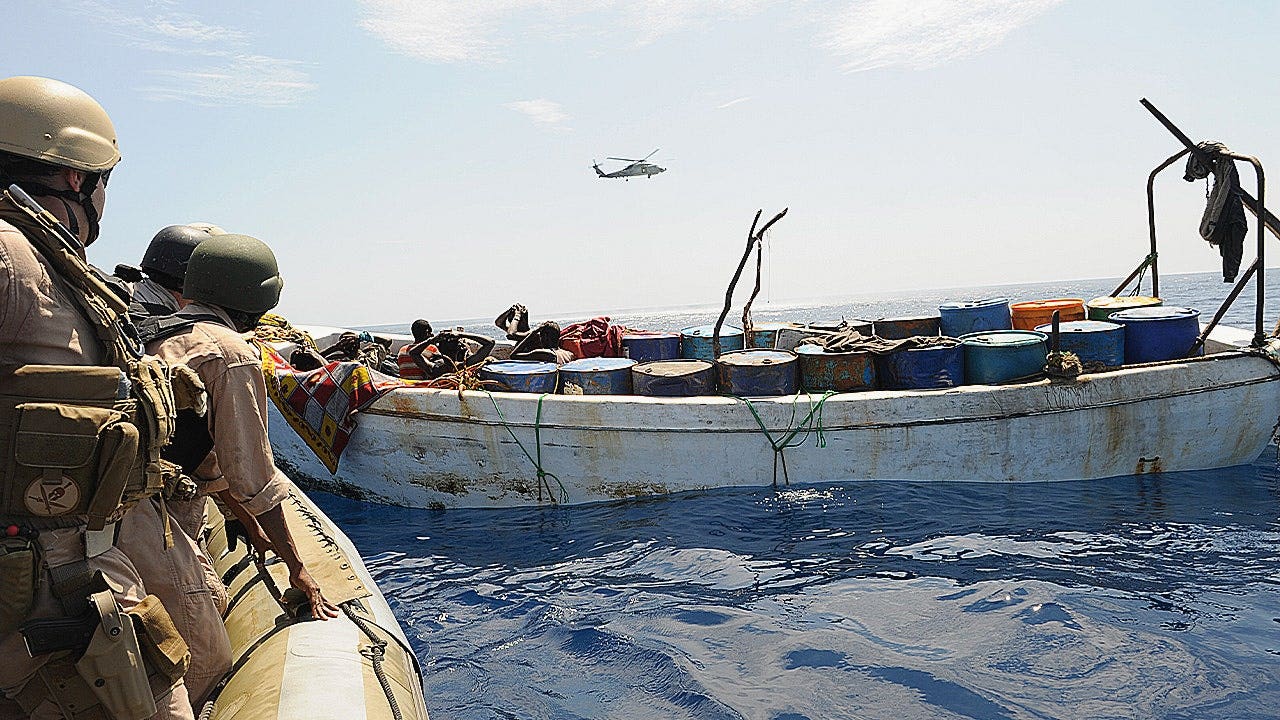
The initiative comes amid heightened regional tensions, with Iran threatening shipping lanes and the U.S. Navy now actively guiding vessels through the strait to ensure safe passage.
Beyond the immediate military response, a more ambitious plan is emerging to address the structural vulnerability of global energy routes. A policy proposal known as “ARAM Express,” developed by Richard Goldberg of the Foundation for Defense of Democracies, outlines a vision for a multidirectional overland pipeline network that would bypass the strait entirely.
The concept envisions building energy corridors extending from the Gulf to the Red Sea, Mediterranean, and Arabian Sea, creating multiple export pathways that would significantly reduce global dependence on the narrow waterway.
“This isn’t just a long-term idea anymore,” Goldberg told Fox News Digital. “There is a real threat to the Strait of Hormuz that isn’t going away so long as the regime in Tehran remains.”
The proposal would require broad international participation, with European and Asian energy buyers potentially investing in infrastructure and securing long-term supply agreements to ensure energy security.
“European buyers are desperate for long-term supply resilience, and Asian customers are equally exposed,” Goldberg explained. “Even China cannot tolerate the risk of a sustained disruption.”
Saudi Arabia’s Strategic Foresight
Among Gulf states, Saudi Arabia has been most proactive in developing alternatives to the strait. Its East-West pipeline already allows crude oil to travel from eastern fields on the Gulf to the Red Sea port of Yanbu, bypassing Hormuz entirely.
“Saudi Arabia has treated the Strait of Hormuz risk with planning, not panic,” said Salman Al-Ansari, a Saudi geopolitical analyst. “The East-West pipeline is strategic insurance. A Hormuz closure would be disruptive, but not paralyzing. Saudi Arabia has spent years reducing that vulnerability, and today it is uniquely positioned to absorb shocks and keep global flows moving.”
The kingdom’s strategy extends beyond energy exports, positioning the country as a broader logistics hub. “Ports, pipelines, land bridges, storage and Red Sea access are all part of one Saudi contingency architecture,” Al-Ansari added.
Uneven Vulnerability Across Gulf States
The United Arab Emirates has also developed alternative export capacity through its pipeline to Fujairah, located outside the strait. However, other Gulf nations remain highly vulnerable.
“If you’re Kuwait, you’re in a world of hurt,” noted Goldberg, pointing to countries lacking meaningful alternatives to maritime exports through Hormuz.
Qatar, one of the world’s largest exporters of liquefied natural gas, also remains heavily dependent on the strait, with limited options to reroute supply if shipping is disrupted.
This uneven exposure could reshape regional dynamics, giving countries with alternative routes greater resilience and leverage during future crises.
Shifting Regional Architecture
U.S. Ambassador to the United Nations Mike Waltz confirmed that Washington’s Gulf partners are actively exploring long-term solutions. “I know our Gulf partners and allies are seriously thinking through that,” Waltz said during a conference call with reporters. “I know they’re looking at additional alternatives to frankly diversify their pathways and diversify their economies.”
Some analysts see deeper shifts underway in the region’s energy architecture. Yonatan Adiri, an Israeli entrepreneur and former adviser to Israeli President Shimon Peres, suggested that the traditional model of a unified Gulf energy system centered on Hormuz is breaking down.
“The whole arrangement… it’s starting to expire,” Adiri said. He cited the UAE’s decision to leave OPEC effective May 2026 as evidence of fragmentation. “The UAE stepping away from OPEC is not just about production policy. It reflects a broader shift toward an independent strategy — building its own routes, partnerships and leverage rather than relying on a collective system.”
Political Constraints Remain
Despite the compelling economic and security case for alternative routes, significant political challenges exist. One particularly sensitive question is whether future energy corridors could involve Israel, even indirectly.
“As for routes involving Israel, even indirectly, the politics are extremely difficult under current circumstances,” Al-Ansari acknowledged. “I genuinely do not see it happening now.” However, he suggested such cooperation might become more realistic under different political conditions.
For now, the U.S. and its allies remain focused on stabilizing the immediate situation in the Strait of Hormuz while exploring long-term solutions. The current crisis has forced a fundamental reassessment of global energy security architecture, with growing recognition that overreliance on a single maritime chokepoint presents an unacceptable risk to the world economy.
If current trends continue, experts believe Hormuz may remain an important energy corridor but will likely see its dominance diminish as countries invest in alternative routes, new partnerships, and a more diversified energy map.
Fact Checker
Verify the accuracy of this article using The Disinformation Commission analysis and real-time sources.

14 Comments
Reducing reliance on the Strait of Hormuz is a smart strategic move. This pipeline plan could be a game-changer if executed properly, though the political and technical hurdles will be immense.
I agree, mitigating the risk of disruptions in the Strait is crucial. An overland pipeline network is an ambitious solution, but the regional dynamics and logistics involved will be extremely complex to manage.
A more diverse and resilient energy transportation network is sorely needed. The Strait of Hormuz choke point has caused too many disruptions over the years.
Indeed, reducing dependence on the Strait is a worthy goal. Bypassing it with pipelines could bring more stability, though the regional politics will be tricky to navigate.
Securing freedom of navigation through the Strait of Hormuz is a vital national security priority for the U.S. and its allies. This pipeline proposal aims to provide a more resilient energy transport system.
Absolutely, the global economy’s dependence on that volatile chokepoint is a major vulnerability. A diversified pipeline network could enhance energy security, though the geopolitical risks will be significant.
This pipeline plan is an ambitious attempt to address a critical global energy security issue. Lessening reliance on the Strait of Hormuz is a worthy goal, but the regional dynamics will be challenging.
You make a fair point. Implementing a large-scale overland pipeline network to bypass the Strait would be an immense engineering and diplomatic feat. The risks and complexities should not be underestimated.
Project Freedom seems like a pragmatic response to the escalating tensions and threats in the Strait of Hormuz. A multi-directional pipeline system is an ambitious but necessary step.
You’re right, the current situation is untenable. A more secure overland energy network could be transformative, if the geopolitical obstacles can be overcome.
This pipeline proposal is an interesting solution to reduce reliance on the volatile Strait of Hormuz. Reducing global energy vulnerabilities is crucial, though the geopolitical challenges will be significant.
Agreed, the overland pipeline network could enhance energy security if executed successfully. However, the logistics and diplomatic hurdles will be formidable.
Reducing global dependence on the Strait of Hormuz is a strategic imperative. This pipeline proposal is an intriguing concept, though the execution will be highly complex.
Agreed, the vulnerability of that choke point is a major concern. A more diversified energy transport system could enhance stability, but the political and technical hurdles will be immense.