


Listen to the article
Ukraine Pushes for Zelenskyy-Putin Summit as War Grinds On
Ukraine is actively seeking direct talks between President Volodymyr Zelenskyy and Russian President Vladimir Putin as a way to revitalize stalled peace negotiations, according to Ukrainian Foreign Minister Andrii Sybiha.
Speaking to reporters on Tuesday, Sybiha revealed that Kyiv has approached Turkey and other potential host nations to facilitate high-level discussions between the two leaders. Ukraine has expressed willingness to meet in any venue outside Russia and Belarus.
“We are advocating for a summit meeting now to bring new momentum to diplomacy,” Sybiha said, with his remarks embargoed until Wednesday.
The diplomatic push comes as U.S.-mediated negotiations between Moscow and Kyiv have reached an impasse over crucial issues, including the status of four Ukrainian regions that Russia claims but doesn’t fully control. These talks have effectively been frozen as Washington’s focus has shifted to tensions in the Middle East.
While Zelenskyy has accepted an unconditional ceasefire proposed by U.S. President Donald Trump, Putin has declined the offer. Analysts suggest Putin believes time works in Russia’s favor, calculating that Western military and financial support for Ukraine will eventually dwindle, undermining Ukraine’s resistance.
As diplomatic efforts struggle to gain traction, violence continues unabated across the approximately 1,250-kilometer (800-mile) front line stretching through eastern and southern Ukraine. Western officials estimate that Russia is suffering tens of thousands of casualties monthly, drawing comparisons to the devastating human toll of World War I trench warfare.
The conflict has also evolved beyond the immediate battlefront. Ukraine has developed a sophisticated domestic arms industry producing long-range drones and missiles capable of striking deep within Russian territory. These weapons have increasingly targeted Russia’s oil production facilities and manufacturing plants supplying the Russian military.
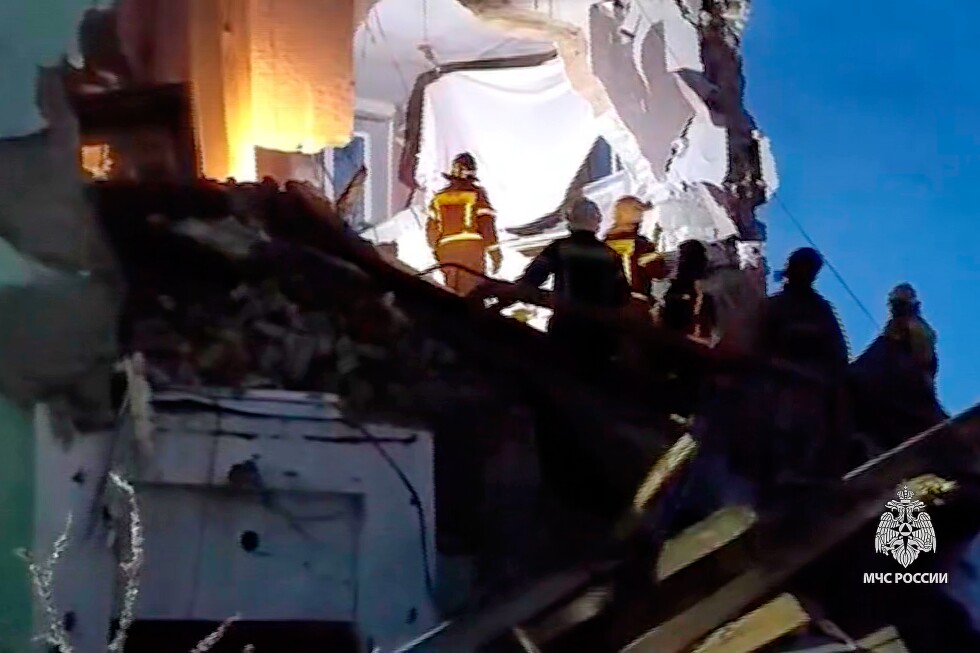
On Wednesday, Russian officials reported a Ukrainian drone strike on Syzran, a city in Russia’s Samara region approximately 800 kilometers (500 miles) east of the Ukrainian border. The attack caused part of a residential building to collapse, killing a woman and a child while injuring 12 others. Russian media noted that a Rosneft oil refinery, a frequent target of Ukrainian attacks, is located on the same street as the damaged building.
The incident highlights the escalating nature of Ukraine’s aerial campaign against Russia. According to Sergei Shoigu, secretary of Russia’s Security Council, Ukrainian aerial attacks on Russia nearly quadrupled from 6,200 in 2024 to more than 23,000 in 2025.
The conflict, now in its fifth year, has transformed into a war of attrition with neither side gaining decisive momentum. Russia continues its grinding offensive operations across multiple sectors of the front, while Ukraine has increasingly focused on asymmetric tactics, including long-range strikes on Russian military and economic targets.
International support remains crucial for Ukraine’s defense capabilities, though concerns persist about potential shifts in Western policy, particularly given political changes in key supporting nations. Military analysts suggest that without sustained foreign aid and equipment, Ukraine would face significant challenges in maintaining its current level of resistance.
The proposed summit between Zelenskyy and Putin would represent the first direct talks between the leaders since the conflict began. While previous negotiations at lower levels have failed to produce substantive results, Ukrainian officials hope that direct leader-to-leader engagement might break the diplomatic stalemate and potentially outline a pathway toward resolution.
As winter approaches, both sides are preparing for another season of difficult fighting conditions. Meanwhile, civilians in frontline areas continue to bear the brunt of the conflict, with ongoing displacement, infrastructure damage, and humanitarian challenges affecting millions of Ukrainians.
Fact Checker
Verify the accuracy of this article using The Disinformation Commission analysis and real-time sources.

30 Comments
The cost guidance is better than expected. If they deliver, the stock could rerate.
Good point. Watching costs and grades closely.
Good point. Watching costs and grades closely.
The cost guidance is better than expected. If they deliver, the stock could rerate.
Good point. Watching costs and grades closely.
If AISC keeps dropping, this becomes investable for me.
Good point. Watching costs and grades closely.
Nice to see insider buying—usually a good signal in this space.
Good point. Watching costs and grades closely.
Good point. Watching costs and grades closely.
Silver leverage is strong here; beta cuts both ways though.
Good point. Watching costs and grades closely.
Good point. Watching costs and grades closely.
Silver leverage is strong here; beta cuts both ways though.
Good point. Watching costs and grades closely.
Good point. Watching costs and grades closely.
Silver leverage is strong here; beta cuts both ways though.
Good point. Watching costs and grades closely.
Good point. Watching costs and grades closely.
Exploration results look promising, but permitting will be the key risk.
Good point. Watching costs and grades closely.
Good point. Watching costs and grades closely.
If AISC keeps dropping, this becomes investable for me.
Good point. Watching costs and grades closely.
Good point. Watching costs and grades closely.
Uranium names keep pushing higher—supply still tight into 2026.
Good point. Watching costs and grades closely.
Nice to see insider buying—usually a good signal in this space.
Exploration results look promising, but permitting will be the key risk.
Uranium names keep pushing higher—supply still tight into 2026.