


Listen to the article
Thousands to Celebrate as Hungary’s New Prime Minister Takes Oath, Ending Orbán’s 16-Year Rule
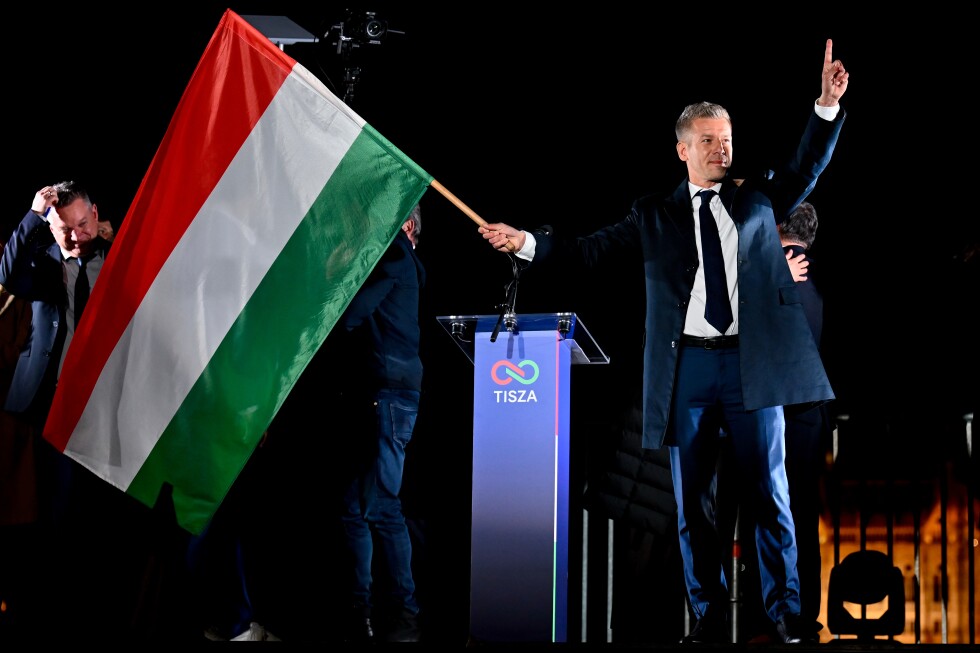
BUDAPEST, Hungary — Thousands of Hungarians are expected to gather outside the country’s neo-Gothic parliament building on Saturday as Péter Magyar takes his oath of office, marking the end of Viktor Orbán’s 16-year dominance over Hungarian politics.
Magyar, a 45-year-old lawyer whose center-right Tisza party secured a historic landslide victory in last month’s elections, has called for an all-day “regime-change” celebration to commemorate both his inauguration and the conclusion of what many critics described as an increasingly authoritarian era under Orbán’s leadership.
“We will step through the gateway of regime change with a huge party. Come along, and invite your family and friends!” Magyar wrote in a social media post, inviting citizens to witness what many view as a watershed moment in Hungary’s post-communist history.
The scale of Magyar’s electoral triumph was unprecedented in modern Hungarian politics. Tisza gained more votes and parliamentary seats than any other party since the fall of communism, providing Magyar with a robust mandate to implement sweeping reforms and policy reversals.
Magyar, who spent years as an insider within Orbán’s Fidesz party before breaking away to form Tisza in early 2024, has pledged to address what he characterizes as systemic corruption that flourished under the previous administration. His campaign resonated with voters frustrated by economic stagnation and the enrichment of Orbán’s allies and family members through government contracts and favorable policy decisions.
One of Magyar’s top priorities will be securing approximately €17 billion ($20 billion) in European Union funds that were frozen during Orbán’s tenure due to rule-of-law and corruption concerns. These funds are considered vital for revitalizing Hungary’s economy, which has shown minimal growth over the past four years while neighboring countries have prospered.
“Hungary’s economic recovery depends heavily on those EU funds,” said Zoltán Pogátsa, an economist at the University of West Hungary. “Restoring relations with Brussels isn’t just a diplomatic goal—it’s an economic necessity.”
The incoming government has already announced plans to reestablish Hungary’s ties with its Western allies, relationships that deteriorated as Orbán cultivated closer connections with Russia and China. In a symbolic first step, Magyar’s administration will restore the European Union flag to the parliament building’s facade, reversing Orbán’s 2014 decision to remove it.
Magyar faces high expectations from the nearly 3.4 million Hungarians who voted for change. His agenda includes establishing the National Asset Recovery and Protection Office, tasked with investigating and recovering public funds allegedly misused during the Orbán years. The new government also plans to temporarily suspend Hungary’s public broadcaster’s news services—widely criticized as a propaganda outlet for Fidesz—until journalistic standards can be restored.
Government restructuring will be another priority. Magyar intends to create separate ministries for health, environmental protection, and education, portfolios that were consolidated under Orbán’s streamlined but often criticized administrative structure.
The incoming leader has emphasized competence in his cabinet selections, nominating several internationally respected figures. Diplomat and foreign policy expert Anita Orbán (no relation to the outgoing prime minister) has been tapped as minister of foreign affairs, while former Shell executive István Kapitány will oversee economy and energy matters. András Kármán, a respected economist, has been nominated as finance minister.
Budapest’s liberal mayor, Gergely Karácsony, has announced a separate “system-closing” celebration along the Danube River on Saturday, describing it as an opportunity to honor those who opposed Orbán’s government despite personal risk.
“Teachers fired, civilians and journalists humiliated, small churches torn apart,” Karácsony wrote. “We can finally leave this era behind us—but first, let us remember the everyday heroes and express our gratitude with a farewell to the system.”
Magyar is scheduled to take his oath of office at approximately 3 p.m. local time on Saturday, after which he will address the gathered crowds. The inauguration events are expected to draw participants from across the political spectrum, united in what many see as a historic turning point for Hungarian democracy.
Political analysts suggest that while Magyar’s victory represents a dramatic shift, the new government faces significant challenges in dismantling entrenched systems of patronage and addressing economic difficulties exacerbated by high inflation and weak growth during Orbán’s final years in office.
Fact Checker
Verify the accuracy of this article using The Disinformation Commission analysis and real-time sources.

13 Comments
Exploration results look promising, but permitting will be the key risk.
Good point. Watching costs and grades closely.
Good point. Watching costs and grades closely.
The cost guidance is better than expected. If they deliver, the stock could rerate.
Good point. Watching costs and grades closely.
Silver leverage is strong here; beta cuts both ways though.
Good point. Watching costs and grades closely.
Nice to see insider buying—usually a good signal in this space.
Good point. Watching costs and grades closely.
Good point. Watching costs and grades closely.
Nice to see insider buying—usually a good signal in this space.
Silver leverage is strong here; beta cuts both ways though.
Good point. Watching costs and grades closely.