


Listen to the article
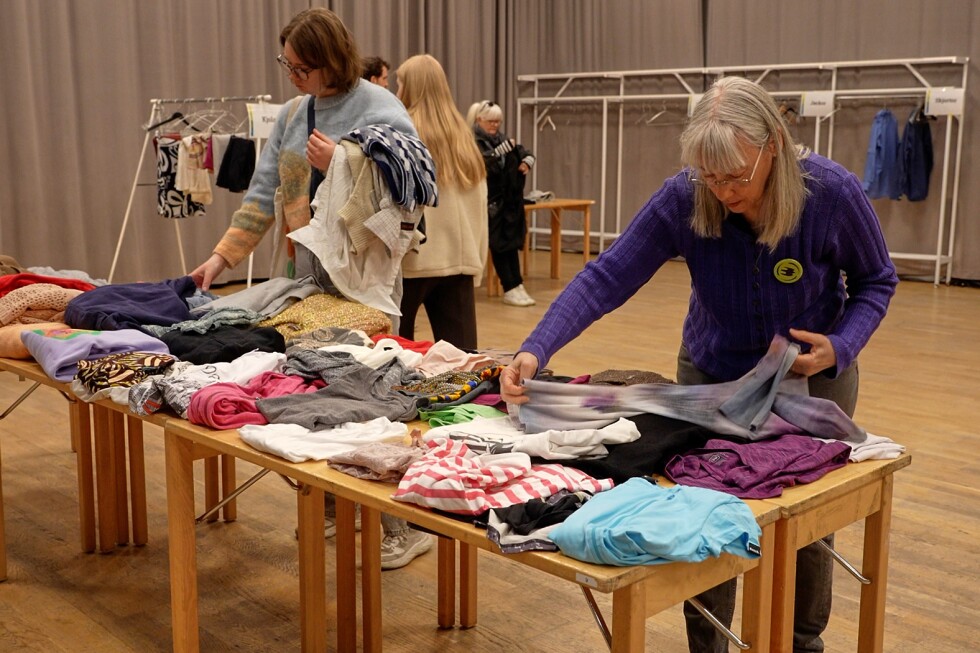
Alva Palosaari Sundman spent hours examining racks of secondhand clothing in Stockholm last weekend, searching meticulously for the perfect pair of pre-owned jeans. The 24-year-old art student was one of hundreds participating in an annual clothing swap at a community center in the Swedish capital, where attendees traded their own garments for others.
“It’s like, ‘Oh, OK, it gets a new life with this person,'” Palosaari Sundman said, describing the satisfaction of watching others select items she had contributed. “It just feels a bit more humane.”
This Stockholm event was part of a nationwide initiative that attracted thousands across Sweden, all participating with the shared goal of reducing the substantial environmental impact of clothing production. What began as a small-scale effort in 2010 has expanded significantly. Last year alone, approximately 140,000 people took part in 140 swap events throughout the country, finding new homes for more than 44,000 pre-owned items.
The environmental motivation behind these swaps is substantial. According to the United Nations Environment Programme, the fast fashion industry is responsible for up to 10% of global carbon emissions. The production process for a single pair of jeans requires roughly 2,000 gallons (7,571 liters) of water. Beyond carbon and water concerns, discarded clothing overwhelms landfills in developing countries, while synthetic fibers used in inexpensive garments contribute to ocean pollution through microplastics.
Beatrice Rindevall, chair of the Swedish Society for Nature Conservation, which organizes these events, noted that each Swedish citizen disposes of approximately 9-10 kilograms (20-22 pounds) of clothing annually. Even more striking is the organization’s finding that Swedes purchase around 25 new clothing items per year, while 90% of garments in their wardrobes go unworn.
“We have to be more careful and we have to think about our consumption,” urged Cecilia de Lacerda, one of the society’s Stockholm volunteers.
Despite Sweden’s reputation as an environmental leader, the reality remains complex. Research from Mistra Future Fashion, a Swedish research institute, indicates that clothing consumption still contributes to roughly 3% of the average Swede’s total emissions footprint.
The country’s efforts to address textile waste have faced challenges. Last year, Sweden implemented a ban on disposing of clothes in regular trash as part of a European Union initiative to increase recycling. However, the measure created unexpected problems when municipal collection sites became overwhelmed with textiles, leading to large stockpiles of unused garments. The Swedish government was forced to partially reverse the regulation in October.
The clothing swap events offer a practical alternative by directly connecting unwanted items with new owners. Beyond the exchange of garments, the events feature tailors who help participants repair clothes to extend their usability.
“A lot of people don’t have sewing machines anymore, or they don’t quite know how they should fix that buttonhole that broke,” explained Meg Goldmann, another volunteer with the conservation society.
For younger participants like 19-year-old high school student Alice Dundeberg, secondhand clothing offers benefits beyond environmental considerations. She values the uniqueness that pre-owned garments bring to her wardrobe.
“You don’t find multiple types of the same shoes, pants or sweater,” Dundeberg said. “No one has the same clothes as the others.”
As fast fashion brands continue to dominate global markets with inexpensive, rapidly changing collections, these community-based initiatives represent a growing countermovement focused on sustainability and conscious consumption. By creating social events around the exchange of used clothing, organizers hope to normalize secondhand fashion while building community connections around sustainable practices.
The success of Sweden’s clothing swap program demonstrates a potential model for other nations seeking to address textile waste and reduce the environmental impact of consumer fashion habits through practical, community-centered approaches.
Fact Checker
Verify the accuracy of this article using The Disinformation Commission analysis and real-time sources.

10 Comments
Clothing swaps are a clever way to give pre-owned items a second life. I’m curious to see if this model could be replicated in other countries to make a dent in textile waste on a global scale. Small changes at the local level can add up to big impacts.
Good point. If these swap events continue to grow in popularity, the cumulative effect could be substantial. Spreading this concept internationally could inspire similar grassroots sustainability initiatives around the world.
The environmental toll of fast fashion is alarming, so it’s heartening to see Sweden taking proactive steps to address it. Clothing swaps seem like a win-win, allowing people to refresh their wardrobes while keeping textiles out of landfills. I hope this trend catches on globally.
It’s great to see communities coming together to find creative solutions to fast fashion’s waste problem. Clothing swaps provide a fun, social way for people to give their pre-owned items a new lease on life. This model could be a powerful tool in the fight against textile pollution if scaled up.
Clothing swaps are a clever way to reduce waste and give garments a second life. I’m impressed by the participation numbers in Sweden – 140,000 people swapping over 44,000 items is quite significant. This grassroots approach could inspire similar initiatives in other countries grappling with the environmental impact of fast fashion.
The fast fashion industry’s environmental toll is staggering, so Sweden’s clothing swap model is a welcome antidote. By making secondhand shopping social and accessible, these events are helping to shift mindsets and divert textiles from landfills. If this concept catches on globally, it could make a real dent in fast fashion’s carbon footprint.
Kudos to Sweden for spearheading this sustainable fashion initiative. The statistics on the number of items rehomed through these swaps are impressive. It’s great to see communities coming together to reduce waste in such a practical way.
Agreed, community-driven projects like this can be highly effective. With the fashion industry’s massive environmental toll, we need creative solutions from the ground up to make real progress.
Interesting approach to reducing fashion waste. Clothing swaps seem like a great way to give new life to pre-owned items and cut down on textile production emissions. I wonder if this model could be scaled up to have a meaningful impact on the fast fashion industry’s environmental footprint.
Absolutely, scaling up these clothing swaps could make a real difference. The numbers suggest high participation already, so with more outreach and organization, they could divert even more garments from landfills.