


Listen to the article
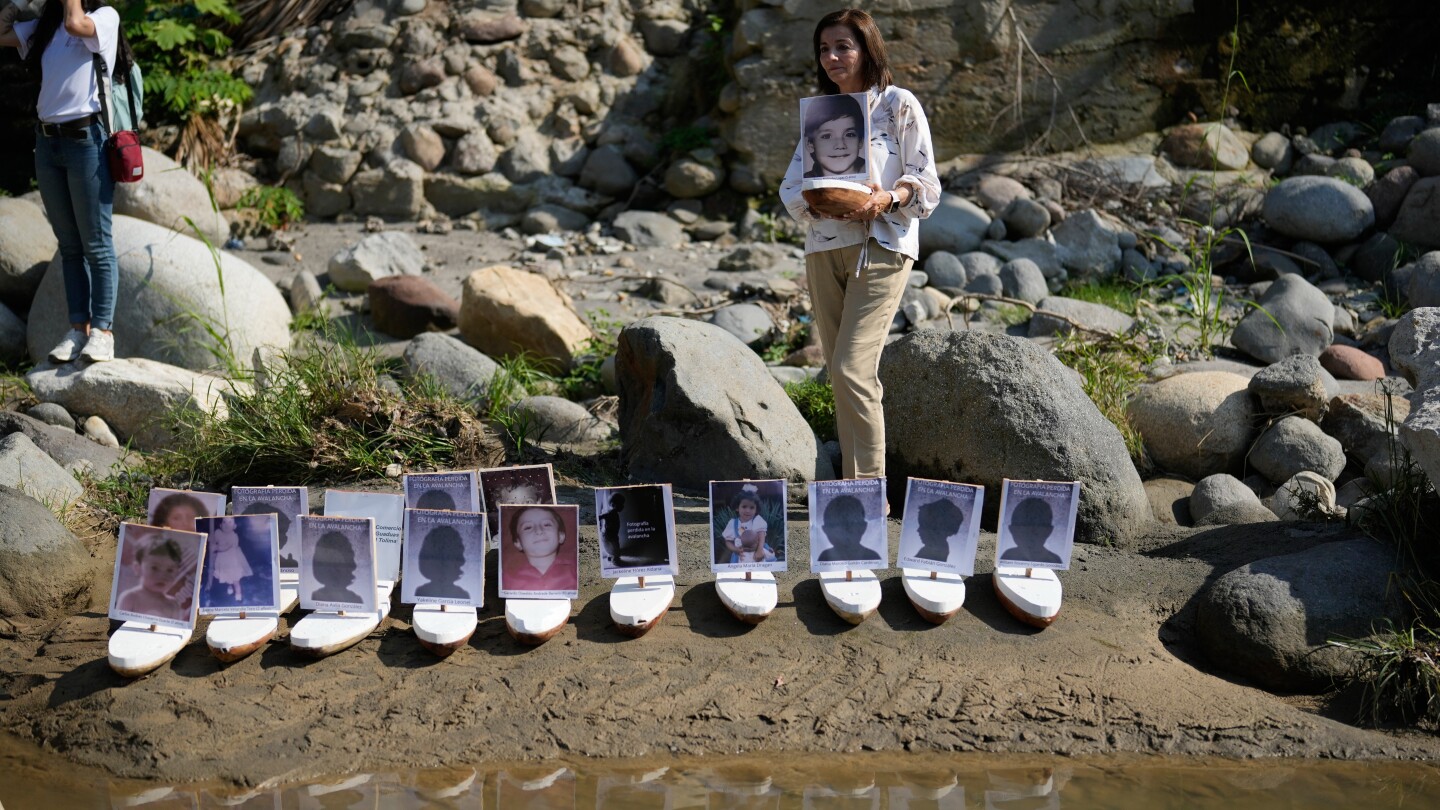
In a solemn ceremony marking four decades of uncertainty, Martha Lucía López released a small boat into the river, joining hundreds of others in a ritual of remembrance and hope. Each boat bore the face of a child who vanished during Colombia’s deadliest natural disaster – the Armero volcanic eruption of November 13, 1985.
“The only option we have is for them, the people who adopted them, to tell the true story and for them to come to us,” said López, 67, whose son Sergio Melendro was just 5 years old when he disappeared in the chaos that followed the eruption.
When the Nevado del Ruiz volcano erupted that November night, it unleashed catastrophic mudflows that claimed approximately 25,000 lives and obliterated the town of Armero in central-western Colombia. Amid the devastation, hundreds of children were separated from their families, creating a legacy of loss that continues to haunt survivors to this day.
López recalls the night with painful clarity. She and her husband had stepped outside after hearing unusual sounds, leaving their sleeping son at home, believing they were at a safe distance from danger. The volcanic eruption melted the mountain’s snow-capped peak, creating an avalanche of mud and debris that surged down the mountainside. As the river overflowed, it overturned their car, forcing the couple to seek refuge in a tree and later a house.
When they finally returned home, their house was destroyed, and Sergio was gone.
In the years that followed, López learned through a television advertisement that her son had been reported to be at the Colombian Institute of Family Welfare (ICBF), the government agency responsible for child protection. Her sister attempted to locate him at the agency’s headquarters in Bogotá but was denied access without additional documentation proving family ties.
Years later, a friend reported encountering someone in New Orleans who claimed his brother had adopted a child from Armero. “He showed her a photo… Sergio’s eyes were unmistakable,” López said, referring to their distinctive blue color. The lead never materialized into a reunion.
The aftermath of the Armero tragedy created perfect conditions for children to become separated from their families. According to Ancizar Giraldo, who was 12 when the volcano erupted, some children were taken by the ICBF, others were sent to nearby villages, and many simply vanished without a trace. Giraldo himself spent nearly four years in a social center funded by international donations until his mother located him through photographs released by the ICBF.
The Armando Armero Foundation, a civil society organization dedicated to investigating the disappeared children, has documented 580 missing children from the disaster. Of these, 71 were reportedly adopted. Through DNA collection efforts, the foundation has successfully located four survivors.
“There is no single modus operandi. You can’t just say, ‘the children were stolen solely by the ICBF,’ there are many ways,” explained Francisco González, the foundation’s director. “Civilians even went to Armero right after the tragedy and saw children, took them home, and welcomed them with affection.” Many children were reportedly sent to various parts of Colombia and abroad.
The search for these missing children was particularly challenging in an era without modern communication technologies. Desperate families physically traveled to shelters and ICBF offices, often with limited success.
Adriana Velásquez, deputy director general of the ICBF, told the Associated Press that their records show they received at least 170 children from Armero following the disaster. The agency is currently investigating how many were subsequently placed for adoption, as these decisions were handled by the courts at that time.
For years, families placed their hopes on the ICBF’s “red book,” named for its crimson cover, which contains records of some Armero children. Although this document was finally declassified in October 2023, Velásquez noted it does not provide a comprehensive account of all missing children.
Despite the passage of four decades, families refuse to abandon their search. The annual ceremony of releasing boats with photos into the river symbolizes their enduring hope that their children might one day find their way back home.
“It’s been 40 years of hope,” said Benjamín Herrera, father of Óscar Fernando, who was just 14 months old when the disaster struck. “And we will wait as long as it takes.”
The Armero tragedy stands as a stark reminder of both nature’s destructive power and the human cost of institutional failures in disaster response. For the families still searching, the quest for answers continues even as the once-vibrant town of Armero remains uninhabited, a permanent memorial to those lost that fateful November night.
Fact Checker
Verify the accuracy of this article using The Disinformation Commission analysis and real-time sources.

12 Comments
It’s incredible that these parents have never given up hope of finding their lost children, even after 40 years. The pain and uncertainty they’ve had to endure is unimaginable. This story is a testament to the resilience of the human spirit.
The details of that night – the parents stepping outside, leaving their sleeping son behind, only to have him vanish in the chaos – are just heartbreaking. I hope they’re able to find some closure, even if the outcome is not what they hoped for.
This is a truly tragic story, but it’s inspiring to see the parents’ unwavering determination to find their lost children. 40 years is an unimaginably long time to carry that burden of uncertainty and grief. I sincerely hope they are able to find answers, even if they’re not the ones they were hoping for.
The ritual of the boats is a beautiful and poignant way to honor the missing children. It’s a powerful symbol of the enduring hope and resilience of these families.
This is a heartbreaking story. 40 years later and these parents are still searching for their lost children after the devastating volcanic eruption in Colombia. I can’t imagine the pain and uncertainty they’ve had to endure all this time.
It’s incredible they’ve been able to keep hope alive for so long. I hope they’re able to find some closure, even if the circumstances are tragic.
This is a powerful reminder of the lasting impact of natural disasters, especially on the most vulnerable. 40 years on, and these parents are still grappling with the aftermath of the Armero eruption. I admire their courage and perseverance.
The ritual of the boats is a beautiful way to honor the missing children and keep their memory alive. I hope it provides some solace to the grieving families.
What an incredibly difficult situation for these parents. To lose a child in the chaos of a natural disaster like this, and then have no closure for 40 years – it’s just heartbreaking. I admire their resilience and determination to keep searching.
The hope that their children may have been adopted by others is a small ray of light, but the uncertainty must be excruciating. I sincerely hope they are able to find answers, even after all this time.
The scale of this disaster is just unimaginable. 25,000 lives lost and hundreds of children separated from their families. It’s a tragedy that continues to haunt the survivors even decades later.
The ritual of releasing boats with the faces of the missing children is such a poignant way to honor their memory and keep searching. I hope it brings some solace to the grieving parents.