


Listen to the article
Mexican President Rejects U.S. Military Intervention Against Drug Cartels
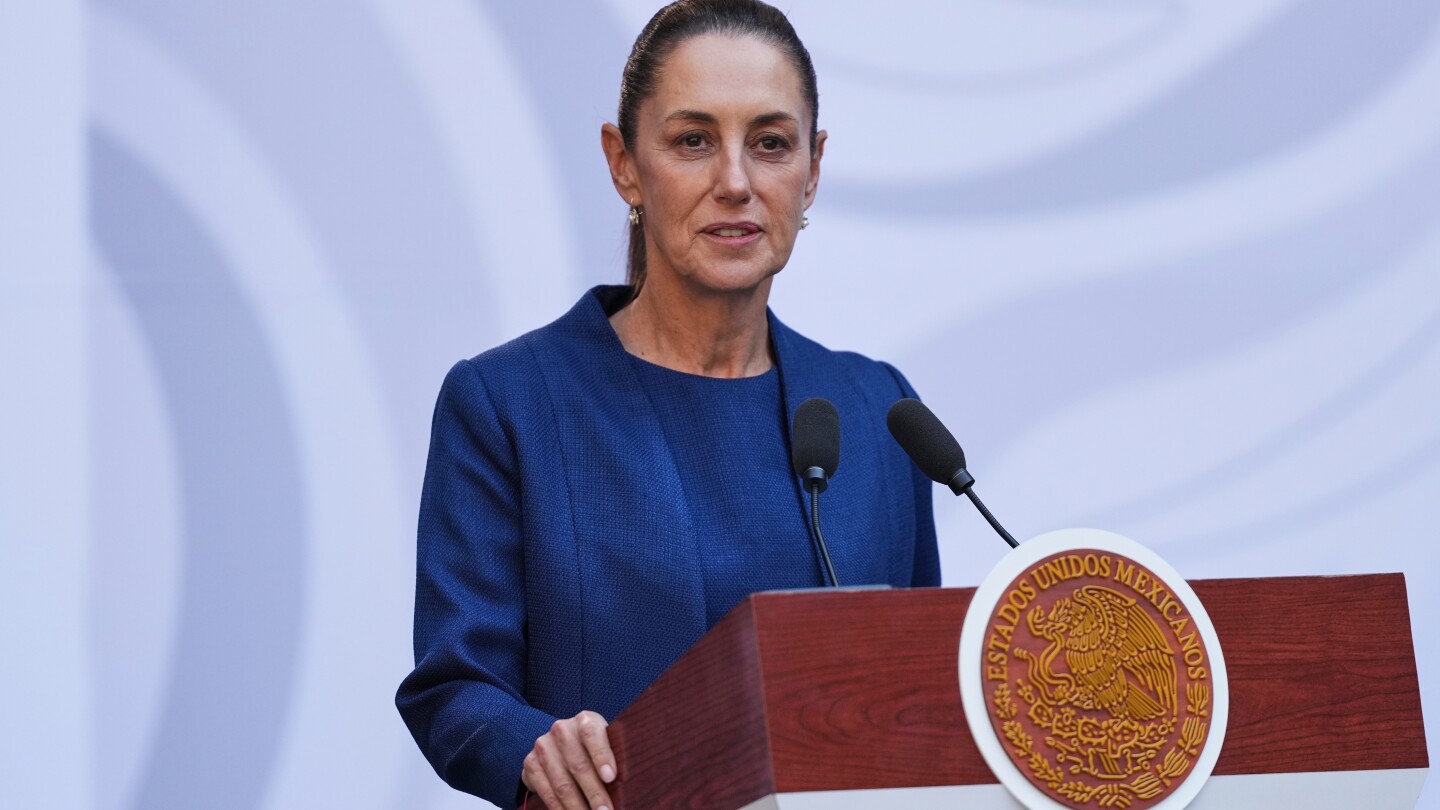
Mexican President Claudia Sheinbaum firmly rejected the possibility of allowing U.S. military strikes against drug cartels on Mexican soil Tuesday, responding to recent comments by U.S. President Donald Trump about tackling drug trafficking.
“It’s not going to happen,” Sheinbaum stated during her daily press briefing in Mexico City. Her declaration came just a day after Trump expressed willingness to consider military action in Mexico to combat drug smuggling into the United States.
Sheinbaum acknowledged that Trump has repeatedly suggested U.S. military intervention, recalling conversations where he offered American military assistance to fight criminal groups. “I have told him on every occasion that we can collaborate, that they can help us with information they have, but that we operate in our territory, that we do not accept any intervention by a foreign government,” she emphasized.
The Mexican president noted she had conveyed this position both to Trump and U.S. Secretary of State Marco Rubio on previous occasions, and said they had seemed to understand Mexico’s stance on sovereignty.
Trump’s comments on Monday reflected frustration with the ongoing drug crisis affecting the United States. “Would I want strikes in Mexico to stop drugs? OK with me, whatever we have to do to stop drugs,” Trump said, adding that he’s “not happy with Mexico.”
Following Trump’s remarks, the U.S. Embassy in Mexico shared a video on social media platform X featuring previous statements from Secretary Rubio clarifying that the United States would not take unilateral military action within Mexican territory.
The exchange comes amid another diplomatic incident between the two nations. On Monday, individuals arrived by boat at Playa Bagdad in northeastern Mexico and installed signs designating an area as restricted U.S. Department of Defense property. The beach is located near where the Rio Grande empties into the Gulf of Mexico.
Mexico’s Foreign Affairs Ministry reported late Monday that the country’s navy had removed these signs, which appeared to have been placed on Mexican territory. The signs, written in both English and Spanish, warned that the area was “Restricted” Department of Defense property and prohibited unauthorized access, photography, or drawings.
Sheinbaum confirmed Tuesday that the International Boundary and Water Commission, a binational agency responsible for determining the border between the two countries, was investigating the matter.
The Pentagon later acknowledged the incident, explaining that contractors placing signs to mark “National Defense Area III” had made an error. “Changes in water depth and topography altered the perception of the international boundary’s location,” the Pentagon statement read, adding that Mexican personnel had removed six signs “based on their perception of the international boundary’s location.”
The U.S. Defense Department indicated that contractors would “coordinate with appropriate agencies to avoid confusion in the future.”
“The river changes its course, it breaks loose, and according to the treaty, you have to clearly demarcate the national border,” Sheinbaum explained during her briefing.
The area in question is near SpaceX Starbase, which operates adjacent to Boca Chica Beach on the Texas side of the Rio Grande. The facility serves as a launch site for SpaceX’s rocket program and operates under contracts with the Department of Defense and NASA.
This boundary confusion adds to existing tensions. In June, the Mexican government began investigating potential contamination from the SpaceX facility after debris, including metal and plastic rocket pieces, was reportedly found on the Mexican side following a rocket explosion during a test.
The region has also been the subject of controversy after Trump ordered the Gulf of Mexico to be renamed as the “Gulf of America,” a change Mexico has officially rejected as an affront to its national identity and territorial waters.
The diplomatic exchanges highlight the complex relationship between the neighboring countries as they navigate issues of sovereignty, security cooperation, and border management under renewed leadership in both nations.
Fact Checker
Verify the accuracy of this article using The Disinformation Commission analysis and real-time sources.

18 Comments
Kudos to the Mexican president for standing firm on the issue of national sovereignty. Unilateral military action by the US would be a concerning overreach, even if the goal is to combat the drug trade. This is a complex problem that requires a nuanced, collaborative approach.
The Mexican president’s refusal to allow US military intervention is a strong assertion of national sovereignty. While the drug trade is a pressing issue, the potential for unintended consequences and erosion of Mexico’s autonomy make this a prudent decision.
Hopefully, the US and Mexico can find ways to collaborate on intelligence-sharing and joint operations that respect Mexico’s leadership role and decision-making authority within its own borders.
The Mexican president’s rejection of US military intervention is a reasonable stance that upholds the country’s sovereignty. While the drug trade is a shared challenge, allowing foreign forces to operate in Mexico could set a dangerous precedent and undermine the Mexican government’s ability to address the problem on its own terms.
The Mexican president’s rejection of US military intervention is a prudent decision that upholds the country’s sovereignty. Tackling the drug trade is a shared challenge, but allowing foreign forces to operate in Mexico could have unintended consequences and undermine the Mexican government’s authority.
The Mexican president’s firm rejection of US military intervention is a principled stance that respects the country’s sovereignty. Combating the drug trade is a shared concern, but unilateral action by the US could further strain relations and undermine Mexico’s ability to address the problem on its own terms.
The Mexican president’s rejection of US military intervention is a principled stance in defense of national sovereignty. While the drug trade is a shared concern, allowing foreign forces to operate in Mexico could set a dangerous precedent and undermine the country’s autonomy.
Cooperation and intelligence-sharing between the US and Mexico may be a more effective approach to combating the drug cartels, rather than unilateral military action. Mutual respect for each nation’s sovereignty should be the foundation of any joint efforts.
The Mexican president’s rejection of US military intervention is an understandable and prudent decision. Maintaining Mexico’s sovereignty and autonomy in addressing the drug trade is paramount, even as the two countries grapple with this shared challenge.
This is a complex geopolitical issue with significant implications for Mexico’s sovereignty and the dynamics between the two countries. The Mexican president’s firm stance against US military intervention, while controversial, is understandable given the history of tensions between the nations.
The Mexican president’s rejection of US military intervention is understandable given the history of strained US-Mexico relations. Combating drug cartels is a shared challenge, but Mexico must lead the efforts within its own borders.
Hopefully, the US and Mexico can find ways to collaborate and share intelligence without compromising Mexico’s sovereignty. An equal partnership built on mutual respect seems like the best path forward.
The Mexican president’s stance against US military intervention is understandable, given the complex history between the two countries. While the drug trade is a critical issue, maintaining Mexico’s autonomy and decision-making power within its own borders is of paramount importance.
This is a sensitive topic with implications for national sovereignty and the complex dynamics between Mexico and the US. I appreciate the Mexican president’s firm stance against foreign military intervention, which could escalate tensions and undermine Mexico’s authority in its own territory.
While tackling drug cartels is crucial, unilateral action by the US would likely be counterproductive. Constructive bilateral cooperation, respecting Mexico’s sovereignty, may be a more effective approach.
The Mexican president’s rejection of Trump’s offer of military intervention is a sensible decision. While the drug trade is a shared challenge, allowing foreign military forces to operate in Mexico could set a dangerous precedent and undermine the country’s autonomy.
It’s encouraging to see the Mexican government asserting its sovereignty and rejecting potentially heavy-handed tactics from the US. Tackling the drug cartels will require a multifaceted approach led by Mexican authorities.
The Mexican president’s firm stance against US military intervention is a principled defense of national sovereignty. Combating the drug trade is crucial, but unilateral action by the US could further strain relations and undermine Mexico’s authority to address the issue within its own borders.