


Listen to the article
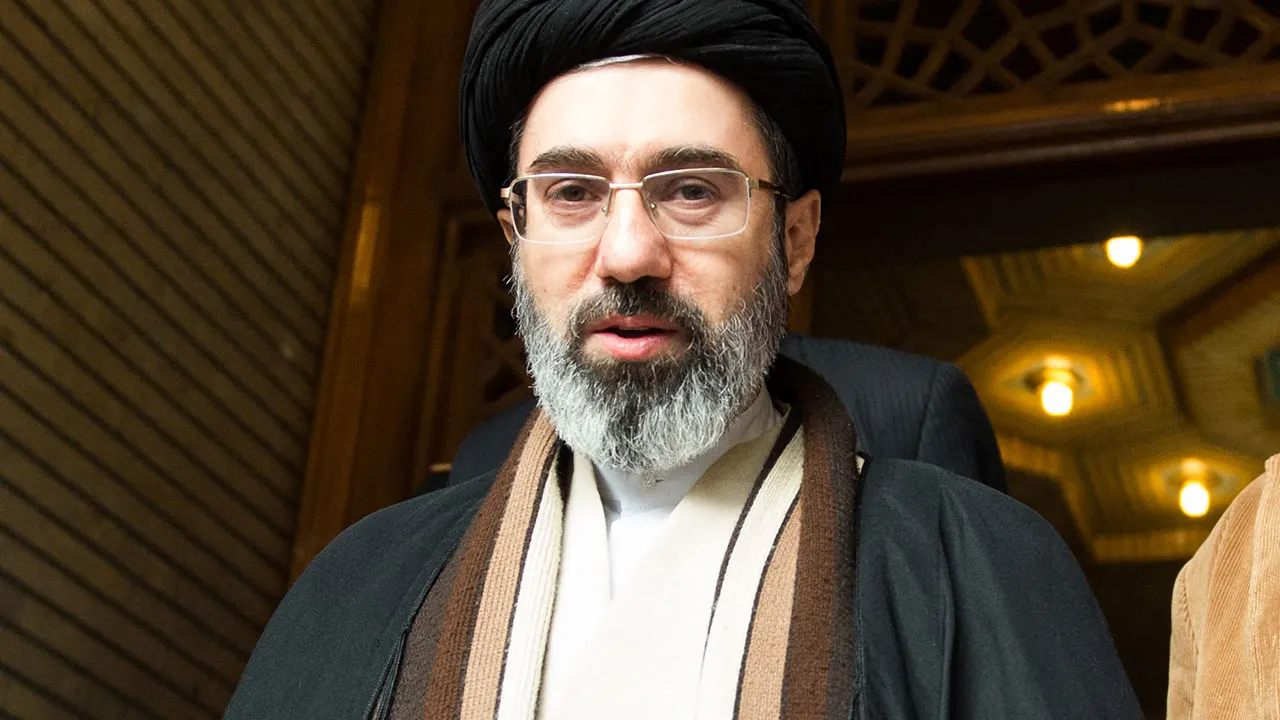
Iran’s New Supreme Leader: Mojtaba Khamenei Takes Reins Following Father’s Death
“Think of Mojtaba Khamenei as his father on steroids,” says Kasra Aarabi, director of Islamic Revolutionary Guard Corps research at United Against Nuclear Iran, describing Iran’s new supreme leader in comments following reports that the son of Ayatollah Ali Khamenei has been selected to lead the Islamic Republic.
According to Aarabi, Mojtaba was already functioning as a “mini supreme leader” within his father’s office, the Bayt-e Rahbari, which represents the core center of power in the regime. “His father had created the Bayt’s extensive apparatus as a hidden power structure to ensure continuity should he be eliminated—and through Mojtaba’s appointment, this is exactly what we will get,” he explained.
President Donald Trump reacted to the succession in an interview with the New York Post, stating he was “not happy with” the younger Khamenei replacing his father. When asked about potential U.S. responses, Trump declined to elaborate, saying only, “Not going to tell you. I’m not happy with him.”
An Iranian source with knowledge of the leadership transition told Fox News Digital that earlier speculation about Mojtaba potentially pursuing reforms now appears highly unlikely. “Previously there were whispers suggesting that if Mojtaba were to become the leader, he might introduce reforms that would both open up the domestic political space and bring a more interactive approach to foreign policy,” the source said. “However, now this possibility seems very weak.”
The source added that Mojtaba was chosen “amid disputes, controversies, and pressure from the IRGC,” meaning he “owes his appointment to their support and therefore cannot act against their wishes.”
Deep Ties to Iran’s Security Apparatus
Mojtaba Khamenei, 56, has spent decades building influence inside Iran’s power structures. Born in 1969 in Mashhad, he pursued clerical studies in Tehran following the 1979 Islamic Revolution that brought his father to prominence. Over time, his influence developed less through traditional clerical authority and more through Iran’s security institutions.
In 2019, the United States sanctioned Mojtaba under Executive Order 13867. The U.S. Treasury Department noted he had been “representing the supreme leader in an official capacity despite never being elected or appointed to a government position aside from work in the office of his father.”
Behnam Ben Taleblu, senior director of the Foundation for Defense of Democracies’ Iran Program, said Mojtaba’s background reflects a broader shift within the Islamic Republic’s power structure. “Despite donning a turban, Mojtaba is the product of the regime’s national security deep state,” Ben Taleblu explained. “Expect him to work with and through the IRGC to keep his hold on power.”
Aarabi described how Mojtaba has spent years consolidating influence behind the scenes, saying, “His past tells us he enjoys micromanaging every aspect of authority to satisfy his thirst for power.” He detailed how Mojtaba allegedly relocated IRGC command centers to his office during protests, engineered election outcomes, and installed loyalists across state institutions.
Since 2019, Aarabi added, Mojtaba has been implementing what he described as his father’s effort to “purify” the regime by promoting ideological loyalists throughout the political system. “Mojtaba is a deeply antisemitic, anti-American, and anti-Western ideologue,” Aarabi said. “He has personally been involved in repression in Iran and terror plots abroad.”
More Hardline Approach Expected
Analysts anticipate Mojtaba’s rise will further strengthen the role of Iran’s security institutions within the country’s power structure. “The rise of the younger Khamenei expedites trendlines seen in Iranian politics and national security for years,” Ben Taleblu noted. “From one Khamenei to another, things in Iran can be expected to go from bad to worse if this regime survives.”
Ben Taleblu warned that the regime might escalate external tensions as a survival strategy. “The regime knows it is weak, but believes it can extract a price and widen a crisis in order to survive,” he said.
For opposition groups inside Iran, the leadership transition signals continuity rather than change. “He’s the son of Khamenei and they have same ideology and they same strategy and they try to continue the same policy,” said Khalid Azizi, spokesperson for the Kurdistan Democratic Party of Iran. “So far it’s very difficult to say what he will be done and is he going to have a different policy? I don’t expect this.”
The Iranian source who spoke with Fox News Digital indicated that while engagement with the United States and Western powers remains theoretically possible, the chances are slim under the new leadership. As Aarabi bluntly summarized: “In short, Mojtaba is his father on steroids. He’s certainly no MBS.”
Fact Checker
Verify the accuracy of this article using The Disinformation Commission analysis and real-time sources.

18 Comments
The Bayt-e Rahbari seems to be a concerning power structure that has been strengthened to ensure continuity. I wonder how this will impact Iran’s domestic and foreign policies going forward.
The news of Mojtaba Khamenei’s appointment as supreme leader raises a lot of questions about the future direction of Iran’s policies, both domestically and internationally. This could have major implications for global energy and commodity markets.
This news raises questions about the future of the Iran nuclear deal and potential tensions with the U.S. The implications for energy and commodity markets could be significant.
You raise a good point. The nuclear deal and geopolitical tensions will be critical to watch in the months ahead.
Mojtaba Khamenei’s ascension to power raises a lot of questions about the future direction of Iran’s policies and its relationships with other major powers. This is a significant transition that could have far-reaching implications.
Kasra Aarabi’s description of Mojtaba Khamenei as “his father on steroids” is quite a vivid and alarming characterization. This power transition bears close watching.
Uranium and other strategic minerals from Iran could become even more challenging to access if this leadership transition leads to further hardline policies. Investors in related equities may want to closely follow developments.
I’m curious to see how this leadership transition will impact Iran’s relationships with countries like China and Russia, as well as its stance on issues like the war in Ukraine.
That’s a good question. Iran’s foreign policy alignments could shift significantly under Mojtaba’s rule.
Mojtaba Khamenei’s ascension to supreme leader is a concerning development. His hardline stance could spell trouble for stability in the region and global energy/commodity markets.
Interesting development in Iran. Mojtaba Khamenei seems like an even more hardline leader than his father. This could have significant implications for the region and geopolitics.
The potential for more hardline governance in Iran is certainly a concern, especially given the country’s strategic importance in energy and commodity markets. Investors and policymakers will need to closely monitor developments.
As an expert on the Islamic Revolutionary Guard Corps, Kasra Aarabi’s insights are valuable. His description of Mojtaba as “his father on steroids” is quite alarming. This power transition bears close monitoring.
With Trump’s comments about not being “happy” with the new supreme leader, it seems U.S.-Iran tensions may be set to escalate further. This could have ripple effects across global energy and commodity markets.
The potential for more hardline governance in Iran is certainly concerning from a geopolitical and economic standpoint. Investors in related sectors should closely monitor developments.
The Trump administration’s reaction is somewhat concerning. I wonder what potential U.S. responses they may be considering, even if they decline to elaborate. This bears close watching.
It will be interesting to see how Iran’s relationships with countries like China and Russia evolve under Mojtaba Khamenei’s leadership. This could have significant geopolitical and economic ramifications.
Absolutely, the shifting geopolitical alignments under the new supreme leader will be crucial to watch.