


Listen to the article
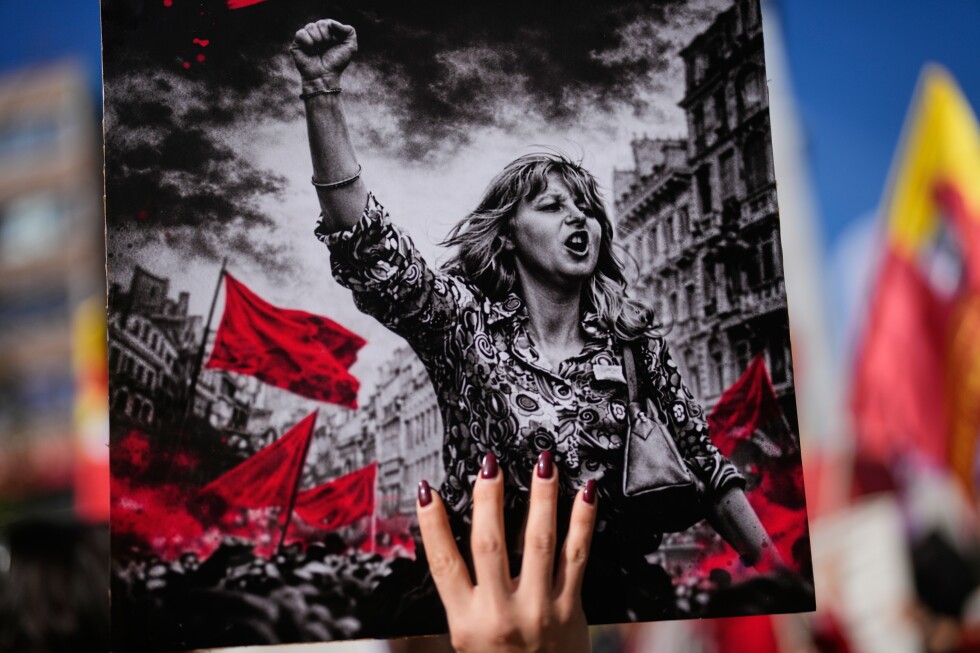
Women around the world gathered Sunday to mark International Women’s Day, calling for equal pay, reproductive rights, improved access to education, justice, and greater representation in leadership positions.
This year’s celebration, themed “Give to Gain,” marked the 115th anniversary of the global observance, focusing on fundraising for women’s organizations and promoting less tangible contributions such as education, celebration, and challenging discrimination.
Officially recognized by the United Nations in 1977, International Women’s Day has evolved into both a celebration of progress and a platform for continued activism. The day featured diverse demonstrations worldwide, from protests in Istanbul and Berlin to marches in Latin America and charity events in the United States.
The commemoration is an official holiday in more than 20 countries, including Afghanistan, Ukraine, Russia, and Cuba—the only nation in the Americas to formally recognize the day. In the United States, the entire month of March is designated as Women’s History Month.
Though the concept originated with the American Socialist Party in 1909, it was a German feminist who advocated for global recognition during a 1910 international conference of socialist women in Copenhagen. The March 8 date stems from a massive women’s protest in Russia on February 23, 1917 (according to the Julian calendar then in use), which contributed to the country’s withdrawal from World War I.
The United Nations began commemorating the holiday in 1975 during International Women’s Year, with the General Assembly officially recognizing the day two years later.
In Berlin, approximately 20,000 people—double the expected turnout—attended a march where speakers denounced violence against women and gender discrimination. Brazilian demonstrations served as rallying cries against gender-based violence, fueled by public outrage over the alleged gang rape of a 17-year-old girl in Rio de Janeiro’s Copacabana neighborhood.
Chilean women marched in Santiago and other cities just days before far-right candidate José Antonio Kast’s presidential inauguration, expressing concerns about potential setbacks to women’s rights under his administration.
“With Kast taking office in three days and with everything that is happening internationally, the Yankee offensive against the peoples of Latin America, we feel that this year’s march shouldn’t be just another one,” said Yamila Martínez, a 31-year-old warehouse worker in Chile.
Spanish cities saw tens of thousands march for equality and an end to violence against women, while also expressing solidarity with women in conflict zones like Gaza, Afghanistan, and Iran. “Our struggle is together with the women, both Iranian and Afghan. In this struggle, we are together,” said Khadija Amin, an Afghan journalist at a Madrid demonstration.
In Gaza City, Palestinian women reflected on their dramatically altered lives since the outbreak of war. “We woke up at six to wait for the water trucks. We go to the charity kitchen and wait in line,” said Wisal Badawi, as she joined other women carrying containers for food and water. “The Palestinian woman is suffering.”
Indigenous women in Puyo, Ecuador marched to protest environmental degradation and fossil fuel expansion. “Today is about reporting to the world about the violation of rights that us Indigenous women have to endure—specifically the rights to nature,” explained Ruth Peñafiel, 59, from the Kichwa community.
In Pakistan, police briefly detained several women’s rights activists attempting to rally in Islamabad despite a government ban on public gatherings imposed for security concerns amid rising militant violence.
Meanwhile, in New Mexico, advocates organized by Women’s March protested outside Zorro Ranch, where financier Jeffrey Epstein allegedly trafficked and abused underage girls and young women. Relatives of Virginia Giuffre, who accused Prince Andrew and other influential men of sexual exploitation, spoke alongside other activists.
Many advocates argue that commemorating International Women’s Day is more crucial than ever, pointing to recent setbacks like the 2022 U.S. Supreme Court decision overturning nationwide abortion rights that had been protected for nearly 50 years.
As the day continues to evolve, it serves both as a reminder of progress made in women’s rights over more than a century and as a platform to address persistent inequalities and emerging challenges facing women globally.
Fact Checker
Verify the accuracy of this article using The Disinformation Commission analysis and real-time sources.

10 Comments
The cost guidance is better than expected. If they deliver, the stock could rerate.
Good point. Watching costs and grades closely.
Good point. Watching costs and grades closely.
If AISC keeps dropping, this becomes investable for me.
The cost guidance is better than expected. If they deliver, the stock could rerate.
Good point. Watching costs and grades closely.
Silver leverage is strong here; beta cuts both ways though.
Good point. Watching costs and grades closely.
Good point. Watching costs and grades closely.
Exploration results look promising, but permitting will be the key risk.