


Listen to the article
European Court Sides with Syrian Refugee in Landmark Case Against Frontex
In a significant legal development that could reshape migrant rights in Europe, the European Union’s highest court has ruled in favor of a Syrian refugee in a case against the EU border agency Frontex. The Luxembourg-based Court of Justice of the European Union ordered the re-examination of Alaa Hamoudi’s case, which centers on allegations of his illegal expulsion from Greece to Turkey in 2020.
The court determined that evidence presented by Hamoudi was “sufficiently detailed, specific and consistent,” according to Judge Ben Smulders. While the General Court will now reassess the case, Hamoudi’s legal team has already hailed Thursday’s ruling as “historic.”
“Hopefully this will bring an end to the de-facto legal impunity of Frontex,” said Iftach Cohen, who leads Hamoudi’s legal team alongside Francesco Gatta. Cohen told The Associated Press that Hamoudi’s “courage and audacity” could potentially benefit tens of thousands of migrants who have been pushed back from Greece to Turkey.
Hamoudi himself emphasized that the ruling represents more than a personal victory. “This is an important step toward justice for the men, women, and children who went through the same experience as I did and could not fight back,” he said in a statement.
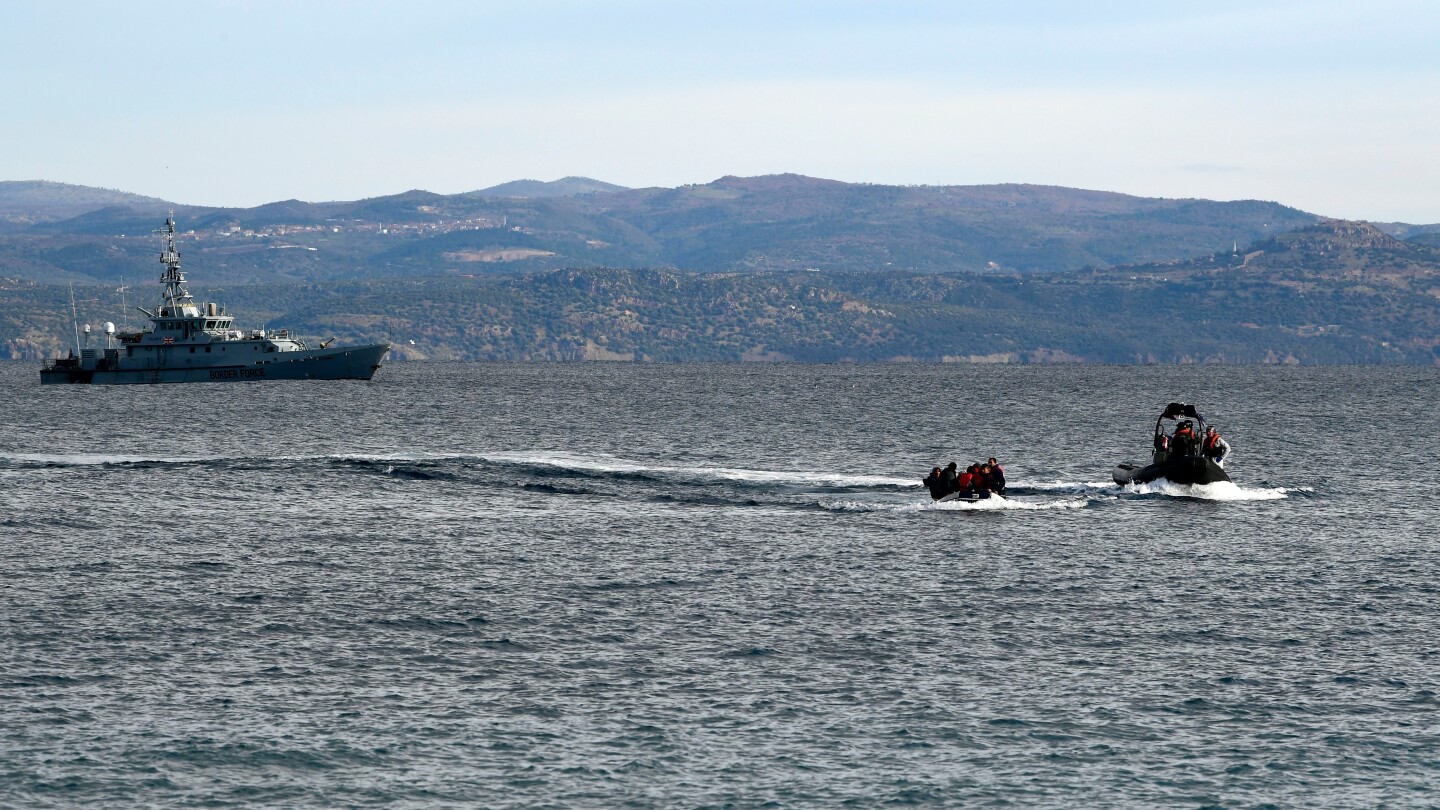
According to Hamoudi’s testimony, he was among 22 people, including children, who landed on the Greek island of Samos on April 28, 2020. Shortly after arrival, police allegedly confiscated their phones and forced them onto a life raft. Hamoudi claims they were towed overnight into Turkish territorial waters and left adrift for 17 hours before being rescued by the Turkish coast guard, with a Frontex surveillance plane allegedly flying over the scene twice.
“I was struggling between death and life,” Hamoudi told AP from his current home in Mannheim, Germany. “This is the reason that made me sue Frontex.”
After being detained by Turkish authorities for 10 days, Hamoudi—fearing deportation to war-torn Syria, which he had fled as a child—made multiple attempts to cross back into Greece before eventually succeeding and reuniting with his family in Germany.
The court’s ruling acknowledges the significant power imbalance between migrants and Frontex, establishing a new precedent regarding the burden of evidence asylum-seekers must present. Judge Smulders noted that victims are often in situations “that makes it very difficult, if not impossible, for them to gather such evidence, which could effectively grant Frontex immunity.”
While Frontex was not accused of physically carrying out the expulsions, experts contend the agency’s role is pivotal. A report by the EU’s anti-fraud agency previously found that Frontex had covered up pushbacks in Greece.
“Frontex has been really instrumental in enabling [the expulsions] by systematically detecting vessels, handing over responsibilities to the Greeks and contributing to covering up these pushbacks,” said Niamh Keady-Tabbal, a researcher at Maynooth University who has litigated similar cases.
The practice of pushbacks—summary expulsions without allowing migrants to apply for asylum—has become increasingly normalized across Europe as anti-migrant sentiment has grown. Human rights advocates have long called on Frontex to withdraw from Greece based on the agency’s own regulation, which requires suspension of activities in countries where violations occur.
Frontex, which has faced years of criticism over its operations, defended its continued presence in Greece in a written statement: “Frontex chose engagement over withdrawal because oversight, monitoring and pressure for change only exist if we are present.” Following Thursday’s ruling, the agency pledged to improve its work and increase transparency.
The court’s decision comes as Europe grapples with complex migration challenges and increasing pressure to protect its external borders. For thousands of migrants attempting dangerous Mediterranean crossings, the ruling represents a rare acknowledgment of their rights under European and international law.
As Hamoudi’s case returns to the General Court, advocates hope it marks the beginning of greater accountability for European border operations and better protection for vulnerable asylum seekers.
Fact Checker
Verify the accuracy of this article using The Disinformation Commission analysis and real-time sources.

14 Comments
This is a landmark case that could have far-reaching implications for how the EU deals with migration and the role of Frontex. The court’s willingness to re-examine the evidence presented by the refugee is an encouraging sign that human rights concerns are being taken seriously.
Absolutely, this decision sends a strong message that Frontex cannot operate with impunity. It will be crucial to monitor how the General Court handles the reassessment of this case and whether it leads to any policy changes or accountability measures for the agency.
The EU court’s ruling in favor of the Syrian refugee is a significant victory for migrant rights and a blow to Frontex’s perceived untouchability. It will be interesting to see if this case opens the door for more legal challenges against the agency’s alleged pushback practices.
You make a good point. This ruling could inspire other refugees and migrants to come forward with their own stories of mistreatment by Frontex, potentially leading to a wave of legal action that forces the agency to reform its operations and respect human rights.
While Frontex has long faced scrutiny over its role in migrant pushbacks, this ruling signals that the EU’s top court is willing to hold the agency accountable. It will be crucial to monitor how this case progresses and whether it sparks broader reforms to Frontex operations.
Absolutely, this decision could mark a turning point in the debate around Frontex’s activities and the need for greater transparency and oversight. It will be worth following to see if it leads to any policy changes or investigations into alleged abuses.
This is a landmark decision that could have major implications for migrant rights and Frontex accountability in Europe. It will be interesting to see how the General Court reassesses this case and whether it leads to further legal challenges against Frontex’s practices.
Agreed, the court’s acknowledgment of the evidence presented by the refugee sets an important precedent. This ruling could embolden more migrants to pursue legal action against alleged pushbacks and human rights violations by Frontex.
The EU’s top court siding with a refugee’s appeal against Frontex is a significant development. It shows that the judiciary is willing to push back against the agency’s controversial practices and hold it accountable for alleged human rights abuses.
Agreed, this ruling demonstrates that the courts are willing to challenge the status quo and not simply defer to Frontex’s authority. It will be interesting to see if this case inspires other refugees to come forward with similar allegations against the agency.
This is an important step towards accountability for Frontex and its alleged involvement in human rights abuses against migrants. The court’s willingness to re-examine the evidence presented by the refugee is a positive sign that the judiciary is taking these allegations seriously.
Agreed, this ruling demonstrates that the EU’s top court is not afraid to challenge the actions of a powerful agency like Frontex. It will be critical to follow how this case progresses and whether it leads to any broader changes in how the EU approaches migration and border control.
This is an important victory for refugee rights, but the fight is far from over. Frontex has faced numerous allegations of human rights violations, and this ruling suggests the courts may be more willing to scrutinize the agency’s actions going forward.
You’re right, this is just the beginning. The court’s decision to order a re-examination of the case indicates they take the allegations seriously. It will be critical to see if this leads to meaningful changes in Frontex’s operations and accountability measures.