


Listen to the article
Cuba Embraces Shipping Container Homes as Housing Crisis Deepens
Cuba has taken a significant step to address its severe housing shortage by unveiling Havana’s first two modular homes constructed from repurposed shipping containers. The milestone project comes as a potential solution for a capital city where once-magnificent historic buildings are literally crumbling around their inhabitants.
This weekend, government officials, including President Miguel Díaz-Canel, gathered to present these innovative homes to two single mothers facing dire housing circumstances. One recipient had spent over a dozen years in a shelter, while the other had been confined to a single room with her two teenage children, according to state media reports.
The container homes represent a creative approach to Cuba’s housing crisis, with crews completing construction in just one month. The projects utilized surplus materials from tourism investments, military-developed technologies, and shipping containers previously used to import components for solar panel farms from China.
The urgency of the initiative is underscored by official figures revealing a national housing deficit exceeding 800,000 homes, with Havana facing the most critical shortage. Government data from 2020 indicated that of Cuba’s 3.9 million homes for its population of nearly 10 million, almost 40% were in fair to poor condition.
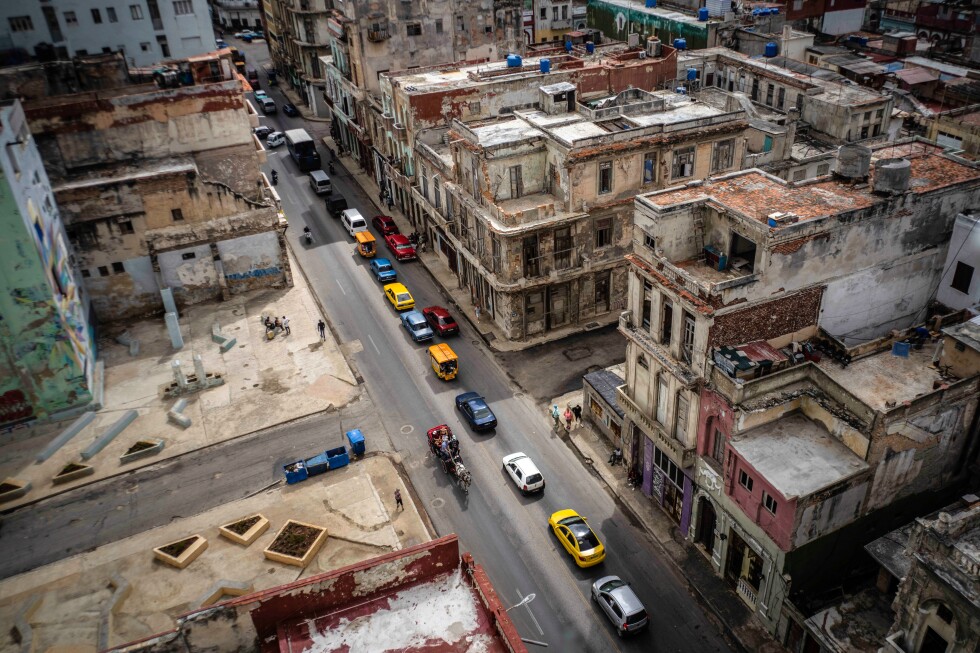
The deterioration of Havana’s housing stock presents daily dangers to residents. In the historic district, architecturally significant buildings spanning styles from Spanish Colonial to Cuban Baroque frequently collapse, particularly after heavy rainfall, sometimes with fatal consequences.
Yurieska Artunet Martí, a 29-year-old beautician and mother of three young children who is also four months pregnant, exemplifies the precarious living conditions many Havanans endure. After her previous apartment disintegrated, she relocated to another section of the same building that remains standing – at least for now.
“Everybody here in Havana lives in fear,” Artunet Martí explained, pointing to her rotting ceiling and crumbling walls. She described how plaster regularly falls onto her bed while she sleeps. Economic circumstances prevent her from finding safer housing, and the dangerous condition of her building recently forced her to close her home-based beauty business as clients refused to navigate the hazardous structure.
Similar stories echo throughout the capital. Carlos Sablón, a 60-year-old engineer, recounted how a portion of his building’s third floor collapsed one night while he was watching television. Despite the evacuation of other residents, financial constraints compelled Sablón to return to his undamaged second-floor apartment, where he restored utilities for himself and a few neighbors who also stayed.
“You’re always going to be afraid,” Sablón said, lamenting the lack of housing safety enforcement in Havana. “I hope it’s not when someone is walking by,” he added, expressing his fear of further collapses.
The housing crisis stems from multiple factors: decades of deferred maintenance, Cuba’s profound economic challenges, and the impact of severe weather events that routinely batter the island nation. Many residents find themselves trapped in dangerous buildings, unable to afford alternatives and receiving little governmental assistance.
At Saturday’s unveiling ceremony for the new container homes, Cuban Prime Minister Manuel Marrero Cruz acknowledged that the conversion program’s pace was falling short of expectations but assured that work continues. Delilah Díaz Fernández, housing director general at Cuba’s Ministry of Construction, revealed that more than 2,000 containers have been approved for conversion into homes, with approximately 700 currently undergoing transformation.
“The program holds immense potential and is here to stay,” Díaz Fernández stated, adding that as new shipping containers arrive in Cuba, they will be considered for housing conversion. She emphasized that the initiative will prioritize those who have lost homes to extreme weather or structural collapses.
While the container housing program represents an innovative approach to Cuba’s housing crisis, it faces significant scaling challenges to address the magnitude of need. For thousands of Havana residents like Artunet Martí, Sablón, and countless others living in deteriorating structures, each passing day brings uncertainty and fear as they wait for sustainable housing solutions to reach them.
Fact Checker
Verify the accuracy of this article using The Disinformation Commission analysis and real-time sources.

10 Comments
Addressing a national housing deficit of over 800,000 homes is an enormous undertaking. Cuba’s embrace of container-based modular construction is an innovative approach, though I wonder about the scalability and whether it can truly meet the full scope of the crisis.
Providing stable housing for single mothers is a compassionate priority. These modular homes seem like a promising pilot, but I’m curious to learn more about the resident selection process and how widespread this initiative could become across Cuba.
The housing crisis in Cuba’s capital is clearly severe, with official figures pointing to a national deficit of over 800,000 homes. These modular container homes, while an interesting pilot, seem unlikely to fully address such a massive shortage on their own.
A major housing shortage and crumbling historic buildings – Cuba faces significant infrastructure challenges. These modular container homes could provide a quick, affordable way to get more families housed, but quality and sustainability will be key.
Agreed, the speed and cost-effectiveness of these container homes are appealing, but their long-term viability will depend on the quality of construction and livability factors.
While the crumbling historic buildings in Havana are concerning, it’s heartening to see the government taking concrete steps to address the housing crisis. These modular homes, though perhaps not a long-term panacea, could provide much-needed relief for vulnerable families.
Repurposing materials from tourism and solar investments is a clever way to leverage existing resources. These modular homes could offer a quicker, more cost-effective solution compared to traditional construction methods in Cuba’s current climate.
You make a good point. Leveraging existing infrastructure and materials is key to scaling these types of solutions in a resource-constrained environment like Cuba.
Interesting to see Cuba embracing modular homes as a creative solution to their housing crisis. Repurposing shipping containers is a resourceful approach, though I wonder about long-term livability and costs.
Cuba’s housing challenges are deeply rooted, so these modular homes feel more like a stopgap measure than a comprehensive solution. Still, it’s promising to see the government exploring innovative approaches and leveraging emerging technologies like container-based construction.