


Listen to the article
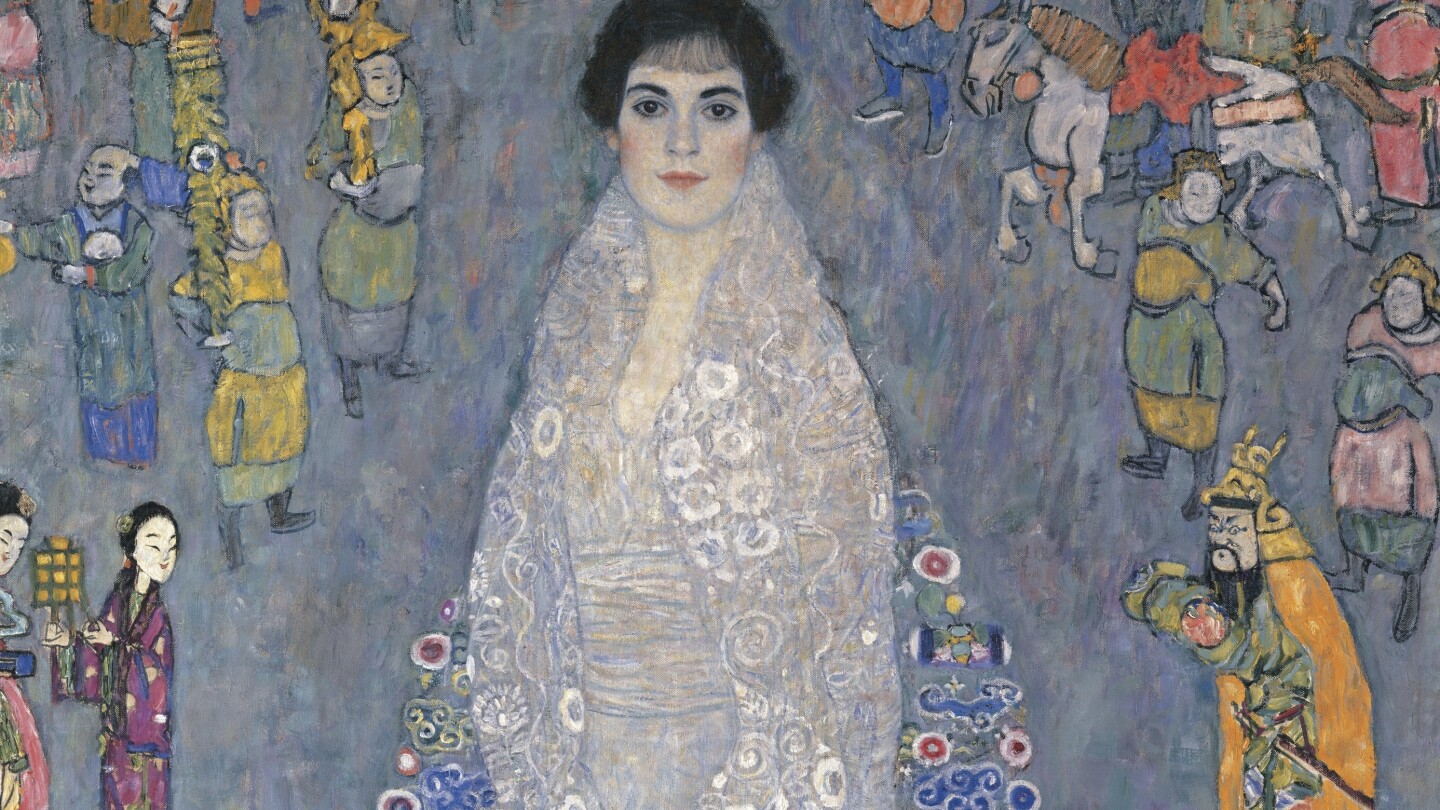
A Gustav Klimt masterpiece that played a crucial role in saving its subject’s life during the Holocaust fetched a staggering $236.4 million at Sotheby’s New York, setting a new record for modern art at auction.
The “Portrait of Elisabeth Lederer,” painted between 1914 and 1916, depicts the daughter of one of Vienna’s wealthiest Jewish families wearing an East Asian emperor’s cloak. The six-foot-tall portrait commanded intense bidder interest, culminating in a 20-minute bidding war before the hammer fell.
The painting’s historical significance extends far beyond its artistic merit. When Nazi Germany annexed Austria in 1938, the Lederer family’s extensive art collection was largely looted by the Nazis. However, family portraits, considered “too Jewish” to be worth stealing, were left behind. Elisabeth Lederer leveraged this oversight to save her own life, fabricating a story that Klimt, who died in 1918 and was not Jewish, was her father.
With assistance from her former brother-in-law, a high-ranking Nazi official, Lederer convinced authorities to provide documentation of her supposed descent from Klimt. This ruse allowed her to remain safely in Vienna until her death from illness in 1944, effectively using the portrait as a shield against persecution.
The record-breaking painting came from the collection of cosmetics heir Leonard A. Lauder, who died earlier this year at age 92. His art collection was valued at over $400 million. Sotheby’s has not disclosed the identity of the painting’s new owner.
The sale surpassed the previous record for 20th-century art, set by Andy Warhol’s portrait of Marilyn Monroe that sold for $195 million in 2022. In total, five Klimt pieces from Lauder’s collection brought in $392 million during the evening.
The auction also featured works by other prominent artists including Vincent van Gogh, Henri Matisse, and Edvard Munch, underscoring the exceptional caliber of Lauder’s collection.
Perhaps the most unusual highlight of the evening was Maurizio Cattelan’s fully functional solid gold toilet titled “America,” which sold for $12.1 million. The provocative 223-pound, 18-karat gold commode was created as a satirical commentary on extreme wealth and consumption.
“Whatever you eat, a $200 lunch or a $2 hot dog, the results are the same, toilet-wise,” Cattelan once remarked about the piece.
This gold toilet is one of two created by the Italian artist in 2016. Its counterpart gained notoriety when the Guggenheim Museum offered to lend it to then-President Donald Trump after declining his request to borrow a Van Gogh painting. That toilet was later stolen while on display at England’s Blenheim Palace, Winston Churchill’s birthplace. Though two men were convicted in the heist, the stolen artwork has never been recovered and is presumed to have been melted down.
The surviving “America” was displayed at Sotheby’s New York headquarters prior to the auction. The auction house described it as an “incisive commentary on the collision of artistic production and commodity value,” a statement that seems particularly apt given its multi-million-dollar sale price.
The evening’s results reflect the continued strength of the high-end art market, particularly for works with exceptional provenance and historical significance. The Klimt portrait’s remarkable backstory—transforming from a symbol of pre-war Viennese luxury to a lifesaving document during the Holocaust—likely contributed to its record-breaking price, cementing its place in both art history and the annals of World War II survival stories.
Fact Checker
Verify the accuracy of this article using The Disinformation Commission analysis and real-time sources.

8 Comments
I’m skeptical that the record-breaking $236M sale price is fully justified, even considering the painting’s historical significance. While the artwork is undoubtedly magnificent, the auction house is likely capitalizing on the compelling backstory to drive up the price.
That said, the fact that it commanded such an astronomical sum speaks volumes about the enduring power and prestige of Klimt’s work, as well as the high value placed on art with profound historical meaning.
It’s remarkable that this Klimt masterpiece has not only endured as a celebrated work of modern art, but also as a symbol of resilience and survival during the Holocaust. A truly remarkable piece with an equally remarkable history.
What an incredible story of how this Klimt portrait played a role in saving a life during the Holocaust. The fact that it’s now fetched a record-breaking price at auction is a testament to both its artistic merit and historical significance.
Fascinating story of how this Klimt portrait played a role in saving its subject’s life during the Holocaust. It’s incredible that a work of art could have such profound historical significance beyond its artistic merits.
The record-breaking sale price is a testament to the work’s immense artistic and historical value. It’s wonderful to see this important piece preserved and honored.
I’m curious to learn more about the Lederer family’s ingenious ruse to protect Elisabeth from the Nazis by claiming Klimt as her father. Art was clearly a powerful tool for survival during that dark time.
The fact that the Nazis deemed the family portraits ‘too Jewish’ to steal is both chilling and fascinating. What an incredible stroke of luck that oversight proved to be.