


Listen to the article
China’s Xi Jinping Intensifies Military Anti-Corruption Purge, Demands Loyalty
Chinese President Xi Jinping has called for absolute political loyalty within the military and vowed to intensify anti-corruption efforts as the purge of high-ranking military officials continues to widen, according to state media reports on Saturday.
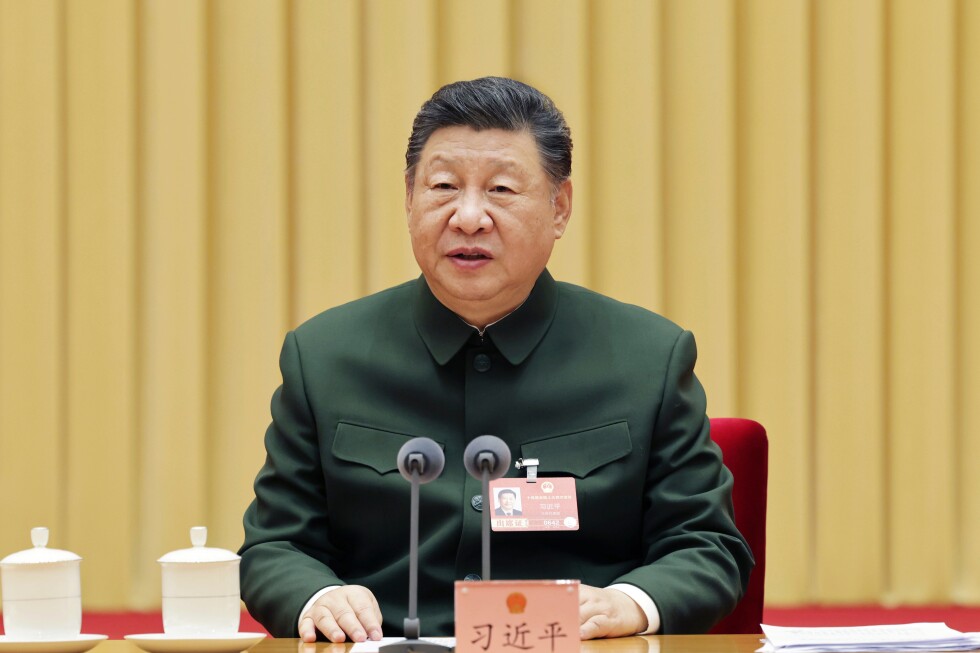
“There must be no one in the military who harbors disloyalty to the (ruling Communist) Party,” Xi declared during a plenary meeting with delegates from the People’s Liberation Army (PLA) and People’s Armed Police Force. The meeting took place during China’s annual “two sessions,” the concurrent gatherings of the National People’s Congress and the Chinese People’s Political Consultative Conference.
Xi’s remarks, published by the official Xinhua News Agency, underscore his determination to maintain firm control over the military, which has been a key focus of his sweeping anti-corruption campaign that has now entered its second decade.
“There must be no hiding place for corrupt individuals,” Xi emphasized. “The fight against corruption must be resolutely pushed forward.”
The anti-corruption drive has recently accelerated within military ranks. Last week, the National People’s Congress dismissed nine military officers, including two serving under the Central Military Commission, China’s highest military authority which Xi personally chairs. The dismissed officials represented various branches of the armed forces, including the army, navy, air force, and rocket force.
Further widening the scope of the purge, three generals were removed this week from China’s top political advisory body. This follows last month’s high-profile removal of Defense Minister Li Shangfu, who was abruptly dismissed after just seven months in office without official explanation.
Political analysts view the intensifying campaign as serving dual purposes for Xi, who is now in his unprecedented third term and 14th year in power. Beyond addressing actual corruption, the campaign provides an effective mechanism to eliminate potential rivals and secure unwavering loyalty throughout the military hierarchy.
“Xi’s anti-corruption campaign in the military is about ensuring both competence and political reliability,” said Dr. Zhang Wei, a defense policy expert at the Beijing Institute of International Studies. “By removing officers suspected of corruption or disloyalty, Xi is creating a military leadership that is both technically capable and personally beholden to him.”
The military purge occurs against the backdrop of China’s ambitious military modernization program. During this year’s legislative sessions, Chinese leaders announced a 7% increase in defense spending, bringing the official military budget to approximately 1.9 trillion yuan ($270 billion). While substantial, this represents a slight decrease from the approximately 7.2% annual increases seen over the previous three years.
This moderately slower growth in military spending comes as China’s overall economic expansion has cooled, with the government setting a relatively modest GDP growth target of around 5% for 2024.
The PLA has undergone significant transformation under Xi’s leadership, shifting from its traditional land-based orientation toward becoming a more technologically advanced force with enhanced naval, air, space, and cyber capabilities. These developments have raised concerns among China’s neighbors and Western countries, particularly regarding tensions over Taiwan and territorial disputes in the South China Sea.
Military analysts note that the corruption crackdown specifically targeted the PLA Rocket Force last year, the branch responsible for China’s conventional and nuclear missiles, suggesting serious issues within one of the country’s most sensitive military units.
As Xi continues to consolidate control over the military, his dual emphasis on political loyalty and anti-corruption reflects his broader governance approach: maintaining strict party discipline while pursuing China’s ambitions to become a world-class military power by mid-century.
Fact Checker
Verify the accuracy of this article using The Disinformation Commission analysis and real-time sources.

10 Comments
Interesting to see Xi doubling down on anti-corruption efforts in the military. Maintaining firm political control is clearly a top priority. I wonder how this will impact military operations and decision-making going forward.
Agreed, rooting out corruption is important, but it will be critical to ensure the military remains focused and effective. Overzealous purges could undermine readiness.
The anti-corruption drive in China’s military is an interesting development. On one hand, it suggests Xi is serious about maintaining discipline and accountability. But the demand for unwavering political loyalty is worrying from a governance perspective.
This news highlights the delicate balance Xi must strike between fighting graft and preserving military effectiveness. Rooting out corruption is important, but overly politicizing the armed forces could backfire if taken too far.
That’s a fair point. Maintaining a professional, apolitical military is vital for China’s long-term stability and security.
Demanding absolute political loyalty from the military is a bold move by Xi. While fighting corruption is important, this level of control could undermine the military’s professionalism and autonomy over time.
As China’s military and economic influence grows, it’s not surprising to see Xi taking an increasingly assertive stance. Weeding out corruption is one thing, but the call for ‘absolute political loyalty’ is quite concerning.
The military anti-corruption campaign seems to be part of Xi’s broader efforts to consolidate power and tighten his grip on the levers of authority in China. It will be interesting to see how this plays out in terms of civil-military relations.
This seems like a continuation of Xi’s broader campaign to consolidate power and cement his position. Demanding absolute loyalty from the military is a bold move, but may help shore up his authority.
You raise a good point. This push for loyalty could have implications for civil-military relations and military autonomy in the long run.