


Listen to the article
Bangladesh’s former Prime Minister Sheikh Hasina has been sentenced to death in absentia, a dramatic development that has stirred tensions but failed to disrupt daily life across the South Asian nation.
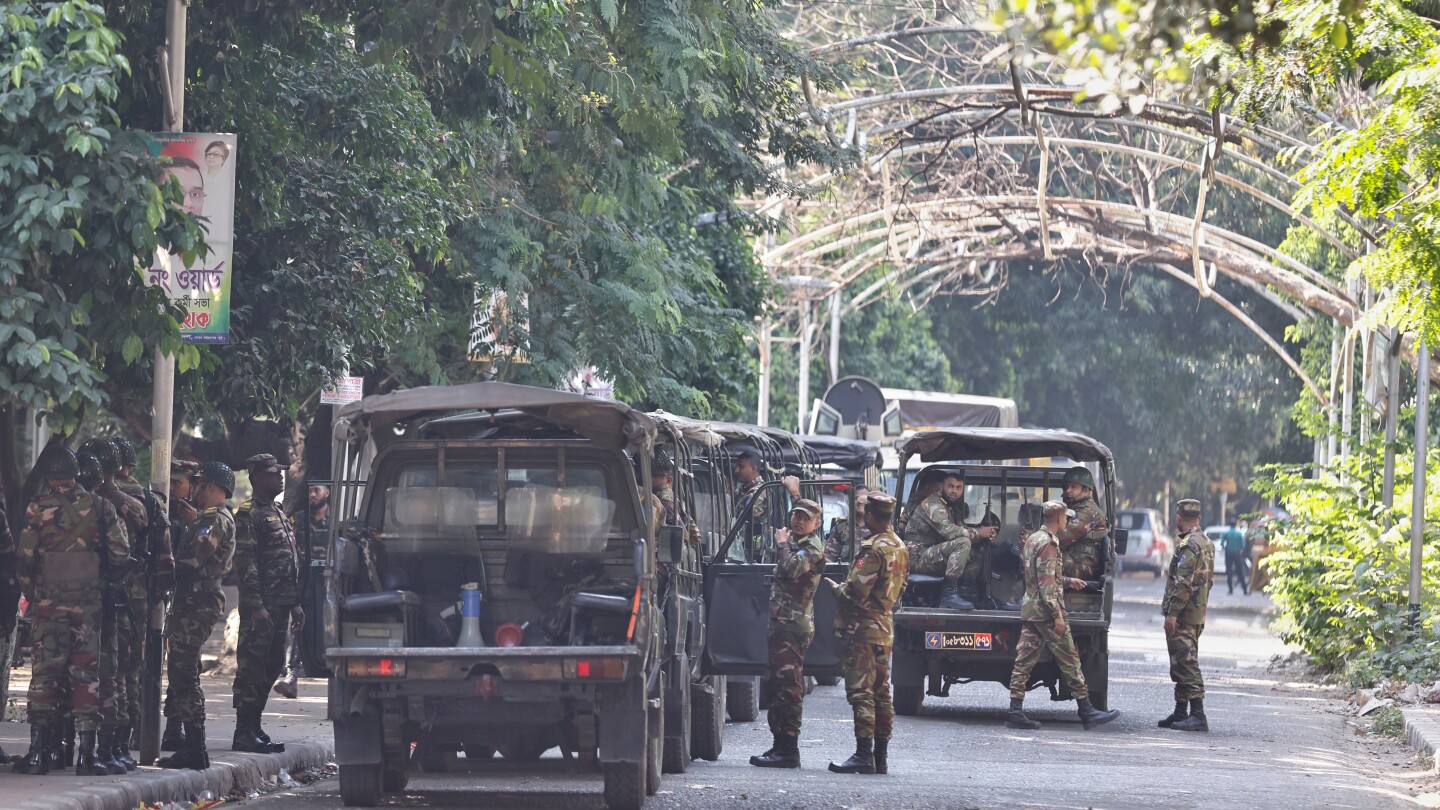
The International Crimes Tribunal handed down death sentences on Monday to Hasina, 78, and former Home Minister Asaduzzaman Khan for their roles in the deadly crackdown on student protesters last year. Despite her Awami League party denouncing the proceedings as a “kangaroo court” and calling for a nationwide shutdown on Tuesday, major cities including the capital Dhaka remained largely calm.
The tribunal found Hasina guilty of five charges of crimes against humanity. She was also sentenced to prison until natural death for making inflammatory remarks and ordering what the court described as the “extermination” of student protesters using helicopters, drones, and lethal weapons. A former police chief received a five-year prison sentence after pleading guilty and testifying against the former leader.
“Those who ruled the country before shaped the law in their own way, and those who are ruling now are also shaping the law in their own way,” said Mohammad Saikot Hossain, a businessman in Dhaka, expressing concerns about political instability. “Our next generation is growing up in this environment. They have no aim and no future.”
The charges stem from the government’s response to widespread student-led protests in July and August 2023. The demonstrations began as opposition to a quota system for government jobs that critics claimed favored those with connections to Hasina’s party. According to the interim government that replaced Hasina’s administration, more than 800 people were killed and approximately 14,000 injured during the unrest. United Nations estimates suggest the death toll could be as high as 1,400.
The protests ultimately led to the collapse of Hasina’s 15-year rule on August 5, 2024, when she and Khan fled to neighboring India. The Indian government has declined to extradite them, making it highly unlikely they will ever face execution or imprisonment. Under Bangladesh law, Hasina cannot appeal unless she surrenders or is arrested within 30 days of sentencing.
In a statement released Monday, Hasina defended her actions, saying she and Khan “acted in good faith and were trying to minimize the loss of life.” She added: “We lost control of the situation, but to characterize what happened as a premeditated assault on citizens is simply to misread the facts.”
The trial has drawn mixed reactions from international organizations. The United Nations called it “an important moment for victims of the grave violations committed during the suppression of protests last year.” However, Human Rights Watch expressed concerns about the fairness of the proceedings, questioning witness statements and the conduct of the state-appointed defense.
“There is enduring anger and anguish in Bangladesh over Hasina’s repressive rule, but all criminal proceedings need to meet international fair trial standards,” said Meenakshi Ganguly, Human Rights Watch deputy Asia director.
Amnesty International Secretary General Agnès Callamard was more direct in her criticism: “This was not a fair trial. The victims of July 2024 deserve far better. Bangladesh needs a justice process that is scrupulously fair and fully impartial beyond all suspicion of bias and does not resort to order further human rights violations through the death penalty.”
The political tensions have manifested in other ways. Following the verdict, Hasina’s opponents clashed with security forces and reportedly attempted to demolish the home of her father, Sheikh Mujibur Rahman, a revered figure who led Bangladesh’s independence movement. Local media also reported vandalism at the residence of former President Abdul Hamid, a veteran Awami League leader, in the northeastern Kishoreganj district.
Bangladesh now faces an uncertain path forward under an interim government headed by Nobel Peace Prize laureate Muhammad Yunus, who assumed leadership three days after Hasina’s ouster. The country, a parliamentary democracy home to 170 million people, is scheduled to hold elections in February, though specific dates remain unannounced.
For many Bangladeshis, the recent developments highlight the nation’s ongoing struggle with political stability and rule of law—challenges that continue to shape its democratic future and economic prospects in the region.
Fact Checker
Verify the accuracy of this article using The Disinformation Commission analysis and real-time sources.

14 Comments
It’s concerning to see political tensions escalate to this degree. The international community will be watching closely to ensure due process and human rights are protected.
This case raises important questions about the balance of power and the role of the judiciary in Bangladesh’s political landscape. I hope the authorities can find a solution that upholds democratic principles.
Agreed. Any perception of political interference or bias in the legal process will undermine public trust and confidence. Independence of the judiciary is crucial.
The death sentence against a former prime minister is a significant and controversial development. I’ll be closely following the international reaction and response to this case.
This is a complex and sensitive situation. It’s important that any legal proceedings are conducted fairly and transparently, with full respect for the rule of law and human rights.
I agree, the charges and sentencing need to be scrutinized carefully. Maintaining stability and order is crucial, but not at the expense of justice.
The death sentence against a former prime minister is an extraordinary development. I’m curious to learn more about the specific charges and evidence presented in the tribunal’s proceedings.
Yes, the details of the case will be important in evaluating the fairness and legitimacy of the tribunal’s decision. Transparency is key in these high-profile political trials.
It’s good to hear that the situation in Bangladesh remains calm so far. Careful management of this crisis will be essential to avoid further unrest or violence.
This case highlights the delicate balance between upholding the rule of law and maintaining social stability. I hope the Bangladeshi government can navigate this challenge with wisdom and restraint.
The death sentence against a former prime minister is a dramatic development. I hope the authorities in Bangladesh can find a peaceful resolution that upholds the democratic process.
Absolutely. Any unrest or violence would only make this situation worse. Constructive dialogue and adherence to the rule of law should be the priority.
Given the charged political climate, I hope the authorities in Bangladesh can de-escalate the situation and find a peaceful path forward. Stability and security must be balanced with justice.
Agreed. Any appearance of political interference or bias in the legal proceedings will only serve to further inflame tensions. Transparency and fairness are crucial.