


Listen to the article
Bahrain accused Iran of attacking a desalination plant on Sunday, escalating concerns that civilian infrastructure is becoming a target in the ongoing Middle East conflict. The accusation comes as Iran’s president promised to intensify attacks on American targets throughout the region, despite sustained U.S. and Israeli airstrikes.
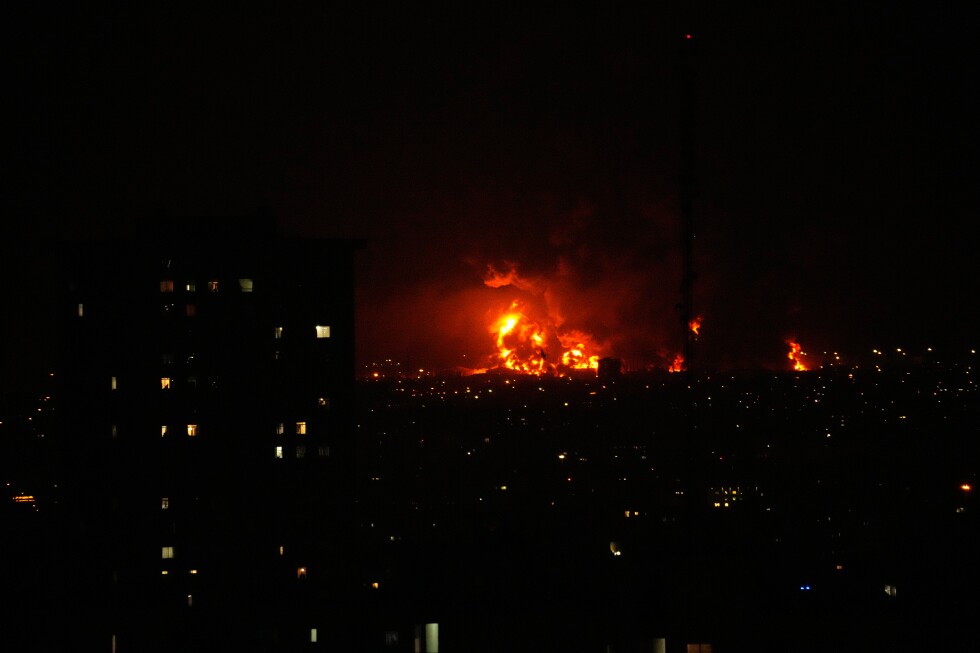
An overnight Israeli strike on an oil facility in Tehran blanketed Iran’s capital in thick smoke on Sunday. Simultaneously, Israel continued its offensive in Lebanon, where the death toll has now surpassed 300. President Donald Trump and Israeli Prime Minister Benjamin Netanyahu have both signaled their determination to continue the military campaign, which has sent shockwaves across the Middle East with no apparent resolution in sight.
Iranian President Masoud Pezeshkian adopted a more confrontational tone on Sunday, appearing to walk back conciliatory statements he made toward Gulf neighbors just a day earlier. “When we are attacked, we have no choice but to respond. The more pressure they impose on us, the stronger our response will naturally be,” Pezeshkian said in video comments. “Our Iran, our country, will not bow easily in the face of bullying, oppression or aggression — and it never has.”
The stark shift in rhetoric came shortly after Pezeshkian had expressed regret for regional concerns caused by Iranian strikes. His Saturday comments, which urged neighboring states not to participate in U.S. and Israeli actions against Iran, were quickly contradicted by Iranian hardliners, revealing apparent divisions within the leadership.
The conflict has claimed at least 1,230 lives in Iran, more than 300 in Lebanon, and approximately a dozen in Israel, according to official reports. Six U.S. troops have also been killed since hostilities began on February 28, when joint U.S.-Israeli strikes hit Iran. The escalating situation has disrupted global markets, affected international air travel, and significantly weakened Iran’s leadership structure following hundreds of coordinated strikes.
Iran’s judiciary chief Gholam Hossein Mohseni-Ejei publicly challenged Pezeshkian’s moderate stance, writing on social media: “The geography of some countries in the region — both overtly and covertly — is in the hands of the enemy, and those points are used against our country in acts of aggression. Intense attacks on these targets will continue.” Both officials serve on the three-member leadership council governing Iran since Supreme Leader Ayatollah Ali Khamenei was killed early in the conflict.
The desalination plant attack in Bahrain represents a concerning development in the targeting of vital civilian infrastructure. The island nation, which hosts the U.S. Navy’s Fifth Fleet, reported damage to the facility, though it did not indicate that water supplies had been disrupted. Bahrain has experienced multiple Iranian drone and missile strikes hitting hotels, ports, and residential areas, resulting in at least one fatality.
Iran claimed the attack was retaliation for a U.S. airstrike that damaged an Iranian desalination plant on Qeshm Island in the Strait of Hormuz. Foreign Minister Abbas Araghchi stated the American strike had cut water supplies to 30 villages, warning that “the U.S. set this precedent, not Iran.” Neither U.S. Central Command nor Israel’s military immediately commented on these allegations.
Tehran also reported that Israeli overnight strikes had hit four oil storage tankers and a petroleum transfer terminal, killing four people. Witnesses described smoke so thick from the north Tehran oil depot that it obscured the sunrise, prompting the city’s governor to advise residents to wear masks outdoors. Iranian officials assured the public that the country maintains sufficient fuel reserves despite the attacks.
In Lebanon, Israel renewed its bombardment early Sunday, with health officials reporting 12 additional deaths. Israel has ordered tens of thousands of people to evacuate large areas of the country, including parts of Beirut, ahead of an offensive aimed at eliminating Iran-backed Hezbollah forces. The Israeli military issued new evacuation orders for residents of southern Lebanon on Sunday morning.
This intensified offensive follows Hezbollah’s rocket attacks toward northern Israel during the war’s early days. The current campaign represents the most severe escalation since a November 2024 ceasefire. While Israel withdrew from most of southern Lebanon at that time, it continued limited strikes, primarily in the south, claiming Hezbollah was attempting to rebuild its positions.
Hezbollah stated last week that after more than a year of honoring the ceasefire while enduring continued Israeli strikes on Lebanon, its patience had run out, leaving it with “no option but to fight.”
As the conflict approaches its tenth day, regional tensions continue to escalate, with civilian infrastructure increasingly caught in the crossfire and both sides showing little willingness to de-escalate the situation.
Fact Checker
Verify the accuracy of this article using The Disinformation Commission analysis and real-time sources.

7 Comments
Attacks on civilian infrastructure like this desalination plant are extremely troubling and risk drawing this conflict into an even more dangerous phase. The priority now should be calming tensions through dialogue and diplomacy before the situation spirals further out of control.
While the details are still emerging, an attack on a desalination plant is a very concerning development that could exacerbate the ongoing tensions in the region. All sides should exercise maximum restraint and prioritize a diplomatic solution to de-escalate the situation.
This escalation, with Iran allegedly hitting a desalination plant in Bahrain, is deeply worrying. All parties involved need to step back, de-escalate, and focus on finding a diplomatic resolution to this crisis before it spirals into an even more dangerous confrontation.
The tit-for-tat attacks between Iran and Israel/US are deeply worrying. Civilian sites getting hit raises the specter of this conflict spiraling out of control. All parties need to step back and prioritize de-escalation through dialogue before things deteriorate further.
Well said. Hitting desalination plants could have severe humanitarian consequences, beyond just the strategic/military implications. Cooler heads must prevail to prevent this from escalating into an all-out regional conflagration.
Concerning developments in the Middle East. Attacking civilian infrastructure like desalination plants is an escalation that could further destabilize the region. All sides should exercise restraint and focus on diplomatic solutions to de-escalate tensions.
I agree, this type of attack on civilian targets is highly concerning and risks drawing the conflict into a more dangerous phase. Diplomatic efforts to find a peaceful resolution are crucial at this point.