


Listen to the article
China’s Crackdown on Same-Sex Romance Fiction Leaves Female Readers Bereft
For Cindy Zhong, a quiet evening once meant escaping into stories of romance between two men. Now, those stories and their creators are vanishing across China, victims of what fans describe as an unprecedented government crackdown.
The popular literary genre known as Danmei or “Boys Love” features male-male relationships and is primarily written and consumed by straight women. In recent months, Chinese authorities have interrogated, arrested, and charged dozens of writers with producing and selling “obscene materials,” according to media reports and online accounts.
“Chinese female readers can no longer find a safe, uncensored space to place our desires,” said Zhong, an educator in her 30s who has watched her favorite authors disappear from publishing platforms.
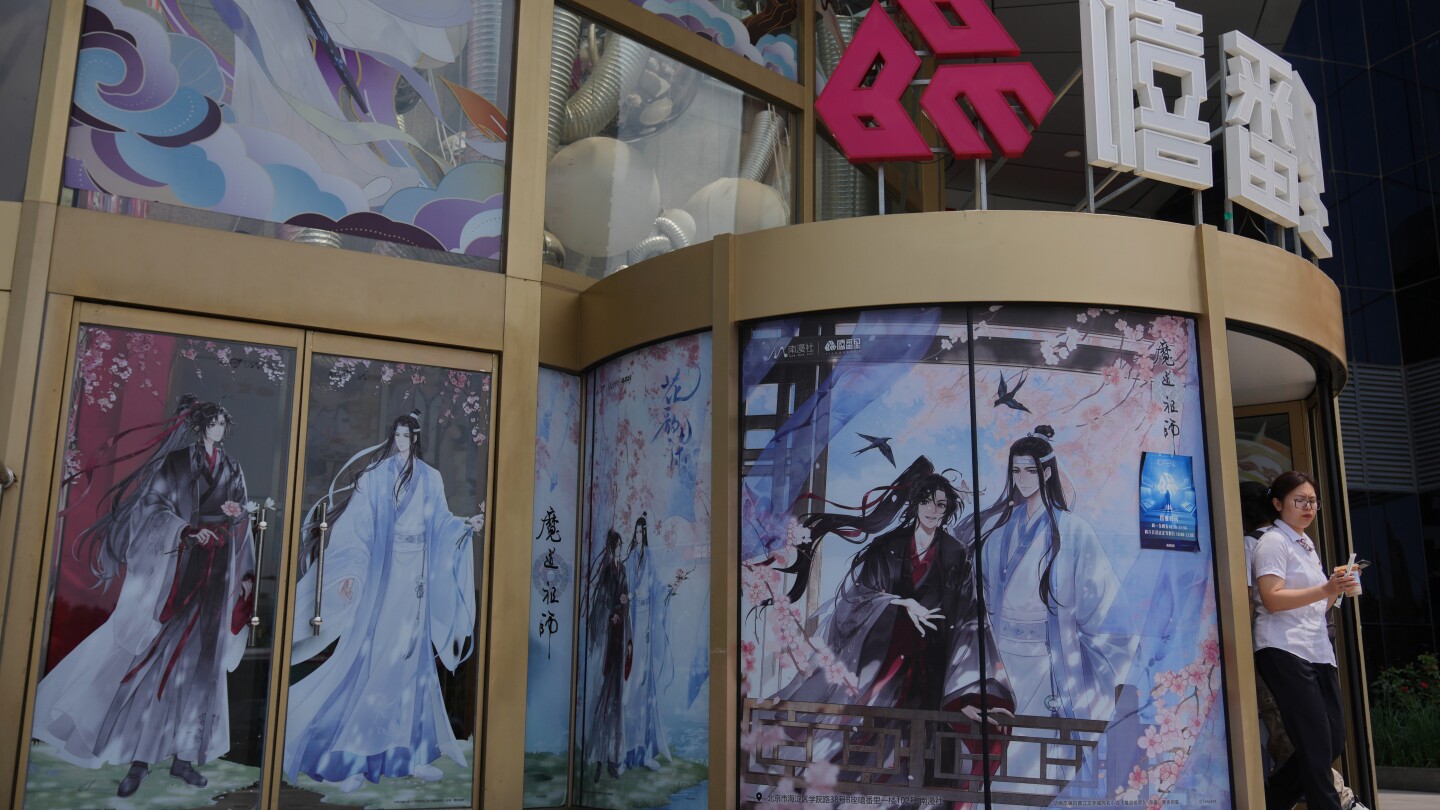
The crackdown affects a literary subculture that has exploded in popularity, with novels that have been adapted into blockbuster television series and translated internationally. Some of the most successful works, including “Heaven Official’s Blessing” and “Grandmaster of Demonic Cultivation,” have even made The New York Times paperback bestseller list.
Scholars suggest the genre’s appeal stems from how it allows women to reimagine relationships outside China’s conservative gender norms. “Women turn to Danmei for pure love, especially as they face pressure from families, peers and society to get married and have kids,” explains Aiqing Wang, a senior lecturer at the University of Liverpool specializing in Chinese popular culture.
The crackdown has forced writers to choose between self-censorship or abandoning their work altogether. Many have stopped publishing or removed their stories from online platforms. Major websites that hosted these works have either shut down or severely culled their libraries of content.
Haitang, a Taiwan-based platform for Danmei stories, temporarily closed in June before returning with significantly fewer works. The site warned writers not to continue creating content that doesn’t comply with laws in their location. Similarly, Sosad.fun, another popular platform with at least 400,000 registered readers, completely shut down in April.
The campaign against Danmei is part of a broader tightening of government control over LGBTQ+ content and communities in China. While homosexuality was removed from the country’s list of mental illnesses in 2001 and same-sex relationships are not criminalized, authorities have shuttered rights groups and social media accounts focused on LGBTQ+ issues.
Zou Xuan, a teacher who wrote Danmei stories for a decade, described the creative liberation the genre provided: “When I was writing, I felt so powerful that I could create a world.”
The stories themselves vary widely—from chaste, flowery romances to explicitly erotic tales. They often feature traditional settings with men “fighting with a sword and a flute in ethereal ancient costumes” or contemporary scenarios that readers find emotionally fulfilling.
“Danmei is a utopian existence,” explains Chen Xingyu, a 32-year-old freelance teacher in Kunming. “I would be less happy without it.”
The genre has also built a substantial international readership. Kayla McHenry, who works at a law firm in Pennsylvania, appreciates the stories’ “very flowery and poetic” language in translation.
Yet one of the genre’s most celebrated authors, Yuan Yimei (known by her pen name Mo Xiang Tong Xiu), faced legal consequences for her work. She was sentenced in 2020 to three years in prison for “illegal business operation” after selling self-published Danmei books, though she was released on parole the following year.
Reports have emerged of writers being detained and questioned by police in Lanzhou city, expressing fear that criminal records could destroy their futures. However, officials at the Lanzhou Public Security Bureau declined to comment on these cases, saying they remain under investigation.
The crackdown’s effects extend beyond mainland China. Even in Taiwan, websites hosting these stories have implemented stricter content policies.
Despite the restrictions, dedicated readers continue searching for authentic Danmei content. Some authors have begun publishing abroad, with readers smuggling physical books or digital files back into China through informal channels. Others have turned to translated Japanese or Korean comics as alternatives.
Experts suggest that while the government can restrict content, the cultural shift in women’s literary desires is irreversible. As Xi Tian, an associate professor of East Asian Studies at Bucknell University notes: “The awakening of female consciousness, the desire of reading and not being ashamed of what they want to read is irreversible.”
Fact Checker
Verify the accuracy of this article using The Disinformation Commission analysis and real-time sources.

9 Comments
It’s unfortunate to see the Chinese government clamping down on Danmei fiction, a genre that has brought joy and fulfillment to many female readers. While they may have their reasons, this move appears heavy-handed and risks alienating an important segment of the population.
I’m curious to learn more about the specific reasons behind China’s crackdown on Danmei fiction. Is this part of a broader effort to censor LGBTQ+ themes, or are there other factors at play? Regardless, the impact on female fans appears quite severe and concerning.
This crackdown on Danmei fiction in China is disappointing to see. These stories have provided an important space for female readers to explore romantic ideals. Shutting down this genre seems like an overly heavy-handed response that could backfire.
This is a concerning development for fans of Chinese Danmei fiction. The government’s crackdown on same-sex romance stories seems to be stifling a popular literary genre and the creative expression of female readers. I hope the authorities reconsider this heavy-handed approach.
The crackdown on Danmei fiction in China is a concerning development for fans of this creative genre. While the government may have its reasons, the impact on female readers who have found joy and fulfillment in these stories is quite severe. A more nuanced approach could be warranted.
The Danmei genre provides an important outlet for female readers in China to explore romantic ideals. While the government may have concerns, shutting down this subculture seems like an overreaction that could backfire. Creative writers and their readers should have more freedom of expression.
The popularity of Danmei fiction highlights the strong demand among Chinese women for romantic stories featuring same-sex relationships. This crackdown seems to ignore that fundamental market reality and the creative potential of the genre.
The Danmei genre has resonated with Chinese women for a reason. By targeting these stories, the government may be underestimating the depth of the demand and the importance of this creative outlet. A more nuanced approach could be warranted.
While I understand the Chinese government may have ideological objections to Danmei fiction, shutting down this creative outlet for female readers feels misguided. These stories provide an important fantasy space that shouldn’t be so heavily policed.