


Listen to the article
Hundreds of climbers face delays on Mount Everest due to dangerous ice block, officials say
Hundreds of climbers and their guides have been forced to delay their attempts to scale Mount Everest after a massive ice block was discovered on the route just above the base camp, Nepalese officials announced Friday.
The unstable serac—a large block of glacial ice—poses significant risks to climbers traversing between base camp and Camp One, according to Himal Gautam of Nepal’s Department of Mountaineering. The dangerous conditions have created a bottleneck at the beginning of the spring climbing season, with hundreds of mountaineers now waiting at base camp.
“The risk of avalanche is high,” explained Lama Kazi Sherpa, Chairman of the Sagarmatha Pollution Control Committee, which oversees safety measures on the mountain. The committee plans to conduct an aerial survey to assess the serac and is currently waiting for it to naturally melt to safer levels before allowing climbers to proceed.
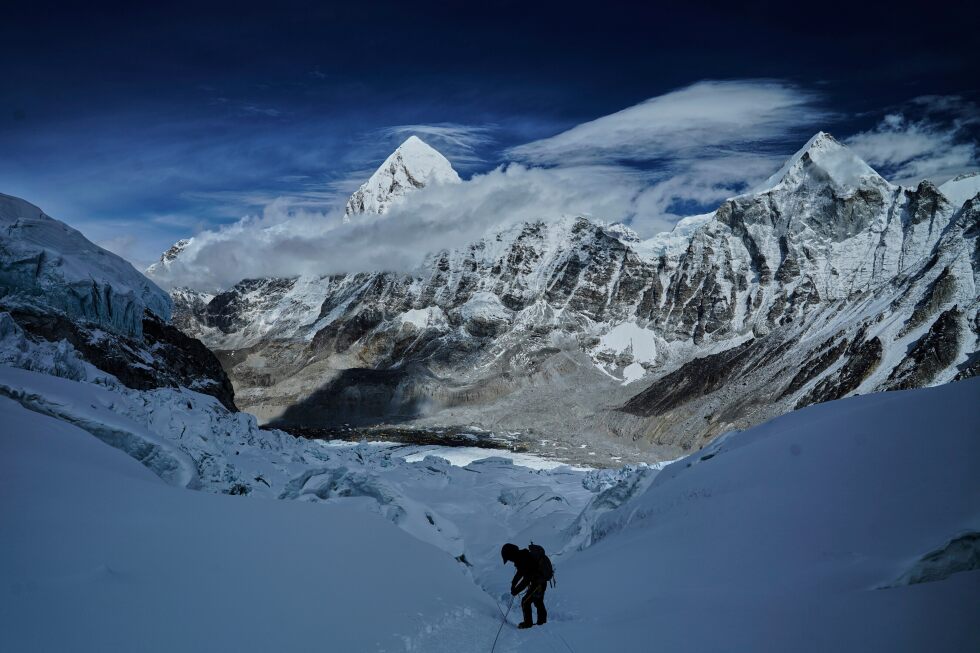
The affected area is part of the notorious Khumbu Icefall, widely considered one of the most treacherous sections of the Everest climb. This constantly shifting glacier features deep crevasses and towering ice formations that can reach the height of 10-story buildings. Navigating through this unstable terrain has historically been one of the most challenging and dangerous aspects of scaling the world’s highest peak.
The current situation has disrupted the normal preparation schedule for the climbing season. Typically, a specialized team known as the “Icefall Doctors”—elite Sherpa guides who establish the yearly climbing route by setting ropes and securing aluminum ladders over crevasses—complete their work by mid-April. Their preparations are essential for the hundreds of climbers who attempt to reach the summit during the brief windows of favorable weather in May.
This year’s delay serves as a stark reminder of the inherent dangers of Everest expeditions. The Khumbu Icefall has been the site of numerous tragedies throughout climbing history, including one of the deadliest disasters in 2014 when a portion of the glacier broke away, triggering an avalanche that killed 16 Sherpa guides as they transported equipment for clients.
The spring climbing season, which runs through the end of May, had already seen significant interest this year. The Nepalese authorities have issued 410 permits to foreign climbers hoping to attempt the summit, with each climber typically accompanied by at least one local guide, meaning potentially over 800 people could be attempting the climb in the coming weeks.
Mount Everest, standing at 8,849 meters (29,032 feet), remains the ultimate achievement for many mountaineers, despite its well-documented risks. Since it was first successfully climbed on May 29, 1953, by New Zealander Edmund Hillary and Sherpa guide Tenzing Norgay, thousands have reached its summit.
The current delay highlights the ongoing challenges of managing Everest expeditions amid increasing commercial interest in recent decades. The mountain has seen growing crowds in favorable weather windows, raising concerns about safety and environmental impact. Climbing permits represent a significant source of revenue for Nepal, with each foreign climber paying $11,000 for permission to attempt the summit.
As officials work with expedition organizers to monitor the dangerous ice formation, climbers at base camp face an uncertain wait. The situation underscores the unpredictable nature of high-altitude mountaineering, where human ambition must ultimately defer to the power and unpredictability of nature.
Fact Checker
Verify the accuracy of this article using The Disinformation Commission analysis and real-time sources.

16 Comments
Interesting development at the Everest base camp. This unstable ice block poses a significant safety risk for climbers. It’s wise for the authorities to thoroughly assess the situation before allowing any further progress up the mountain.
Safety should always be the top priority on Everest. Glad the officials are taking a cautious approach to mitigate the avalanche risk.
This ice block delay is a sobering reminder of the risks and challenges faced by Everest climbers. I commend the officials for taking a cautious approach and prioritizing the safety of all involved.
Mountaineering on Everest requires the utmost preparation and vigilance. I hope the authorities are able to find a safe solution to this obstacle in the coming days.
The Khumbu Icefall is notoriously treacherous, and this latest obstacle is a stark reminder of the challenges faced by Everest climbers. I hope the authorities can find a safe solution to clear the route soon.
Climbing Everest is an incredible feat of human endurance and determination, but it’s crucial that proper safety measures are in place. This ice block delay is an unwelcome setback.
It’s good to see the officials taking this issue seriously and conducting a thorough assessment before allowing climbers to proceed. Mountaineering on Everest requires the utmost caution and preparedness.
This ice block delay is frustrating for the climbers, but safety has to come first. Hopefully, the authorities can find a way to safely clear the route in the coming days.
The Khumbu Icefall is notoriously dangerous, and this latest development underscores the need for meticulous planning and risk assessment on Everest. I’m curious to see how the authorities will address this challenge.
Climbing Everest is an incredible feat of human endurance and determination, but safety must always be the top priority. I hope the officials can find a way to safely clear the route and allow the climbing season to proceed.
This ice block delay is a stark reminder of the unpredictable and dangerous nature of climbing Everest. I commend the officials for taking a cautious approach and prioritizing the safety of the climbers and their guides.
It’s essential that the authorities conduct a thorough assessment of the situation before allowing climbers to proceed. Mountaineering on Everest requires extreme caution and preparation.
The Khumbu Icefall is always a major challenge for Everest climbers, and this latest obstacle adds another layer of complexity. I’m curious to see how the authorities plan to address the situation and ensure the safety of all involved.
Waiting at base camp must be incredibly difficult for the climbers, but their safety is paramount. I hope the officials can find a solution that allows the climbing season to proceed without undue risk.
The Khumbu Icefall is always a major challenge, and this latest obstacle underscores the importance of proper risk assessment and safety protocols on Everest. I’m curious to see how the authorities will address this issue.
Waiting at base camp must be incredibly frustrating for the climbers, but safety has to come first. I hope the officials can find a solution that allows the climbing season to proceed as safely as possible.