


Listen to the article
Viral conspiracy theories linking Patagonian wildfires to Israel gain traction on social media, drawing condemnation from Jewish organizations who call the claims anti-Semitic.
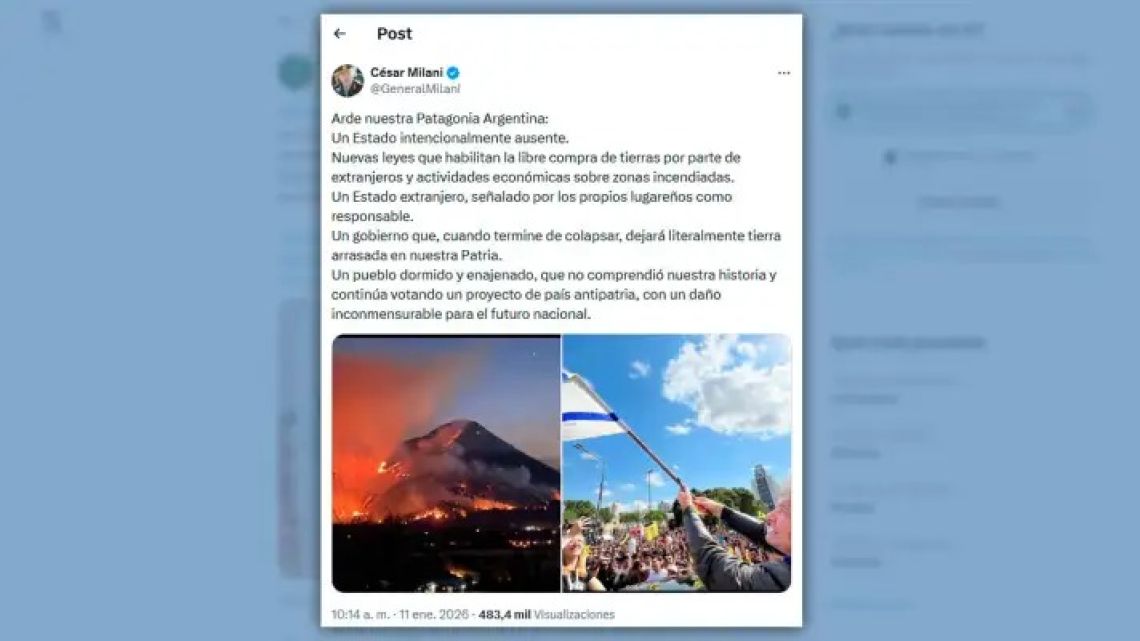
Social media platforms have been flooded with messages falsely attributing the devastating forest fires in Argentina’s Patagonia region to alleged Israeli interests, reviving long-standing conspiracy theories that have circulated in the region for decades.
Posts declaring “I want the Jews out of my country” and “the Israelis are burning Patagonia” have spread rapidly across multiple platforms in Spanish and at least five other languages, according to monitoring groups. The inflammatory content has prompted swift rebuttals from Jewish organizations throughout Argentina.
The fires, which have destroyed more than 15,000 hectares of land to date, were indeed deliberately set, according to Argentine authorities. However, officials have not yet identified those responsible for the blazes.
“As for the perpetrators, we still don’t know,” confirmed Carlos Díaz Mayer, a prosecutor from Chubut Province, in a statement on Tuesday.
Despite the lack of evidence, social media posts linking the fires to foreign—particularly Israeli—interests have multiplied exponentially. Many messages attempt to connect the wildfires to ongoing political debates regarding potential changes to laws governing rural land ownership by foreigners and non-residents, as well as regulations concerning the future use of fire-damaged areas.
One widely circulated false claim features a photo of a grenade that users assert is of Israeli origin and was used to ignite the fires. Authorities in Chubut have debunked this assertion, confirming that the explosive device pictured was discovered in December and manufactured by Argentina’s national military production company, Fabricaciones Militares.
The Argentine Zionist Organization issued a formal statement on Monday categorically denying Israeli involvement in the fires and denouncing the claims as part of a broader conspiracy theory. The organization expressed particular concern about the “reappearance of the so-called ‘Plan Andinia,’ an anti-Semitic libel with no historical or political basis.”
This conspiracy theory, which alleges that Israel intends to establish a Jewish state in Patagonia, first emerged in the 1960s and gained significant traction during the 1970s. According to Ernesto Bohoslavsky, a historian with Argentina’s CONICET scientific research institute, the theory has its roots in the notorious anti-Semitic text “The Protocols of the Elders of Zion,” a fabricated document from the late 19th century that falsely claims to outline Jewish plans for global domination.
“These types of narratives, which seem to explain complex processes very simply, are particularly appealing, especially in the social media landscape,” Bohoslavsky explained. “The story is always being updated. In 2001-2002, for example, there was a version that Argentina was going to sell part of Patagonia to pay off its foreign debt.”
The resurgence of these theories comes at a time of heightened political tension in Argentina, with debates about foreign land ownership intensifying under the new administration. The Patagonia region, known for its stunning natural beauty and vast, sparsely populated territories, has long been the subject of speculation regarding international interests.
Mauro Berenstein, president of DAIA (Delegación de Asociaciones Israelitas Argentina), a prominent Jewish community organization, warned this week that making accusations without evidence “reinforces an anti-Jewish narrative and hatred.” In a post on X (formerly Twitter), Berenstein called for responsible discourse and fact-based investigation into the causes of the fires.
The spread of these conspiracy theories highlights the persistent challenge of combating misinformation in crisis situations, particularly when such content intersects with historical prejudices. Argentine authorities continue their investigation into the actual causes of the fires, while community leaders urge vigilance against the spread of harmful and unfounded claims.
Fact Checker
Verify the accuracy of this article using The Disinformation Commission analysis and real-time sources.

5 Comments
While the origin of the Patagonia wildfires remains unclear, any attempt to scapegoat the Jewish community is completely unacceptable. Authorities should work swiftly to identify the true culprits and ensure accountability, rather than allow these dangerous conspiracy theories to gain traction.
It’s deeply troubling to see the Patagonia wildfires being exploited to promote anti-Semitic conspiracy theories. Authorities must thoroughly investigate the fires and their causes, and social platforms should work to limit the spread of this dangerous misinformation.
The spread of these false claims linking the Patagonia fires to Israel is deeply concerning. Social media platforms must do more to combat the rapid spread of misinformation that can incite hatred and prejudice. Accurate, fact-based reporting is crucial in times of crisis.
Tragic that the Patagonia wildfires have sparked such harmful anti-Semitic rhetoric. Spreading unsubstantiated conspiracy theories helps no one and only breeds more division. Authorities should focus on investigating the actual causes and perpetrators responsibly.
Blaming Israel for the Patagonia fires without evidence is an irresponsible and harmful tactic. These anti-Semitic claims only serve to inflame tensions and distract from the real issues at hand. I hope social media companies and local leaders can counter this misinformation effectively.