


Listen to the article
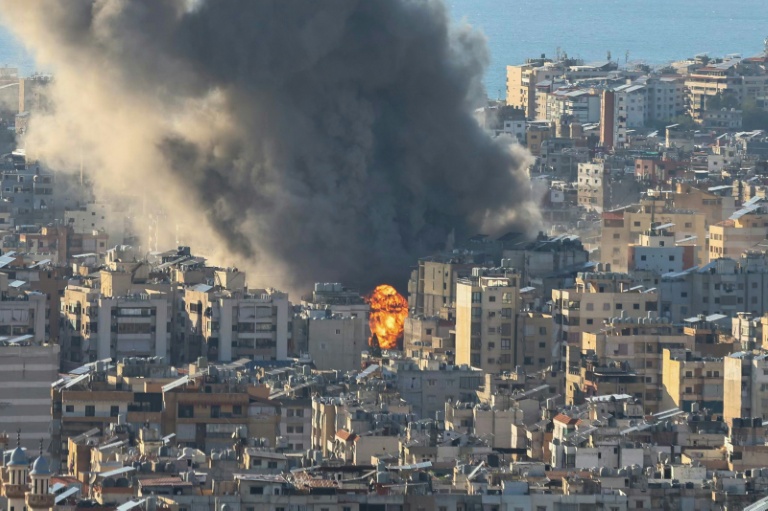
The digital battleground for truth has become as contested as the physical conflict itself in the Middle East, with social media platforms flooded with fabricated content designed to manipulate public perception of the escalating hostilities between the US-Israel coalition and Iran.
Since the US and Israeli strikes triggered a wider regional conflict, a sophisticated information war has developed in parallel, with supporters on both sides disseminating false narratives that often gain traction faster than verified reports from the ground.
Fact-checkers from AFP have identified numerous instances of pro-Iranian accounts recycling old footage to exaggerate the impact of Tehran’s missile strikes on Israel and Gulf states including the UAE and Saudi Arabia.
“There is definitely a narrative war unfolding online,” said Moustafa Ayad from the Institute for Strategic Dialogue (ISD) in a statement to AFP. “Whether it was to rationalize the strikes across the Gulf, or to trumpet Iranian military might in the face of the Israeli and US strikes, the goals seem to be wear down ‘enemies.'”
The disinformation campaign cuts both ways. Iranian opposition media outlets have pushed false narratives on platforms like X (formerly Twitter) and Telegram, erroneously attributing a missile strike on an Iranian girls’ school to the Iranian government itself, according to researchers.
ISD researchers have also identified fake social media accounts impersonating senior Iranian leadership, further complicating the information landscape.
Perhaps most concerning is the proliferation of entirely fabricated visual content. Footage from video games repurposed as authentic combat footage and AI-generated images showing the destruction of US naval assets, including the USS Abraham Lincoln, have collectively garnered over 21.9 million views on X alone, according to data from the disinformation watchdog NewsGuard.
“It is really the speed and scale of these representations that is astounding, driving much of the online confusion of what has been targeted, or casualty counts for instance,” Ayad explained.
In response to the growing crisis of authenticity, X announced Tuesday that it would suspend creators from its revenue sharing program for 90 days if they post AI-generated videos of armed conflicts without proper disclosure. This represents a significant policy shift for the platform, which has faced persistent criticism for its content moderation approach since Elon Musk’s $44 billion acquisition in October 2022.
“During times of war, it is critical that people have access to authentic information on the ground,” said X’s head of product Nikita Bier, acknowledging that current AI technologies make it “trivial to create content that can mislead people.”
Ari Abelson, co-founder of OpenOrigins, a media authenticity company specializing in combating deepfakes, described the situation starkly: “The fog of war is quickly becoming the slop of war as AI synthetic content creates infinite noise in information ecosystems.”
The reliability of verification tools themselves has come under scrutiny. A NewsGuard study revealed that Google’s reverse-image search tool has produced inaccurate AI-generated summaries of fabricated visuals related to the Middle East conflict, exposing “a significant weakness in a widely used system for verifying the authenticity of images.”
Google has not yet commented on these findings.
The online information war has developed against the backdrop of rapid escalation in the physical conflict. The United States and Israel launched their assault on Saturday, resulting in the death of Iran’s supreme leader, Ayatollah Ali Khamenei. This attack came just two days after US representatives had engaged in diplomatic talks with Iran in Geneva regarding a nuclear accord.
In the days since, Iran has expanded its retaliatory missile and drone offensive across the Middle East, targeting a US consulate and military base on Tuesday. The United States and Israel have reported striking key sites within Tehran in response.
As the regional conflict intensifies, the battle for control over the narrative continues to rage in the digital sphere, with truth increasingly becoming a casualty of war.
Fact Checker
Verify the accuracy of this article using The Disinformation Commission analysis and real-time sources.

10 Comments
This ‘digital battleground for truth’ is a concerning development. The rapid spread of false narratives, whether pro-Iranian or pro-US/Israeli, undermines public understanding of the complex realities on the ground.
Absolutely. It’s a sobering reminder of how social media can be weaponized to amplify disinformation and erode trust in reliable information sources. Vigilance is needed to counter these trends.
The disinformation campaigns on both sides of this conflict highlight the need for greater media literacy and critical thinking. Verifying sources and cross-checking facts should be a priority for anyone trying to stay informed.
Well said. Equipping the public with the skills to discern truth from fiction is crucial in the face of such a sophisticated ‘narrative war’ unfolding online.
This ‘digital battleground’ is a troubling development. The ability of both sides to disseminate disinformation highlights the need for greater transparency and accountability in online information sharing.
Absolutely. Social media platforms must take stronger action to curb the spread of fabricated content, while users need to be more discerning consumers of information.
The ‘narrative war’ around the Middle East conflict highlights how social media can be abused to spread disinformation. It’s crucial to rely on verified reports rather than unsubstantiated claims from either side.
Agreed. Fact-checking is essential to cut through the flood of fabricated content designed to manipulate perceptions. Maintaining objectivity is key in such a charged geopolitical environment.
It’s concerning to see how quickly fabricated content can gain traction on social media, even in the context of a complex geopolitical conflict. Fact-checkers play a vital role in debunking these false narratives.
The proliferation of false narratives around the Middle East conflict is a worrying symptom of the broader problem of disinformation on social media. Maintaining a clear-eyed, evidence-based understanding is crucial.