


Listen to the article
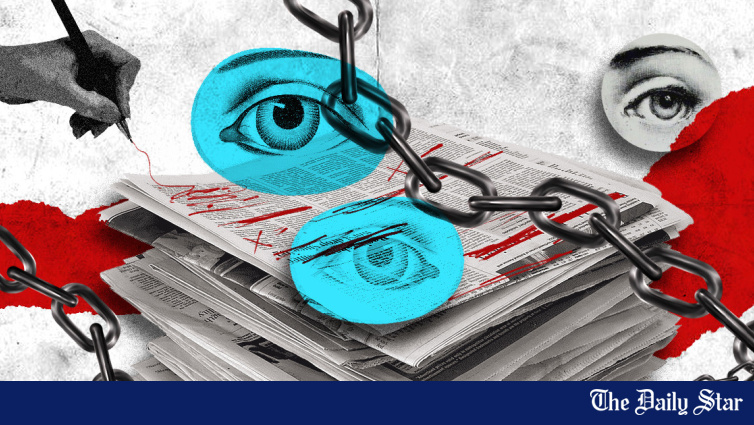
In an age of digital manipulation and state control of media, two researchers have uncovered alarming trends in how governments worldwide are engineering alternative realities for their citizens. Martin Moore and Thomas Colley, authors of the forthcoming book “Dictating Reality: The Global Battle to Control the News,” recently shared insights from their extensive research on government media manipulation strategies.
Their investigation began during the 2020 U.S. presidential election when they examined how Russian and Chinese state media covered Donald Trump’s claims of election fraud. As their research expanded during the COVID-19 pandemic, they observed a disturbing pattern: democratic governments increasingly adopting authoritarian news control techniques.
“We were struck by how many democracies were using authoritarian news control techniques—censorship, taking control of state media, attacking journalists, and limiting funding and access only to pro-government outlets,” explained Moore in an interview with The Daily Star.
The researchers discovered that beyond simple misinformation, governments worldwide are constructing entirely different realities for their citizens. Russia frames its invasion of Ukraine as liberation from fascism, while China portrays itself not as an authoritarian state but as the world’s leading democracy. In democracies like the United States and Brazil, political figures have fostered divisive alternate realities where they alone can “save democracy.”
This shift represents a fundamental change in democratic norms regarding media relations. Where democratic governments once accepted media scrutiny as essential to accountability, many now actively undermine and bypass traditional news outlets. The Trump administration banned certain outlets from White House briefings and sued others. In the UK, successive governments have questioned the BBC’s impartiality while cutting its funding.
Digital technology, while not the root cause, has enabled this authoritarian turn. Social media platforms allow leaders to communicate directly with supporters, bypassing journalistic scrutiny. Brazil’s former president Jair Bolsonaro largely ignored mainstream media, building his own information ecosystem on social media platforms. India’s Prime Minister Narendra Modi rarely holds press conferences, preferring controlled communication through social media and supportive television channels like Republic TV.
The researchers explain that these tactics aren’t entirely new. “There is a significant overlap, as we are essentially describing the spread of authoritarian propaganda techniques in democracies, accelerated by the technologies of the digital age,” said Colley. Leaders like Hungary’s Viktor Orbán and India’s Modi employ the century-old propaganda technique of stoking fear about enemies, presenting themselves as saviors.
What makes today’s manipulation particularly effective is the intersection of these tactics with digital platforms designed to maximize engagement rather than truth. Social media algorithms amplify provocative, emotional content regardless of accuracy. During Brazil’s 2022 election, both major candidates used thousands of WhatsApp groups to distribute targeted messages to followers, creating sealed information environments.
Citizens believe these alternative realities for several reasons. Many simply never encounter contradicting evidence in their personalized information environments. Others no longer trust traditional information sources after sustained attacks on their credibility. And perhaps most powerfully, these alternative narratives offer simplicity and belonging in a complex world.
“It is easier to blame a single ethnic minority for a country’s problems than recognize the complex issues societies face,” Moore explained. “It is more appealing to believe your country is defending others, not attacking them; that your country is right and others are wrong.”
For journalists operating in this environment, resistance is increasingly difficult but essential. The researchers point to Russian journalists who continue to produce fact-based reporting for Russian audiences despite being expelled from their country. They also highlight the importance of fact-checking networks, despite financial pressures and diminishing support from major platforms like Meta and X.
Moore and Colley emphasize that the semi-constitutional role of journalism as a democratic “Fourth Estate” will not survive without active defense. They advocate for a broader societal recognition that our knowledge institutions are being fundamentally reshaped in the digital age.
“As civil society, we must recognize that unless we participate in the reinvention of these institutions, they will not remain authoritative and credible,” Colley stated, referencing Jonathan Rauch’s concept of the “constitution of knowledge”—the methods societies have developed to establish verifiable truth through science, academia, justice, and journalism.
With their book set for publication in 2025, Moore and Colley’s research serves as a warning about the fragility of shared reality in modern democracies and the increasing convergence of authoritarian and democratic media control techniques in the digital age.
Fact Checker
Verify the accuracy of this article using The Disinformation Commission analysis and real-time sources.

9 Comments
The researchers raise important points about the rise of authoritarian news control tactics, even in democratic nations. This highlights how fragile press freedoms can be and the need for robust media literacy efforts.
Yes, it’s a troubling trend that deserves greater attention. Empowering citizens to critically evaluate information sources and detect disinformation is crucial to maintaining an informed populace.
The insights shared here are deeply troubling. The ability of governments to engineer alternative realities through media control poses grave risks to informed public discourse and participatory democracy. Urgent action is needed to address this issue.
This article underscores the complex challenges we face in the digital age when it comes to information control and manipulation. Finding the right balance between free speech and media integrity will be an ongoing struggle.
Fascinating look at how governments manipulate public perception through media control. This is a concerning trend that undermines democratic values and transparency. I wonder what policy solutions could help combat this issue while preserving free speech.
This is a sobering read. The ability of authoritarian regimes to craft alternative realities for their citizens through media control is truly alarming. It’s crucial that we find ways to promote media integrity and fact-based reporting globally.
Agreed. Strengthening journalistic independence and public access to diverse, objective news sources should be a priority. Safeguarding democratic institutions against such manipulation is essential.
The researchers’ findings on authoritarian news control tactics being adopted by democratic governments is very concerning. Upholding press freedoms and media pluralism should be a top priority for safeguarding democratic principles.
While the details on governments constructing alternative realities are disturbing, I appreciate the researchers shining a light on this issue. Maintaining an accurate, fact-based public discourse is vital for democracy.