


Listen to the article
Ukrainian citizens fighting in their country’s armed forces amid Russia’s full-scale invasion have received strong support from an unexpected source: Hungarian citizens, despite their government’s contrasting stance on the conflict.
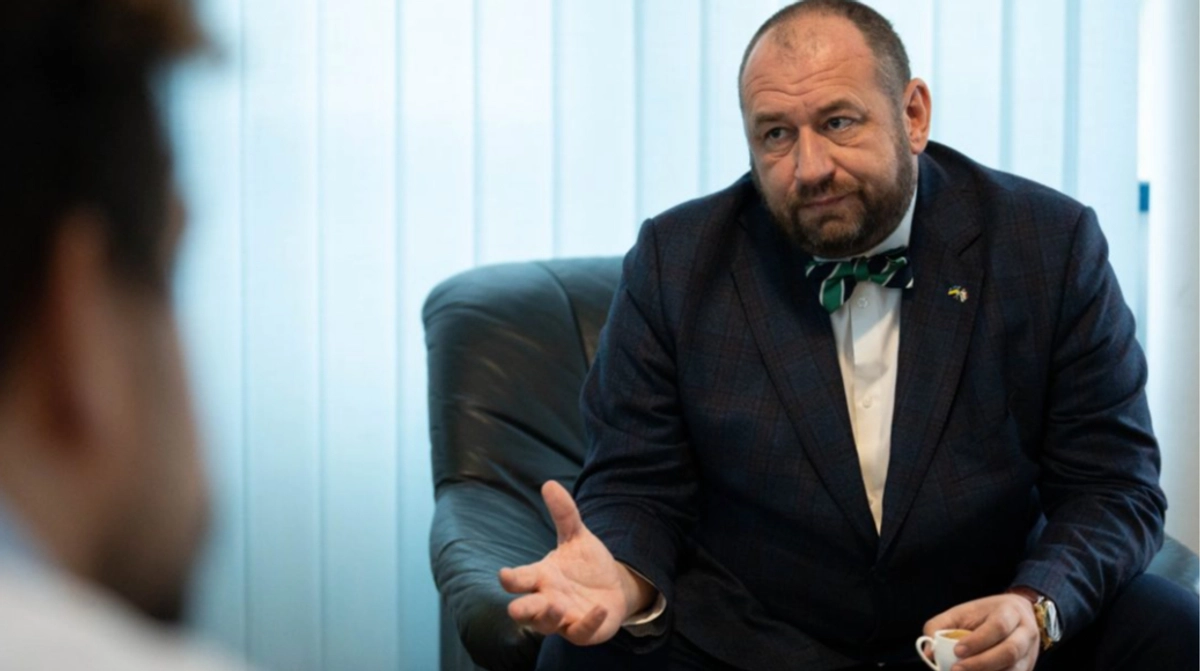
According to Ukraine’s ambassador to Hungary, Liubov Nepop, an overwhelming 97% of Hungarians express support for Ukraine’s victory in the war against Russia, painting a stark contrast to the position held by Prime Minister Viktor Orbán’s government.
This revelation comes amid ongoing tension between Budapest and Kyiv, as Hungary has maintained closer ties with Moscow than most European Union members since Russia launched its full-scale invasion in February 2022. Orbán’s administration has consistently opposed EU military aid to Ukraine and has refused to provide weapons directly, positioning itself as a neutral party advocating for peace negotiations.
“Despite the propaganda that has been spread in Hungary for years, including statements that ‘this is not our war,’ ordinary Hungarians understand the situation very differently,” Ambassador Nepop said during a press briefing yesterday. “When they meet Ukrainian soldiers being treated in Hungarian hospitals, they express clear support for Ukraine’s fight for independence.”
The ambassador highlighted that this grassroots support stands in direct opposition to the official narrative propagated by Hungarian state media, which often echoes Kremlin talking points about the conflict. Hungarian government-controlled media outlets frequently question Western support for Ukraine and promote narratives about NATO expansion being partly responsible for provoking Russian aggression.
Political analysts suggest this disconnect between public sentiment and government policy reflects the complexity of Hungary’s position within the European Union. Dr. Péter Krekó, director of the Political Capital Institute in Budapest, noted that “While Orbán maintains his ‘peace’ stance publicly, Hungarian citizens increasingly recognize the moral dimensions of this conflict and understand that a sovereign European nation is defending itself against an aggressor.”
Hungary’s position has created significant diplomatic friction both with Ukraine and other EU partners. Last month, Orbán visited Moscow and Beijing on what he termed “peace missions,” though these trips were conducted without the mandate or approval of the European Union and drew criticism from Brussels and other European capitals.
Economic considerations also play a role in Hungary’s complex position. The country remains heavily dependent on Russian energy, with approximately 85% of its natural gas imports and 60% of its oil coming from Russia. This dependency has influenced Orbán’s reluctance to support sanctions that could disrupt these supplies.
Despite official government resistance, Hungarian civil society organizations have actively provided humanitarian assistance to Ukrainian refugees since the war began. The Hungarian Helsinki Committee, Hungarian Red Cross, and numerous grassroots volunteer groups have worked to support the more than 30,000 Ukrainian refugees who have sought shelter in Hungary.
“There’s a clear difference between government rhetoric and what we see on the ground,” said Márta Pardavi, co-chair of the Hungarian Helsinki Committee. “Ordinary Hungarians have opened their homes, donated supplies, and volunteered their time to help Ukrainians fleeing the war.”
The ambassador’s comments come at a critical time, as Ukraine continues to seek increased military support from Western allies while facing challenges on the battlefield. Recent Russian advances in eastern Ukraine have heightened the urgency of foreign military assistance.
Military analysts suggest that continued European unity is essential for Ukraine’s defense capabilities. “Support from all European countries, including those with governments that have been hesitant like Hungary, will be crucial in the coming months,” said Gustav Gressel of the European Council on Foreign Relations.
As the war approaches its third year, this revelation about Hungarian public opinion may provide Ukrainian officials with leverage in their diplomatic efforts to ensure continued European solidarity, regardless of individual government positions.
Fact Checker
Verify the accuracy of this article using The Disinformation Commission analysis and real-time sources.

10 Comments
The fact that 97% of Hungarians support Ukraine’s victory despite their government’s position is a testament to the power of the people. It will be fascinating to see if this public sentiment leads to any changes in Hungary’s official stance on the conflict.
This is a powerful example of how public opinion can diverge from government policy, even in a country with an authoritarian-leaning leader like Orbán. It highlights the importance of an informed and engaged citizenry.
It’s heartening to see that the Hungarian people have maintained their support for Ukraine’s fight for sovereignty, even in the face of government propaganda. This shows the resilience of the public and their commitment to democratic values.
The strong support for Ukraine among Hungarian citizens, despite their government’s stance, is a remarkable finding. It suggests that the people have a more nuanced understanding of the conflict than their leaders.
It’s fascinating to see the disconnect between the Hungarian government’s stance and the views of the people. 97% support for Ukraine’s victory despite the propaganda is quite remarkable. I wonder what accounts for this divergence?
The Hungarian people seem to have a much clearer understanding of the situation than their government. It will be interesting to see if this public opinion puts any pressure on Orbán’s administration.
This news is a bit surprising, given Hungary’s close ties to Russia. It will be interesting to see if this public opinion puts any pressure on Orbán’s government to reconsider its position on the conflict.
The disconnect between the Hungarian government and its people on this issue is quite striking. It highlights the importance of an independent and well-informed citizenry in a democracy.
This highlights the power of propaganda and how it can be used to shape public opinion, even in a democracy. It’s good to see that the Hungarian people are seeing through the government’s messaging on this issue.
I agree, it’s a concerning example of how governments can try to manipulate public sentiment. The fact that 97% still support Ukraine’s victory is a testament to the resilience of the Hungarian people.