


Listen to the article
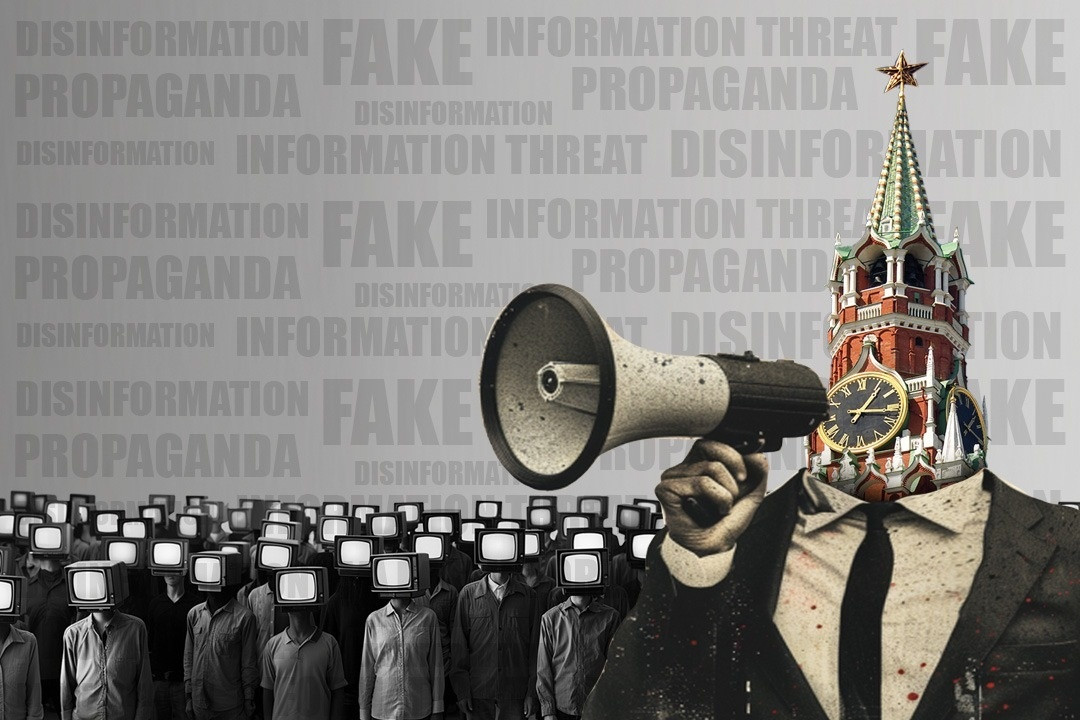
The Russian disinformation machine has found a new foothold in Slovenia through the website Insajder.com, which has emerged as a significant conduit for Kremlin propaganda despite EU-wide bans on Russian state media.
According to a report by The Insight News Media, the Slovenian website has achieved remarkable penetration in the small European nation, garnering approximately 1.6 million views between September and October 2025. This figure represents an extraordinary reach in a country with just 2.1 million inhabitants, putting the site on par with Slovenia’s mainstream media outlets in terms of readership.
The website’s success stems partly from search engine algorithms, with 44% of its traffic coming from platforms like Google, which frequently ranks its misleading content high in search results for common news queries. This algorithmic boost has amplified the site’s influence beyond what might be expected for a fringe publication.
Insajder.com presents itself as a patriotic “alternative news” source while systematically recycling Kremlin narratives about the invasion of Ukraine. The site has become a textbook example of Russia’s adapted disinformation strategy, which now operates through local, Kremlin-friendly proxies to circumvent EU sanctions against Russian state media.
The website’s content is characterized by particularly aggressive visual disinformation. European Commission President Ursula von der Leyen has been depicted with her face merged with Adolf Hitler’s in Nazi imagery, while French President Emmanuel Macron frequently appears as a clown. Media analysts describe these graphics as “deliberate forms of visual disinformation” designed to provoke emotional responses and undermine the legitimacy of European leaders.
Insajder’s editorial direction closely mirrors official Russian state messaging under the guidance of editor-in-chief Igor Mekina and editor Svetlana Vasović-Mekina, who reportedly also writes under the pseudonym Anja Klein. Their articles routinely employ Kremlin terminology, referring to Ukrainian authorities as the “Kyiv regime” and consistently describing Russia’s full-scale invasion as a “special military operation.”
In one post, Igor Mekina attacked Western media for supposedly “lying” about the war, while in other articles, he has used derogatory language against European leaders, calling Ursula von der Leyen the “unelected top European gynecologist.” Similarly, Svetlana Vasović-Mekina has pushed debunked conspiracy theories, including false claims that Ukraine was responsible for downing flight MH17, and has praised Russian extremist ideologist Alexander Dugin.
The site employs a sophisticated “circular citation” method that effectively launders Kremlin narratives. Insajder quotes banned Russian outlets like RT and RIA Novosti for its Slovenian audience. Subsequently, Russian-language media and outlets such as Sputnik Serbia cite Insajder as a “Slovenian source,” creating an illusion of legitimate European support for Russian perspectives. Russian site Iarex, for instance, published an article titled “Slovenian Media Explains How the American Deep State Started the War in Ukraine,” directly citing Insajder.
This case illustrates a broader pattern in Russia’s evolving information warfare. By leveraging “useful local actors” within EU member states, the Kremlin has found effective ways to circumvent sanctions while maintaining its propaganda presence in European information spaces.
The disinformation ecosystem continues to evolve technologically as well. Reports indicate that Russian propaganda networks are now deploying AI-generated videos on platforms like TikTok, featuring fabricated Ukrainian soldiers discussing a “catastrophic situation” in frontline areas.
For European policymakers, the Insajder case presents a challenging dilemma: how to counter disinformation channels that technically operate within EU legal frameworks while serving as conduits for banned foreign state propaganda. As Russia’s disinformation tactics grow more sophisticated, traditional media bans may prove increasingly ineffective against this new generation of proxy outlets.
Fact Checker
Verify the accuracy of this article using The Disinformation Commission analysis and real-time sources.

10 Comments
This report highlights the sophisticated and adaptive nature of Russian disinformation efforts. It’s crucial that policymakers, tech companies, and civil society work together to develop robust counter-measures and protect the information landscape.
Well said. A coordinated, whole-of-society response is the only way to effectively address this complex challenge.
It’s alarming to see the Kremlin’s disinformation machine exploiting search algorithms to amplify its messaging. More transparency and accountability are needed from tech platforms to mitigate this manipulation.
Good point. Platform governance reforms should be a key part of the response to these information warfare tactics.
The ability of Russian state media to circumvent EU bans through local partnerships is concerning. This highlights the need for multilateral cooperation to close loopholes and combat the spread of Kremlin narratives.
Absolutely. Combating foreign interference requires a coordinated, global response to stay ahead of evolving tactics.
This is a troubling trend – Russian propaganda finding new avenues to spread disinformation despite sanctions. We need to be vigilant about these covert tactics and strengthen measures to counter foreign influence operations.
Agreed. Monitoring and disrupting these propaganda networks should be a priority to protect information integrity.
The success of Insajder.com in Slovenia is a stark reminder that Russia will continue finding new ways to disseminate its propaganda. We must remain vigilant and proactive in exposing and countering these evolving influence operations.
Exactly. Maintaining a comprehensive, multi-stakeholder approach is essential to effectively combat these threats to democratic discourse.