


Listen to the article
Russia has banned an Oscar-winning documentary critical of the country’s war propaganda from three streaming platforms, according to a court ruling that deemed the film extremist and supportive of terrorism.
The documentary, “Mr Nobody Against Putin,” which received an Academy Award earlier this month, chronicles how war propaganda intensified in a Russian school following Moscow’s February 2022 invasion of Ukraine. The Chelyabinsk city court, located near the town of Karabash where the featured school is situated, ordered the film’s removal from three online video platforms.
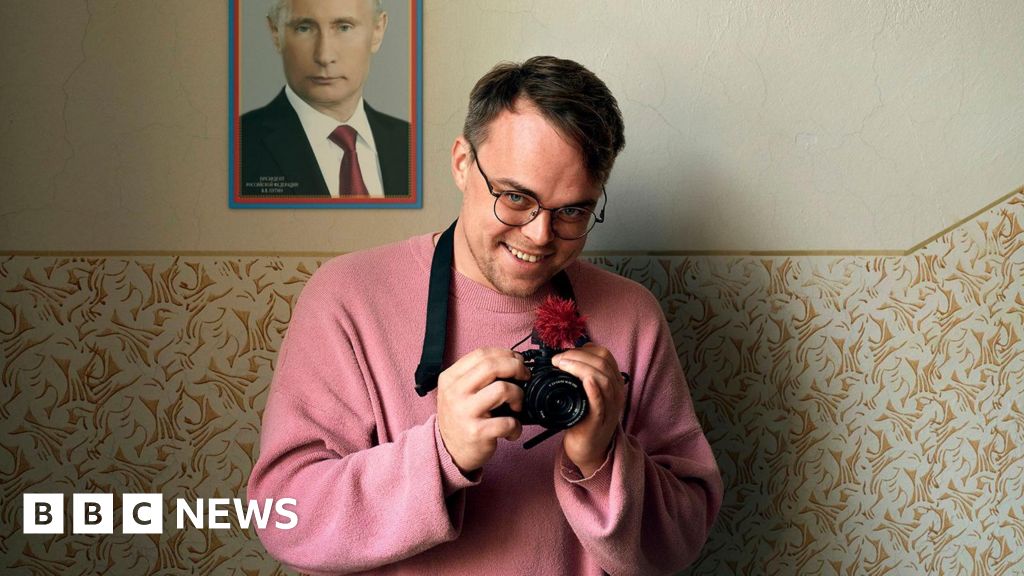
Pavel Talankin, a former school events coordinator who fled Russia in 2024, captured the footage that forms the backbone of the documentary. According to BBC News, Russian prosecutors claimed the film expressed a “negative attitude towards the [war in Ukraine] and the current government.” They also objected to the documentary’s display of the white-blue-white flag, which authorities described as the emblem of a “terrorist organization.” This flag has become a symbol frequently used by Russians protesting against the war.
The documentary provides a troubling glimpse into the Kremlin-mandated indoctrination of Russian schoolchildren. It shows lectures about the supposed need to “denazify” Ukraine – a false narrative that the Russian government has used to justify its invasion. The film also recounts stories of Talankin’s former students who joined the military and subsequently died in the conflict in Ukraine.
In early March, before the ban, a Russian governmental human rights organization condemned the documentary, claiming it used footage of children without parental consent. The body announced plans to petition the Academy of Motion Picture Arts and Sciences to investigate the matter, in what appears to be an attempt to discredit the film internationally.
When accepting the Oscar, Talankin made a poignant appeal for peace, stating, “For the sake of our future, and for the sake of all our children, let’s end all wars.” His statement reflects the documentary’s underlying message about the human cost of conflict and political indoctrination.
The Kremlin has largely avoided commenting directly on the documentary despite its international recognition. When questioned about the film after its Oscar win, Kremlin spokesperson Dmitry Peskov simply stated that he had not watched it – a typical tactic used by Russian officials to downplay content critical of the government.
This ban is part of a broader pattern of intensified crackdown on dissent since Russia launched its full-scale invasion of Ukraine. Russian authorities have systematically suppressed anti-war protests and criticism, with many facing severe penalties for publicly opposing the government’s actions in Ukraine.
The film, a Danish-Czech production, has received significant international acclaim, also winning the BAFTA award for Best Documentary earlier in 2026. Its critical portrayal of how Russian schools have become vehicles for state propaganda highlights the government’s efforts to shape public opinion about the war from a young age.
The ban underscores Russia’s ongoing efforts to control the narrative around its Ukraine invasion and illustrates how the Kremlin views even documentary filmmaking as a potential threat to its authority when it challenges official propaganda. By legally restricting access to the film within Russia, authorities are continuing their systematic approach to information control, preventing citizens from accessing perspectives that contradict state-approved messaging about the war.
Fact Checker
Verify the accuracy of this article using The Disinformation Commission analysis and real-time sources.

10 Comments
This is a concerning development. It’s troubling to see Russia censor a film that provides an inside look at their propaganda efforts around the war in Ukraine. Freedom of expression is fundamental, even when it criticizes the government.
Agreed. Banning documentaries that offer a critical perspective sets a dangerous precedent. It’s important to maintain open dialogue, even on sensitive topics.
The decision to ban this Oscar-winning documentary is a troubling sign of Russia’s intolerance for dissent and independent journalism. Censoring critical voices is a hallmark of authoritarian regimes, and this move will only further erode trust in the Kremlin.
Agreed. Restricting access to this film is a clear attempt to control the narrative and shield the public from unflattering truths about the war in Ukraine.
While not unexpected, it’s still disappointing to see Russia censor this documentary. Filmmakers and journalists play a vital role in holding governments accountable, even in times of conflict. This ban is a troubling sign of the Kremlin’s intolerance for dissent.
The decision to ban this Oscar-winning documentary speaks volumes about Russia’s commitment to propaganda over truth. Silencing critical voices is a hallmark of authoritarian regimes, and this move will only further undermine the Kremlin’s credibility on the world stage.
Exactly. Restricting access to this film is a transparent attempt to control the narrative and shield the public from unflattering truths about the war in Ukraine.
It’s alarming that Russia is going to such lengths to suppress this Oscar-winning documentary. Censorship of independent media and artistic expression is a hallmark of authoritarian regimes. This move only further erodes trust in the Kremlin.
Absolutely. Restricting access to this film is a transparent attempt to control the narrative and shield the public from unflattering truths about the war.
It’s deeply concerning that Russia is resorting to censorship to silence critical portrayals of its war propaganda. This documentary likely offers valuable insights into the Kremlin’s efforts to manipulate public opinion, which the authorities seem intent on suppressing.