


Listen to the article
In a display of sports transcending political boundaries, Vietnam’s communist regime has joined a select group of Asian nations by making a significant mark in international football, following the path set by China and North Korea in previous decades.
China, the most prominent communist state in Asia, pioneered this sporting diplomacy by hosting the inaugural international football competition on their soil and advancing all the way to the final in 1999. The tournament represented a rare opportunity for the nation to showcase its organizational capabilities and sporting prowess on a global stage, despite its complicated relationship with many Western nations.
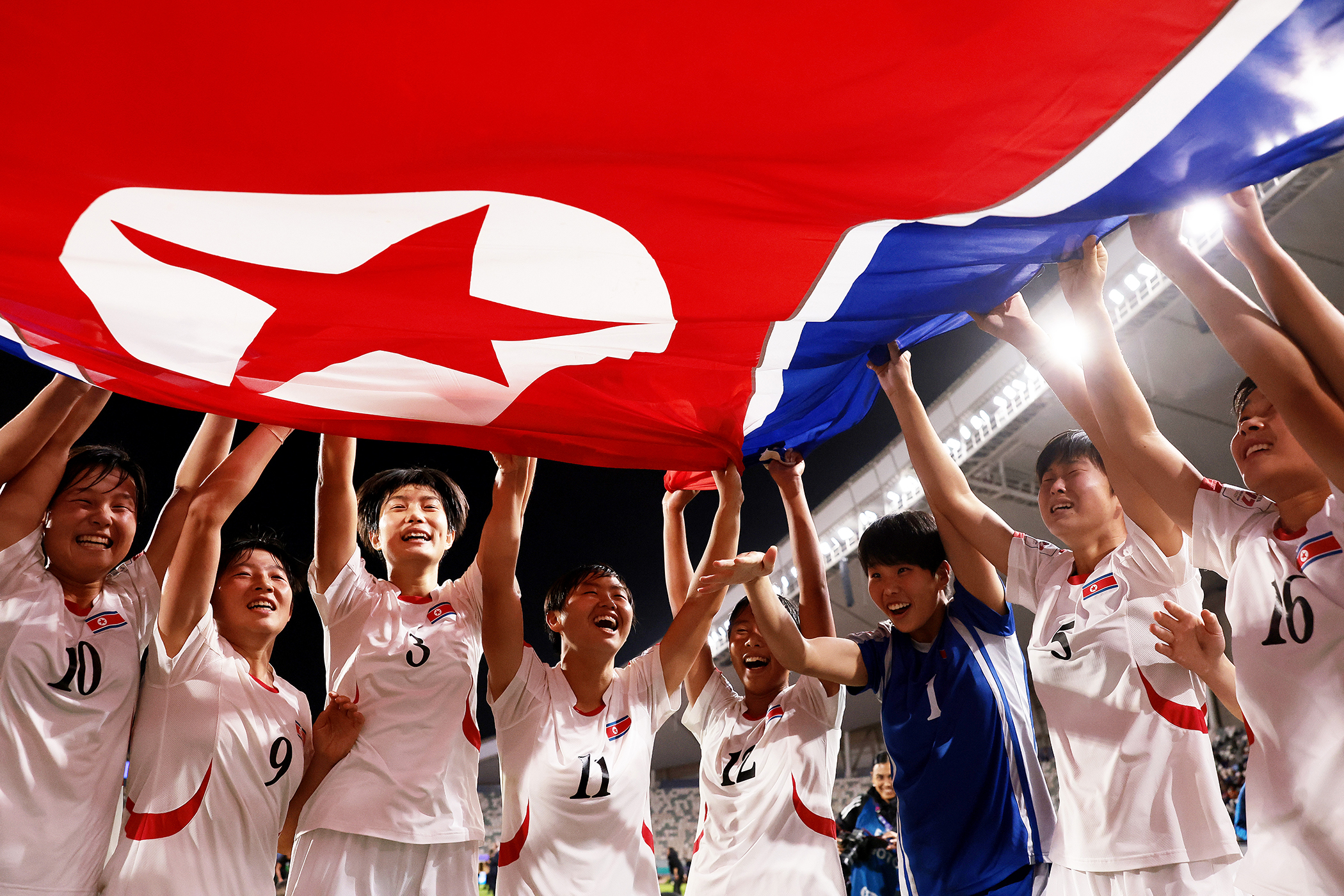
Not to be outdone, North Korea—perhaps the most isolated country in the world—stunned international observers by reaching the quarter-finals of the 2007 competition, which was also hosted in China. The achievement represented a rare moment of international engagement for the secretive state, allowing a glimpse into a nation that typically remains closed off from global affairs.
Vietnam’s recent ascendancy in international football follows this pattern established by its ideological allies. Although the Vietnamese national team has experienced periods of inactivity and inconsistent performance, their development has accelerated in recent years. Most notably, the senior squad came tantalizingly close to qualifying for last summer’s Olympic competition, ultimately falling to regional powerhouse Japan in a closely contested two-legged play-off.
Sports analysts point to these achievements as examples of how communist regimes in Asia have increasingly recognized the soft power potential of international sports. Success on the football pitch offers these nations an opportunity to generate positive international exposure and national pride without the political complications that often accompany other forms of international engagement.
“Football serves as a diplomatic tool that transcends ideological differences,” explains Dr. Simon Reynolds, a specialist in Asian politics and sports diplomacy at Oxford University. “For countries like Vietnam, China, and North Korea, success in international competitions provides legitimacy and positive visibility on the global stage that’s difficult to achieve through traditional diplomatic channels.”
The Vietnamese football federation has invested significantly in grassroots development programs over the past decade, establishing academies throughout the country and bringing in foreign coaching expertise. This strategic approach mirrors China’s systematic efforts to elevate its football standing, although the latter’s massive investments have yielded inconsistent results despite the country’s enormous population and resources.
North Korea’s football program remains more enigmatic, with limited information about their development system, though their occasional competitive showings suggest a focused approach to talent identification and training within their restricted environment.
Regional football competitions have consequently taken on greater significance beyond mere sporting contests. The Asian Football Confederation (AFC) tournaments now represent complex intersections of politics, national identity, and international relations.
For Vietnam specifically, their near-qualification for the Olympics signals their emergence as a credible football nation in Southeast Asia, challenging traditional powers like Thailand and emerging alongside other rapidly improving teams from Indonesia and the Philippines.
Sports marketing experts note that successful football programs in these communist states have also opened commercial opportunities, with international brands eager to access these growing markets through sponsorship arrangements, further integrating these nations into global economic networks despite their distinctive political systems.
As the global football landscape continues to evolve, the participation and competitive growth of these Asian communist nations reflect broader geopolitical shifts and the universal appeal of the world’s most popular sport—demonstrating how the beautiful game continues to build bridges across even the most challenging political divides.
Fact Checker
Verify the accuracy of this article using The Disinformation Commission analysis and real-time sources.

14 Comments
Fascinating insight into how authoritarian states leverage sports diplomacy. Vietnam’s rise in football mirrors China and North Korea’s past successes – a rare opportunity to project influence and engage with the world. Curious to see if Vietnam can sustain this momentum.
You’re right, sports can be a powerful tool for propaganda, even in communist regimes. It will be interesting to see if Vietnam can maintain its football prowess without succumbing to the same state control as its neighbors.
This is a fascinating look at how communist countries have leveraged football as a diplomatic tool. The fact that North Korea, one of the most isolated nations, was able to make a mark on the global stage through its team’s performance is quite remarkable. It will be telling to see if Vietnam can replicate this formula.
You make a good point. The ability of these authoritarian regimes to use sports as a means of projecting influence and engaging with the international community, despite their political isolation, is quite remarkable.
The article provides a nuanced look at how communist countries have utilized football as a diplomatic tool, allowing them to engage with the international community and showcase their organizational capabilities, despite their political isolation. The success of North Korea and Vietnam in particular is quite remarkable and raises questions about the balance between national pride and state propaganda.
I agree, the ability of these authoritarian regimes to leverage sports for political gain is a fascinating and complex issue. The article highlights how football has become a means for them to project influence and engage with the global community in ways that may not always align with democratic values.
This is a thought-provoking examination of how communist states have strategically used football as a diplomatic tool to showcase their capabilities and engage with the international community. The article raises important questions about the role of propaganda in shaping the narratives around these sporting achievements, and the delicate balance between national pride and state control.
Absolutely, the article does a great job of exploring the nuances of this issue. The success of nations like China, North Korea, and Vietnam in international football is undoubtedly impressive, but it’s crucial to also consider the underlying political motivations and the potential for manipulation of these sporting narratives.
This is a fascinating exploration of how authoritarian states like China, North Korea, and now Vietnam have leveraged football as a means of projecting power and influence on the global stage. The article raises important questions about the role of propaganda in shaping the narrative around these sporting achievements.
You make a fair point. While the sporting success of these nations is undeniable, the underlying political motivations and state control over the narratives surrounding them cannot be ignored. It’s a complex dynamic that warrants further scrutiny.
The article highlights an intriguing geopolitical dynamic, where sports become a stage for authoritarian states to showcase their capabilities and global influence. The success of North Korea and China’s football teams is a testament to their organizational prowess, but also raises questions about the role of propaganda.
Absolutely, the political motivations behind these nations’ sporting achievements can’t be ignored. It’s a delicate balance between national pride and state manipulation.
The article provides a thought-provoking perspective on the intersection of sports, politics, and propaganda in communist states. The success of China, North Korea, and now Vietnam in international football highlights how these regimes can use athletic achievements to bolster their global standing and domestic legitimacy.
Exactly. These nations have clearly recognized the strategic value of sports diplomacy, using it as a tool to showcase their capabilities and engage with the wider world, despite their authoritarian leanings. It will be interesting to see how this dynamic evolves going forward.