


Listen to the article
Lego’s Strategic Response to Viral Iranian Propaganda Videos
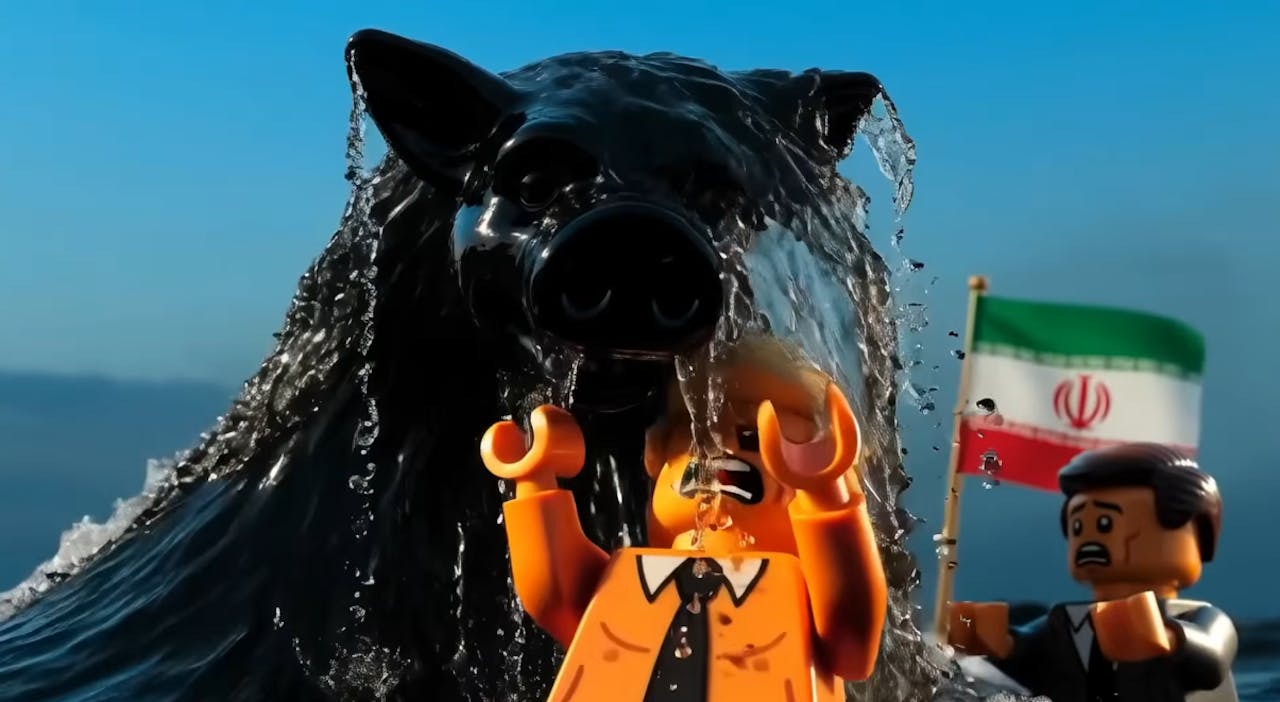
Iranian propaganda videos featuring Lego minifigures have gained significant traction across social media platforms, presenting a serious challenge for the Danish toy company. The controversial content, which includes imagery such as a Trump minifigure coated in oil, has gone viral particularly on TikTok and Instagram despite platform efforts to remove it.
The propaganda campaign has demonstrated remarkable resilience, with videos being rapidly re-uploaded after removal in what crisis communications expert Andy Barr describes as a “Lego propaganda hydra.” This sophisticated approach has allowed Iran to effectively spread its messaging, with mainstream media coverage inadvertently amplifying the content to audiences who hadn’t previously encountered it.
“Iran is winning the propaganda war on social media,” Barr observes, noting that the content’s viral nature has created a significant brand risk for Lego, whose iconic building blocks are being weaponized in geopolitical messaging without the company’s consent.
To gauge public awareness of the situation, Barr conducted an informal survey across his social media accounts, finding that approximately 35% of respondents had already encountered the propaganda videos. This awareness skewed slightly higher among younger audiences on TikTok compared to Instagram’s somewhat older user base.
“Thirty-five percent is a significant enough number to trip all the red flag warning systems that Lego’s brand monitoring team will have in place,” Barr notes, adding that this percentage is likely to increase as major news outlets continue covering the story.
Google Trends data supports the growing impact, showing an 82% spike in Lego-related searches in March 2026 when the videos gained significant momentum, compared to the same period in previous years. This surge presents what Barr calls “an awkward headache” for the toy manufacturer.
In response to this reputation management challenge, Lego appears to be employing a strategic approach focused on flooding digital channels with positive brand content rather than directly addressing the propaganda. Barr’s analysis of the company’s communications output reveals a significant increase in activity since the crisis emerged.
While Lego typically issued around 17 press releases monthly in early 2024 and 2025, that number has jumped to 31 in the first four months of 2026. Similarly, the company’s output of short-form video content increased substantially, with 53 “Shorts” published in March 2026 compared to a previous monthly average of 44.
Barr also believes Lego has increased its paid promotion of content. “Pre-March 2026, Lego financially promoted approximately one in six of its Shorts. During the growing interest phase of the Iran propaganda content in mid-March 2026, the brand increased its amplification strategy to four in six,” he estimates.
This approach represents a deliberate choice between three potential crisis response strategies: saying nothing, issuing a formal statement distancing the brand from the content, or overwhelming negative associations with positive brand messaging. Lego appears to have chosen the third option, which Barr endorses as aligning with the company’s established brand ethos.
“To issue any formal statement would not fit with the carefully cultivated brand ethos,” he explains, while suggesting the company is likely working behind the scenes to accelerate content removal, potentially with U.S. government support.
So far, the strategy seems effective, as propaganda content has not significantly infiltrated mainstream brand searches for Lego. However, the long-term sustainability of this approach remains uncertain as the geopolitical situation continues to evolve.
“In years to come, how Lego has dealt with this situation will become a topic for university lecturers and crisis communication media training professionals,” Barr concludes, commending the company for what he considers an admirable handling of an extraordinarily challenging situation.
Fact Checker
Verify the accuracy of this article using The Disinformation Commission analysis and real-time sources.

10 Comments
The Lego propaganda hydra is a concerning development. It demonstrates the speed and resilience of misinformation campaigns online. Lego will need a nuanced, multi-pronged approach to counter this effectively.
The Lego propaganda campaign is a prime example of the challenges companies face in the social media age. Leveraging popular brands for political messaging is a clever tactic, but one that Lego will need to address effectively.
Indeed, Lego will need to find the right balance between protecting their brand and addressing the propaganda issue head-on. It’s a delicate situation with no easy solutions.
This is a clever tactic by Iran, leveraging the popularity and familiarity of Lego to amplify their messaging. It highlights the challenges companies face in the social media age when their products are used in ways they didn’t intend.
You’re right, it’s a prime example of how viral content can be weaponized for political purposes. Lego will need to tread carefully to mitigate the brand damage.
Interesting how Iran is using Lego to spread its propaganda messaging. Viral content is a powerful tool, but it’s concerning when toy brands get caught up in geopolitical struggles without their consent.
I agree, Lego must be in a tricky position trying to navigate this. Protecting their brand while addressing the propaganda challenge won’t be easy.
While Iran’s use of Lego in propaganda videos is creative, it’s also deeply concerning. Lego’s iconic brand identity is being exploited for geopolitical gain, which poses serious risks for the company.
Absolutely. Lego must act quickly to protect their brand and ensure their products aren’t being weaponized for political messaging without their consent.
This is a complex situation for Lego. On one hand, the viral nature of the Iranian propaganda videos highlights the power of their brand. But on the other, being associated with such controversial content poses major reputational risks.