


Listen to the article
In a sharp rebuke to the Bharatiya Janata Party (BJP), the Akal Takht secretariat has dismissed claims about Sikhs converting to other religions as unfounded propaganda. The statement comes amid growing tensions over religious conversion narratives in Punjab.
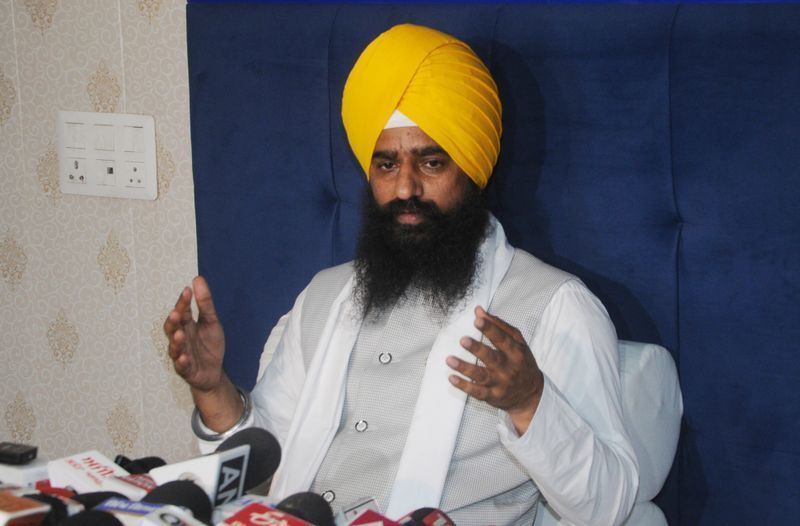
Jaskaran Singh, spokesperson for the Akal Takht, clarified on Wednesday that Jathedar Kuldip Singh Gargaj’s recent statements denying mass conversions were specifically addressing false assertions made by BJP officials. The Akal Takht, the highest temporal seat of Sikhism, has taken a firm stance against what it views as politically motivated claims.
During his Baisakhi address at Anandpur Sahib, Jathedar Gargaj had categorically rejected the conversion narrative, stating that “a true Sikh never changes his faith and is ready to lay down his life for it.” He emphasized that while isolated cases of individuals straying from the faith might occur due to lack of understanding, it was inappropriate to cast aspersions on the entire Sikh community.
“We must focus on propagating Sikh teachings rather than entertaining false narratives,” Gargaj told the congregation, highlighting the importance of education about Sikh principles rather than defensive posturing.
The Jathedar’s recent position appears to present a nuanced view compared to his statements from April last year, when he launched an initiative to counter religious conversions. That campaign began at Gurdwara Janam Asthan Bhai Jeewan Singh in Gaggo Mahal village of Ajnala, a site of historical significance to the Mazhabi Sikh community. Bhai Jeewan Singh was a contemporary of Guru Gobind Singh, the tenth Sikh Guru.
At that time, the Akal Takht had specifically mentioned concerns about the “growing influence of Christian preachers and pastors” in Punjab. The apparent shift in messaging highlights the complex religious dynamics in the region and suggests a more targeted response to BJP’s claims rather than a retraction of concerns about conversion activities.
Scholars have weighed in on the controversy, providing historical context. Amarjit Singh, former director of the Centre for Studies in Sri Guru Granth Sahib at Guru Nanak Dev University, supported Jathedar Gargaj’s assertion that devout Sikhs do not abandon their religion. He traced the history of Christian missionary activity in Punjab to the British annexation in 1849, noting that three churches were established in Amritsar, Ajnala, and Jandiala by 1853.
“There had not been major conversions in the initial 150 years,” Singh explained. “Conversion became a significant issue only in the past 25 years.” This timeframe coincides with major socioeconomic changes in Punjab and shifting political landscapes.
Jagrup Singh Sekhon, former Professor at Guru Nanak Dev University, offered a political perspective, suggesting that while religious conversion does occur, the issue “was raised under political compulsions.” His comment points to the politicization of religious identity in Punjab, a state where faith and politics have historically been intertwined.
The controversy emerges against a backdrop of heightened religious sensitivity in India, where several states have enacted anti-conversion laws in recent years. Punjab, with its Sikh majority population and distinct religious heritage, remains a focal point in debates about religious freedom and identity politics.
The Akal Takht’s intervention serves as a reminder of its role as both a religious authority and a defender of Sikh interests in the political sphere. By directly confronting what it perceives as politically motivated narratives, the institution is asserting its voice in shaping public discourse on issues affecting the Sikh community.
Fact Checker
Verify the accuracy of this article using The Disinformation Commission analysis and real-time sources.

10 Comments
The Akal Takht’s dismissal of the BJP’s claims as propaganda is a strong rebuke. It’s concerning to see religion being used for political gain, and I’m glad the Sikh authorities are standing firm in upholding the facts and their teachings.
Agreed. Maintaining the sanctity of religious institutions and principles is vital, especially when faced with attempts to distort or misrepresent them. The Akal Takht’s clarity on this issue is admirable.
This is a complex issue where political narratives can easily cloud the facts. I appreciate the Akal Takht’s measured and principled response, focusing on propagating Sikh teachings rather than entertaining unsubstantiated claims about conversions.
Well said. Grounding the discussion in the core tenets of the faith, rather than unverified assertions, is the responsible approach. The Akal Takht has demonstrated leadership in upholding the integrity of the Sikh community.
The Akal Takht’s dismissal of the BJP’s claims as propaganda is a clear and necessary statement. It’s important that religious authorities remain independent and focus on educating their followers, rather than getting drawn into political controversies.
Absolutely. Maintaining the separation of religion and politics is crucial for preserving the sanctity of religious institutions. The Akal Takht’s stance is a commendable defense of Sikh principles in the face of potential misuse.
It’s concerning to see political narratives being used to spread misinformation about religious conversions. The Akal Takht’s dismissal of these claims as propaganda is a welcome clarification and a reminder to focus on the facts rather than speculation.
Agreed. Propagating false narratives can be divisive and undermine religious harmony. The Akal Takht’s stance to emphasize Sikh teachings over unsubstantiated claims seems like the right approach.
This highlights the need for religious leaders and authorities to provide clear and authoritative guidance, especially on sensitive issues like conversions. The Akal Takht’s response helps counter any politically motivated attempts to misrepresent the Sikh community.
Absolutely. It’s crucial that religious institutions maintain their independence and integrity when addressing such matters, rather than being drawn into partisan agendas. The Akal Takht’s stance is a commendable defense of Sikh principles.