


Listen to the article
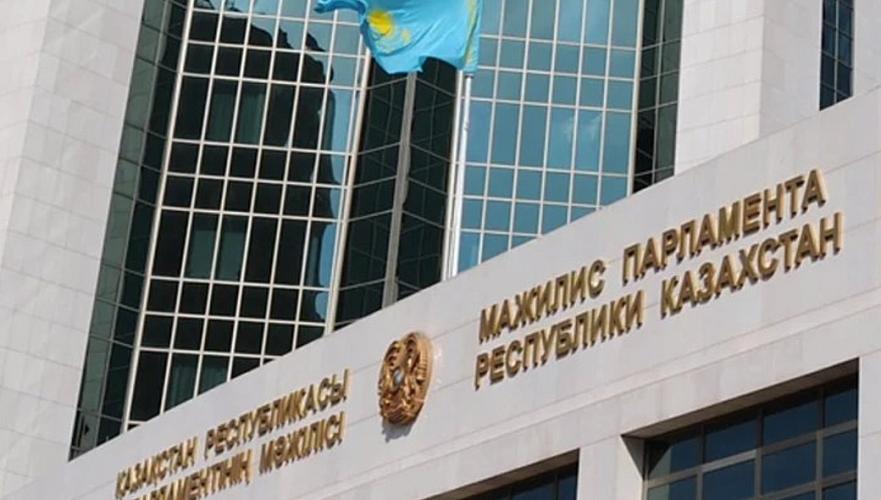
Kazakhstan’s parliament has provided new details about the scope of the country’s forthcoming law banning LGBT propaganda, clarifying what content will be prohibited and which expressions will remain legal.
According to Majilis deputy Elnur Beisenbayev, the legislation defines LGBT propaganda as “the dissemination of information about non-traditional sexual orientation, made publicly or through media and telecommunications networks, including deliberately distorted messages aimed at shaping positive public opinion.”
The clarification came during a parliamentary session in Astana where lawmakers addressed questions about how the law would be implemented in practice. Beisenbayev emphasized that certain personal expressions will not fall under the ban.
“This is not prohibited. There is no ban on LGBT people living in Kazakhstan,” he stated. “However, when they advocate for public support or urge others to join them, that is considered propaganda.”
The distinction appears to draw a line between personal identity and public advocacy, though critics may question how consistently such distinctions will be enforced.
Yevgeny Kochetov, vice minister of culture and information, confirmed that the law’s reach will extend to cultural products including films and literature. A special commission will be established to review content and determine whether it contains prohibited material.
“If a film contains LGBT propaganda, it will be banned, and books with similar content will also be prohibited,” Kochetov said.
The legislation establishes penalties for violations, including fines of 20 Monthly Reference Indicators (MRP) for first-time offenders. Repeat violations could result in fines of 40 MRP and restrictions on freedom for up to 10 days. The Monthly Reference Indicator is a financial unit used in Kazakhstan to calculate various payments, taxes, and fines, with its value adjusted annually.
The new amendments will affect nine existing laws, including those governing child rights, advertising, communications, culture, education, cinematography, and mass media, signaling a broad implementation across Kazakhstan’s legal framework.
Kazakhstan’s move follows similar legislation in neighboring Russia, which enacted an “LGBT propaganda” ban in 2013 that was later expanded. Several other post-Soviet states have pursued comparable measures in recent years.
Human rights organizations have typically criticized such laws, arguing they can lead to increased discrimination, limit freedom of expression, and potentially drive vulnerable individuals underground. The United Nations and various international bodies have repeatedly expressed concern about the impact of anti-LGBT legislation on human rights protections.
The law comes at a time when Kazakhstan has been working to position itself as a modernizing nation seeking greater international investment and partnerships. Some analysts suggest the legislation could complicate the country’s relationships with Western partners who have increasingly emphasized human rights considerations in their foreign policy approaches.
Kazakhstan’s government has framed the law as protecting traditional values and children’s wellbeing, arguments commonly used to justify similar legislation in the region. However, opponents argue such laws often serve to marginalize minority groups rather than provide meaningful protections.
The timing of implementation and full details of enforcement mechanisms remain to be seen, particularly regarding how authorities will determine what constitutes “propaganda” versus personal expression in borderline cases.
Local and international observers will likely watch closely to see how the law is applied in practice once it takes effect, especially regarding its impact on media, cultural events, and civil society organizations in the Central Asian nation.
Fact Checker
Verify the accuracy of this article using The Disinformation Commission analysis and real-time sources.

10 Comments
This propaganda law in Kazakhstan is concerning for LGBTQ+ rights and free expression. Allowing personal identity but banning public advocacy seems like a very fine line that could be abused. I’m curious to see how this plays out in practice and its impact on the community.
Kazakhstan’s move to ban ‘LGBTQ+ propaganda’ is worrying. While personal identity may be allowed, limiting public advocacy could marginalize the community and restrict important discussions. The distinction between personal and public expression seems very subjective and open to abuse.
I agree, the vague language of this law leaves a lot of room for interpretation and potential overreach by the authorities. Enforcing this fairly will be a major challenge.
This propaganda law is a worrying step backwards for human rights in Kazakhstan. Distinguishing between personal identity and public advocacy is a fine line that may be abused. I hope the government can find a way to protect individual freedoms while addressing their concerns.
I agree, the distinction between personal and public expression seems very subjective. Enforcing this law fairly will be a challenge and could lead to overreach and discrimination.
The scope of Kazakhstan’s new LGBTQ+ propaganda law is concerning. While personal identity may be allowed, restricting public advocacy could severely limit visibility and open dialogue. I’m curious to see how this is implemented in practice and its impact on the community.
This propaganda law raises concerns about free expression and civil liberties in Kazakhstan. Banning the public ‘dissemination of information’ about non-traditional orientations seems overly broad and could stifle important discussions. I hope lawmakers can find a more balanced approach.
Interesting development in Kazakhstan. While personal identity expressions may be allowed, it seems the government aims to limit public advocacy for LGBTQ+ issues. This could restrict open dialogue and visibility. I wonder how the line between personal and public will be defined and enforced in practice.
Kazakhstan’s move to restrict LGBTQ+ advocacy is concerning. While personal identity may be allowed, limiting public expressions could marginalize the community and prevent progress. I’m curious to see how the authorities interpret and apply these new restrictions.
This law raises serious questions about civil liberties and freedom of expression in Kazakhstan. Differentiating between personal identity and public advocacy could be very problematic. I hope the authorities can find a more balanced approach that respects individual rights.