


Listen to the article
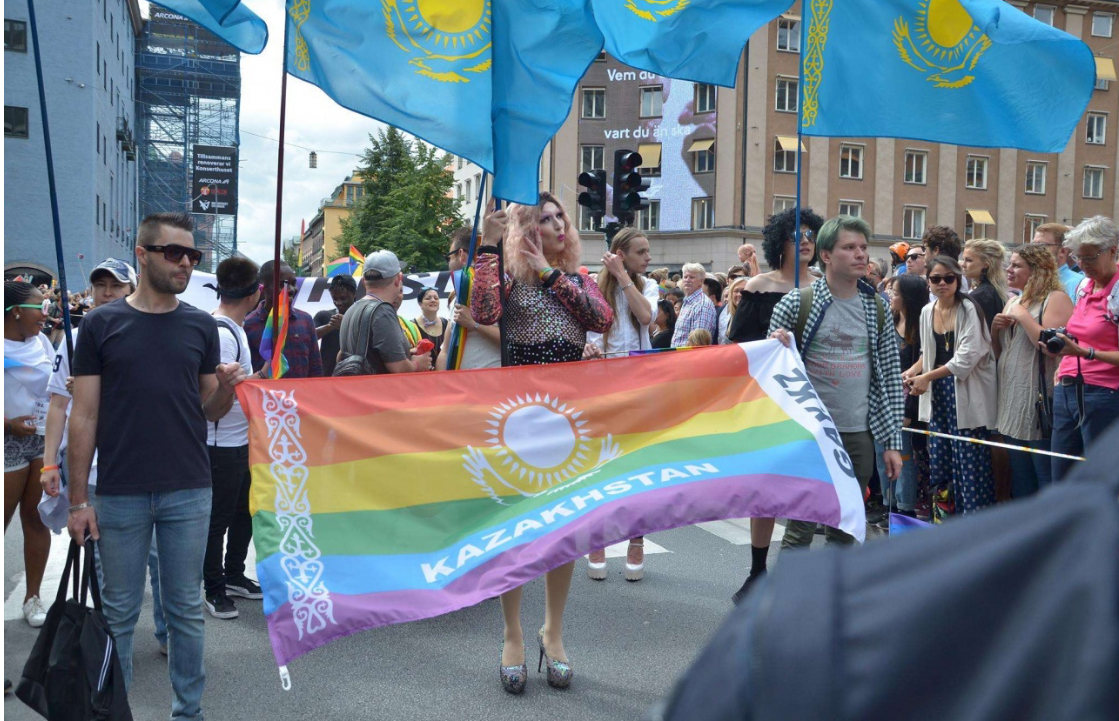
Kazakhstan’s parliament advanced anti-LGBTQ+ legislation on Wednesday, proposing a ban on what it describes as “propaganda of pedophilia and/or non-traditional sexual orientation” in public spaces, media, and online. The bill, framed as protection for children from “harmful content,” closely resembles Russia’s controversial 2022 law that criminalized portraying same-sex relationships as “normal.”
The lower house’s proposal marks a significant step toward institutionalizing discrimination against LGBTQ+ individuals in the Central Asian nation. To become law, the bill must still clear the Senate before reaching President Kassym-Jomart Tokayev’s desk for final approval.
Human rights organizations have swiftly condemned the move. In a preemptive statement released Tuesday, Human Rights Watch, alongside six other advocacy groups, warned that the legislation would “violate fundamental human rights and increase the vulnerability of lesbian, gay, bisexual, trans, intersex, and other queer people” in Kazakhstan.
The timing of the parliamentary action coincides with President Tokayev’s meeting with Russian President Vladimir Putin in Moscow this week, raising questions about potential Russian influence on Kazakhstan’s domestic policy. Russia has implemented increasingly severe anti-LGBTQ+ measures since 2013, when it first banned “propaganda of non-traditional sexual relations” among minors, later expanding restrictions to include adults in 2022.
Mary Struthers of Amnesty International challenged the legislation’s stated purpose, asserting: “Banning so-called ‘LGBTI Propaganda’ is not about protecting children, it’s about institutionalizing stigma, fear and censorship.”
Human Rights Watch further emphasized that such a ban would “blatantly violate Kazakhstan’s international human rights commitments,” including children’s rights to education, health, and information. The organization noted that “discriminatory and rights-violating provisions like those being proposed have no place in any democratic society, which Kazakhstan aspires to be.”
Kazakhstan’s cultural stance on LGBTQ+ issues has remained largely conservative since gaining independence from the Soviet Union in 1991. Despite constitutional reforms and attempts to modernize the nation’s image internationally, homophobia remains deeply entrenched in many aspects of Kazakhstani society.
The proposed legislation follows a troubling pattern of anti-LGBTQ+ policy spreading across former Soviet states and beyond. Similar laws have been enacted in Hungary, Uganda, and several other countries in recent years, often using child protection as justification while effectively criminalizing LGBTQ+ visibility and expression.
For LGBTQ+ Kazakhstanis, the reality is already challenging. Human Rights Watch has previously documented the “climate of fear” affecting queer communities in the country, noting that “harassment, discrimination, and the threat of violence color the everyday lives of LGBT people in Kazakhstan.” This legislation would likely exacerbate these conditions, potentially forcing many back into hiding or considering relocation.
The bill’s advancement comes amid a global backlash against LGBTQ+ rights in several regions, contrasting sharply with progress made in other parts of the world. Rights advocates warn that such laws not only harm LGBTQ+ individuals but also undermine freedom of expression and access to information for the broader population.
As the legislation moves to Kazakhstan’s Senate for further consideration, international human rights organizations continue to urge Kazakhstani authorities to uphold their commitments to equality and non-discrimination, reminding the government that true child protection comes through education and inclusion, not censorship and stigmatization.
Fact Checker
Verify the accuracy of this article using The Disinformation Commission analysis and real-time sources.

8 Comments
The timing of this proposed law is certainly interesting, coming just as Kazakhstan’s president meets with Putin. It raises questions about potential Russian influence and whether this is part of a broader regional crackdown on LGBTQ+ expression.
You make a good point. The similarity to Russia’s ‘gay propaganda’ law is striking and suggests potential coordination or at least shared authoritarianism between the two countries.
This is a troubling development that echoes the repressive policies of neighboring Russia. I urge the Kazakhstani government to reject this legislation and instead focus on upholding the human rights and fundamental freedoms of all its citizens, including LGBTQ+ individuals.
While I understand the desire to protect children, these types of bans on ‘LGBTQ propaganda’ are often used as a pretext to discriminate and marginalize the LGBTQ+ community. I hope Kazakhstan will reconsider this legislation and focus on truly protecting youth without infringing on fundamental rights.
The proposed Kazakhstani law is deeply concerning and appears to be closely modeled on Russia’s own discriminatory ‘gay propaganda’ legislation. I hope the Kazakhstani government will reconsider this step and instead focus on protecting the fundamental rights of all its citizens, regardless of sexual orientation or gender identity.
This is a disturbing development that threatens the basic rights and freedoms of LGBTQ+ individuals in Kazakhstan. I urge the government to reject this legislation and uphold its international human rights obligations.
This is a concerning development for LGBTQ+ rights in Kazakhstan. While protecting children is important, such broad bans on ‘propaganda’ often unfairly target and discriminate against the LGBTQ+ community. I hope the government will reconsider this legislation and uphold human rights.
While the stated intent may be to protect children, overly broad bans on ‘LGBTQ propaganda’ are often misused to target and marginalize the LGBTQ+ community. I hope Kazakhstan will find a way to address any legitimate concerns without resorting to discriminatory legislation that violates basic human rights.