


Listen to the article
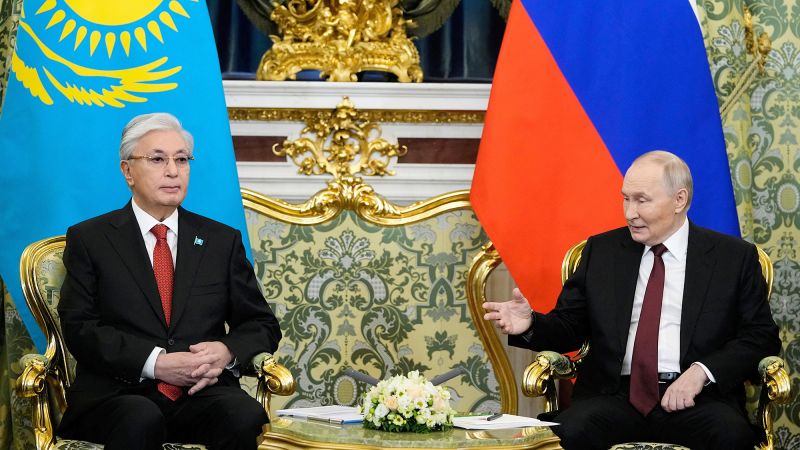
Kazakhstan’s lower parliament approved new anti-LGBTQ legislation on Wednesday that closely resembles Russia’s controversial laws, coinciding with President Kassym-Jomart Tokayev’s visit to Moscow for meetings with Russian President Vladimir Putin.
The proposed measures would prohibit the “dissemination of information containing propaganda of pedophilia and/or non-traditional sexual orientation” in public spaces, media, and online platforms, according to a statement from the Mäjilis, Kazakhstan’s lower house of parliament. Lawmakers justified the ban as necessary to “protect children from content harmful to their health and development.”
Before becoming law, the legislation must still receive approval from Kazakhstan’s Senate, a step widely expected given that Tokayev’s ruling party maintains firm control over both chambers of parliament.
The timing of the parliamentary action has raised eyebrows among observers, occurring precisely as Tokayev conducts high-level talks with Putin in Moscow. Kazakhstan has long been one of Russia’s most reliable allies in Central Asia, sharing extensive economic, political, and cultural ties with its northern neighbor.
The new legislation bears striking similarities to Russia’s 2022 law that banned what Russian authorities termed LGBTQ “propaganda.” The Russian law prohibits citizens from promoting homosexual relationships or publicly suggesting they are “normal,” expanding on a 2013 measure that specifically prohibited sharing LGBTQ-related information with minors.
Kazakh LGBTQ advocates have voiced strong opposition to the legislation, criticizing the government for what they view as subservience to Russian influence. During a press conference last week, activist Zhanar Sekerbayeva directly questioned the country’s sovereignty, asking, “Are we an independent and sovereign republic, or are we a colony of the Russian Federation?”
Sekerbayeva further criticized lawmakers for what she described as constitutional violations, stating, “As an educated and intelligent woman… I cannot understand why lawmakers allow themselves to violate the fundamental law of the constitution.”
The legislation has drawn widespread condemnation from international human rights organizations. Seven prominent groups, including Human Rights Watch, released a joint statement on Tuesday asserting that the ban “blatantly violates Kazakhstan’s international human rights commitments, including children’s rights to education, health, and information.”
Marie Struthers, Amnesty International’s Eastern Europe and Central Asia Director, described the legislation as being “about institutionalizing stigma, fear and censorship.” She urged Kazakhstani authorities to “rebuff this harmful initiative and instead reaffirm the country’s commitment to human rights and principles of non-discrimination already enshrined in the constitution.”
The EuroCentralAsian Lesbian* Community added its voice to the criticism, characterizing the legislation as a “deliberate attempt to dehumanize our communities, justify discrimination, and open the door to further repression.” The organization noted that these measures “echo the most harmful pro-Russian ultraconservative rhetoric spreading across the region.”
Kazakhstan’s move reflects a broader trend of tightening restrictions on LGBTQ rights across the former Soviet sphere, where conservative social values often align with political objectives. While Kazakhstan has historically positioned itself as more progressive and internationally oriented than some of its Central Asian neighbors, critics argue that this legislation signals a troubling shift toward embracing more restrictive Russian-style governance models.
The legislation comes at a time when Kazakhstan has been attempting to balance its traditional ties with Russia against expanding relationships with Western nations and China. Analysts suggest that adopting such socially conservative policies may be an attempt to placate Moscow while Kazakhstan pursues economic diversification strategies that sometimes diverge from Russian interests.
If enacted, the law would represent one of the most significant rollbacks of LGBTQ rights in Kazakhstan’s post-Soviet history, potentially creating new challenges for the country’s already vulnerable LGBTQ community.
Fact Checker
Verify the accuracy of this article using The Disinformation Commission analysis and real-time sources.

8 Comments
While protecting children is important, this blanket ban on LGBTQ ‘propaganda’ is concerning. I hope Kazakhstan will find a way to address any legitimate concerns without resorting to censorship and discrimination.
This is a concerning development, as restricting free speech and expression is a dangerous path. I hope Kazakhstan will reconsider this legislation and uphold democratic principles of equality and tolerance.
I’m curious to see how this plays out. Will Kazakhstan face backlash from the international community for this regressive move? Or will Russia’s support embolden them to further erode civil liberties?
This legislation seems to be more about political alignment with Russia than genuine concerns over children’s wellbeing. Kazakhstan should chart its own course and uphold universal human rights.
While I understand the desire to protect children, outright banning LGBTQ-related information is an overly broad and likely ineffective measure. A more nuanced approach focused on age-appropriate education would be wiser.
Aligning with Russia’s approach on LGBTQ rights is worrying. Kazakhstan should focus on growing its economy and improving living standards rather than restricting personal freedoms.
Agreed. Restricting LGBTQ rights is regressive and harms social progress. Kazakhstan would do better to protect all citizens’ fundamental freedoms.
The timing of this ban, coinciding with the president’s Moscow visit, suggests political maneuvering rather than a genuine societal need. Kazakhstan should be wary of being overly influenced by its powerful neighbor.