


Listen to the article
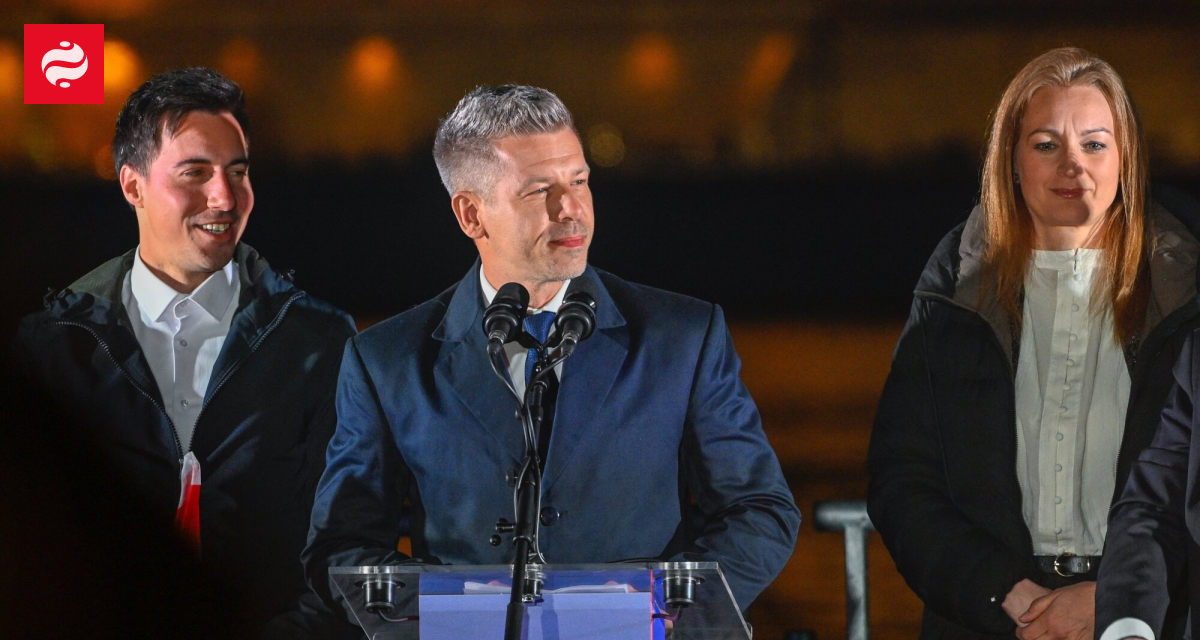
Peter Magyar, Hungary’s incoming prime minister, announced plans on Wednesday to suspend news broadcasts on state-owned media outlets, which he denounced as propaganda machines. Speaking on Kossuth Radio—ironically a public broadcaster that once served as a key platform for outgoing Prime Minister Viktor Orban—Magyar outlined his vision for reforming Hungary’s media landscape.
“Every Hungarian deserves a public broadcaster that tells the truth,” Magyar declared, noting that he himself had been effectively blocked from airtime for a year and a half under the current administration.
The decisive electoral victory of Magyar’s Tisza party, which secured 138 seats in Hungary’s 199-seat parliament compared to Orban’s Fidesz party’s 55 seats, marks the end of Orban’s 16-year grip on power. This changing of the guard signals a potential dramatic shift not only in domestic policies but also in Hungary’s relationships with the European Union and neighboring countries, including Ukraine.
Magyar didn’t mince words when describing the current state of Hungary’s public media, comparing their operations to propaganda systems in Nazi Germany and North Korea. He accused state media journalists of enabling a system characterized by impunity and nepotism that has dominated Hungarian politics for years.
“This is not an act of personal revenge,” Magyar emphasized regarding the planned suspension of news broadcasts. Instead, he framed it as a necessary intervention to rebuild Hungary’s media system on more transparent and truthful foundations. The incoming prime minister also announced plans to draft and implement a comprehensive new media law along with establishing a fresh regulatory framework for the sector.
Media freedom has been a persistent concern in Hungary throughout Orban’s tenure. International press freedom organizations have repeatedly criticized Hungary for allowing government influence over both public and private media outlets. The European Commission has also raised concerns about media independence in Hungary as part of broader rule of law issues that have strained relations between Budapest and Brussels.
The media overhaul represents just one facet of what analysts predict will be a significant policy realignment under Magyar’s leadership. His victory has been cautiously welcomed by EU leaders who have frequently clashed with Orban over issues ranging from democratic backsliding to Hungary’s stance on Russia’s invasion of Ukraine.
However, former Ukrainian Foreign Minister Pavlo Klimkin has tempered expectations, warning that relations with Magyar’s government might still prove “difficult” despite the change in leadership. Hungary and Ukraine have had strained relations in recent years, particularly over issues related to the ethnic Hungarian minority in Ukraine’s western Transcarpathia region and Hungary’s approach to energy deals with Russia.
Media experts note that the restructuring of Hungary’s state media will be a complex undertaking. Years of centralized control have created deeply entrenched systems and practices that may prove resistant to rapid change. The media landscape remains highly polarized, with pro-government outlets dominating much of the mainstream information space.
Magyar’s pronouncement represents one of his first major policy declarations since his electoral victory, signaling the priority his administration places on reforming information channels as a foundation for broader political change in Hungary. How this reform unfolds will likely serve as an early indicator of Magyar’s governance style and his commitment to the democratic principles he championed during his campaign.
Fact Checker
Verify the accuracy of this article using The Disinformation Commission analysis and real-time sources.

9 Comments
Interesting development in Hungary’s media landscape. It will be important to see how the new administration balances public broadcasting independence and accountability. A well-functioning public media is crucial for a healthy democracy.
Agreed. Reforming state media to be more truthful and less propagandistic is a positive step, but the execution will be critical.
This marks a significant shift in Hungary’s media environment. It will be worth monitoring how the new government follows through on its promise of a more truthful and transparent public broadcaster.
Absolutely. Restoring public trust in state media will be a key challenge for the incoming administration.
The Hungarian public deserves a public broadcaster that upholds journalistic principles of accuracy and impartiality. It remains to be seen how the new government will implement these changes.
Agreed. Transparency and accountability for state media will be essential as these reforms are rolled out.
Reforming state media is a complex and sensitive issue. While addressing propaganda is important, the new administration must ensure these changes don’t undermine press freedom and public access to information.
Suspending news broadcasts on state media could be a controversial move, but if the goal is to address propaganda and restore journalistic integrity, it may be a necessary step. The details of the reform will be crucial.
This shift in Hungary’s media landscape is significant and worth following closely. It will be important to see if the new government can deliver on its promise of a more truthful and independent public broadcaster.