


Listen to the article
Hungarian Election Signals Shift as Voters Tire of Orbán’s Long Reign
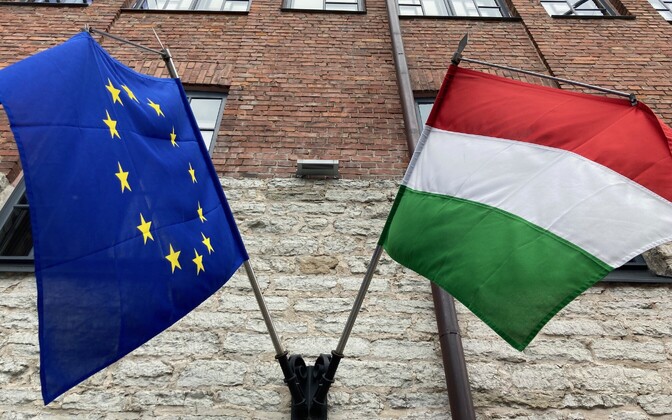
According to Estonian politicians, Sunday’s elections in Hungary revealed growing public fatigue with longtime Prime Minister Viktor Orbán, marking a significant turning point in the country’s political landscape. The victory of opposition candidate Péter Magyar presents both opportunities and challenges for Hungary’s future European alignment.
Mart Helme, deputy chair of the Estonian Riigikogu Foreign Affairs Committee, recently met with Orbán and gained firsthand insight into the Prime Minister’s pre-election concerns. Following his visit to Hungary three weeks ago, Helme reported that Orbán himself recognized two major factors working against his continued leadership.
“During his 16 years in power, a new generation has grown up that is tired of him and Fidesz and longs for fresh air,” Helme explained, quoting Orbán’s own assessment of the situation. This generational shift proved decisive in the election outcome, as younger voters increasingly sought political renewal.
Orbán also pointed to what he perceived as foreign interference in the electoral process, particularly from European Union institutions. “He was primarily referring to interference by the European Commission and to the anti-Fidesz propaganda coming from the media,” Helme said, reflecting Orbán’s perspective on external influences.
The Estonian politician pushed back against characterizations of Hungary as undemocratic under Orbán’s leadership, dismissing such claims as propaganda. “Nowhere did I experience that people were afraid to speak. You can sit in a café or restaurant and talk completely freely,” Helme noted, though he acknowledged that many Hungarians expressed criticism toward their longtime leader.
Looking ahead, Helme predicted that Magyar’s government would likely reorient Hungary’s foreign policy more toward Europe. However, he expressed doubt that Hungary would completely sever its relations with Russia, given the complex economic and energy dependencies that have developed over years.
Social Democratic MP Raimond Kaljulaid offered a more critical assessment of Orbán’s legacy, describing his removal from power as “a win for Europe” after years of the Hungarian leader’s perceived courting of Russia. Kaljulaid highlighted the overwhelming public sentiment driving the change.
“Hungary was certainly seen as moving further and further away from Europe and its Western partners, and especially younger people want Hungary to be part of Europe and the Western world,” Kaljulaid explained, pointing to a fundamental shift in Hungarian voters’ priorities.
The transition of power, however, presents significant hurdles for Magyar’s incoming administration. Hungary faces considerable economic challenges, and its energy sector remains heavily dependent on Russian supplies—a vulnerability that could be exploited.
“There may still be people there who are advancing Russia’s interests, which means that Russia may have ambitions to obstruct the new government in every possible way and start putting spokes in its wheels. This will not be easy,” Kaljulaid warned, suggesting potential interference from Moscow during the transition period.
Observers noted with surprise Orbán’s swift acceptance of the election results, which Kaljulaid interpreted as possibly reflecting the Prime Minister’s concern for his historical legacy. After leading Hungary for 16 years, Orbán may wish to avoid being remembered negatively in the nation’s history.
As for Orbán’s future, speculation ranges widely. With extensive networks in both the United States and Russia, the outgoing Prime Minister has options that might include following other former Western leaders into well-compensated positions abroad. “You never know—perhaps after 16 years of hard work, he is simply very tired and will just retire,” Kaljulaid suggested.
The election results represent a significant realignment in Central European politics, with potential implications for EU unity on issues ranging from Ukraine support to migration policy. Magyar’s victory may signal Hungary’s desire to return to the European mainstream after years of Orbán’s self-described “illiberal democracy.”
Fact Checker
Verify the accuracy of this article using The Disinformation Commission analysis and real-time sources.

10 Comments
The generational shift highlighted in this article is fascinating. It reflects a broader trend we’re seeing in many countries, where younger voters are driving political change and demanding fresh ideas.
Yes, the youth vote seems to have been a key factor in this election outcome. It will be interesting to see how the new government responds to the demands and aspirations of this demographic.
This election could have significant implications for Hungary’s alignment within Europe. It will be crucial for the new government to strike the right balance and maintain productive relations both domestically and internationally.
You raise a good point. Hungary’s geopolitical positioning is very much in focus now, with the EU and other international actors closely watching the country’s direction under new leadership.
This election result marks a significant turning point for Hungary. The country’s future alignment within Europe and its relationship with EU institutions will be crucial to monitor going forward.
The election result signals a real shift in the political landscape in Hungary, with voters clearly wanting change after Orbán’s long tenure. The incoming government will face some tough challenges in charting a new course.
Orbán’s long reign and the public fatigue with his leadership is a common dynamic we see in many political systems. Voters often crave change and new perspectives after extended periods of the same leadership.
The concerns raised about foreign interference in Hungary’s elections are concerning, if true. It’s important that the electoral process remains free and fair, regardless of the outcome.
Orbán’s concerns about foreign interference in the electoral process are worth investigating further. The role of EU institutions in Hungary’s elections is a complex and sensitive issue that deserves close scrutiny.
Interesting to see the generational shift playing out in Hungarian politics. It will be worth watching how the new opposition leader navigates the dynamic with the EU institutions that Orbán was concerned about.