


Listen to the article
Havana Residents Resort to Pot-Banging Protests as Power Crisis Deepens
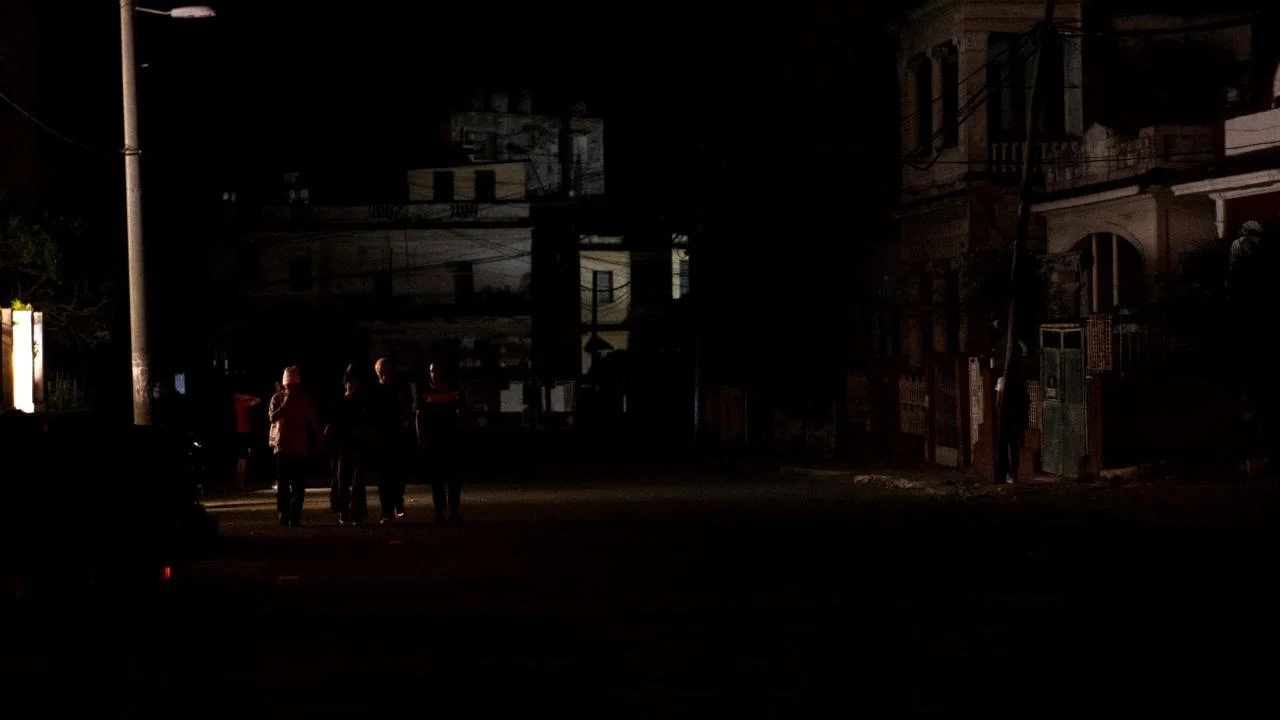
Residents of Nuevo Vedado in Havana took to their balconies Thursday night, banging pots and pans in protest just blocks away from Communist Party headquarters, as the Cuban capital endured another extended power outage. The demonstration came on the same day President Miguel Diaz-Canel opened the fifth edition of the Patria Colloquium, an international gathering of pro-regime supporters that critics say never lacks resources despite the country’s dire economic situation.
Video footage shared on social media by activist Magdiel Jorge Castro captured the protest, showing darkened apartment buildings with only occasional lights from mobile phones or the homes of residents fortunate enough to have generators or solar panels. “I hope Díaz-Canel listens carefully to the sound of tonight’s protest,” Castro wrote when sharing the video.
According to the state-run Unión Eléctrica (UNE), more than half of Cuba was simultaneously without power during Thursday’s peak hours. Social media comments revealed the severity of the crisis, with residents reporting extended blackouts lasting up to 30 consecutive hours, while others described receiving as little as two or three hours of electricity per day.
The contrast between the power crisis and the regime’s ability to stage political events was not lost on citizens. One commenter questioned whether there had been any “power deficit” for what they called “today’s circus” at a political rally in Vedado, where Diaz-Canel himself acknowledged that Cuba “absolutely lacks fuel for almost everything.”
The energy crisis is just one manifestation of Cuba’s broader economic struggles, which have led to increasing public expressions of discontent despite the risks involved.
In a separate but related development highlighting the government’s response to public protest, opposition activist Alexeis Serrano Aguila and his wife, Delis Frometa Suarez, have been detained since April 13 in Palma Soriano. The couple now faces potential three-year prison sentences on charges of contempt after peacefully protesting a fine, according to legal advisory group Cubalex.
Video footage of the April 11 incident shows Serrano Aguila angrily but non-violently protesting a 16,000-peso fine (approximately eight times the minimum monthly wage of 2,100 pesos, equivalent to $4 USD) for selling produce from a handcart on the street.
In the recording, Serrano Aguila accuses authorities of “living off abuse of power in Cuba, against the honest, honorable, hardworking people.” He argues that his small-scale produce selling is not a “business,” adding that “business is what the Government has, selling the people’s food, food that is sent to them for free.” His wife can be heard in the background demanding that authorities “let people live” and stating that “there is hunger” in Cuba.
Two days after the incident, when Serrano Aguila responded to a summons at the Palma Soriano police station, he was immediately detained. His wife was also arrested when she arrived to inquire about him. The couple’s detention has left their two young daughters in what exiled journalist Jose Raul Gallego describes as “an extreme situation of vulnerability,” as they now must care for their grandmother with minimal resources.
Serrano Aguila began a hunger strike immediately upon his detention, and according to Gallego, his health has already deteriorated. Neither he nor his wife, who suffers from diabetes, have reportedly received medical attention during their detention.
The dual crises of energy shortages and repression of economic activity illustrate Cuba’s mounting challenges. As blackouts continue to plague daily life across the island, citizens face difficult choices between silent endurance and the risks that come with public displays of discontent in a system where even a protest against a fine can potentially result in years of imprisonment.
Fact Checker
Verify the accuracy of this article using The Disinformation Commission analysis and real-time sources.

18 Comments
Pot-banging protests are a common tactic used by frustrated citizens to voice dissent. The fact that this is happening just blocks from the Communist Party headquarters suggests the depth of public anger over the power crisis.
It’s troubling that the government is spending resources on an international propaganda event while residents suffer extended blackouts. That seems to highlight the regime’s priorities.
The power outages and economic hardship described in this report are deeply concerning. I hope the Cuban government takes steps to address the root causes and ensure all citizens have access to reliable electricity.
Protests like this often arise when basic services and living standards decline. Tackling the underlying energy and economic issues should be the government’s top priority.
This sounds like a concerning situation in Cuba, with power outages and protests over government propaganda spending. I’m curious to learn more about the factors behind the energy crisis and how residents are coping.
It’s a shame the government seems to prioritize propaganda over addressing the severe power shortages affecting the people. I hope a solution can be found to restore reliable electricity.
This report highlights the stark contrast between the government’s propaganda efforts and the daily struggles of Cuban citizens dealing with power outages. I hope a constructive solution can be found to restore reliable electricity for all.
Protests like this often arise when basic services and living standards decline. Tackling the root causes of the power crisis should be a top priority for the Cuban government.
The pot-banging protests are a vivid expression of public frustration over the government’s apparent misplaced priorities. I’m curious to learn more about the technical, logistical and economic factors contributing to the power crisis in Cuba.
It’s concerning that the regime seems more focused on hosting a propaganda event than resolving the serious electricity shortages impacting the population. Addressing the root causes should be the top concern.
The pot-banging protests are a vivid demonstration of the public’s frustration with the government’s apparent misplaced priorities. I’m curious to learn more about the specific factors behind the energy crisis and how it’s impacting daily life.
It’s concerning that the regime seems to be focusing on propaganda events rather than resolving the serious power outages affecting the population. Addressing the underlying issues should be the government’s main focus.
This report illustrates the challenging situation many Cubans face, with extended blackouts amid an apparent focus on government propaganda. I’m curious to learn more about the technical and logistical factors behind the power crisis.
It’s unfortunate that the government seems more invested in hosting a propaganda event than resolving the serious electricity shortages impacting the population. Hopefully a more balanced approach can be found.
This report highlights the stark contrast between the government’s propaganda efforts and the very real challenges facing Cuban citizens, like extended power outages. I hope the regime takes steps to address the root causes of the energy crisis.
Protests like these pot-banging demonstrations are often a last resort when people feel their basic needs are not being met. Tackling the underlying issues should be the top priority.
The pot-banging protests are a powerful expression of public frustration with the government’s priorities. It’s concerning that the regime appears to be spending resources on propaganda while residents suffer extended power outages.
This situation underscores the need for the Cuban government to address the underlying energy and economic challenges facing the country, rather than focusing on propaganda efforts.