


Listen to the article
Uncertainty Looms Over Extended Hours Ballots in Texas Primaries
The fate of ballots cast during extended polling hours in Texas’ primary elections remained in limbo Wednesday, as officials in two counties await direction following intervention by the state’s highest court.
In Dallas County, Texas’ second most populous and heavily Democratic area, election officials have segregated votes cast after the standard 7 p.m. closing time. This comes after the Texas Supreme Court issued a stay Tuesday night, halting a lower court’s ruling that had extended voting hours. Williamson County, located north of Austin, faces the same situation with ballots from two polling locations now set aside.
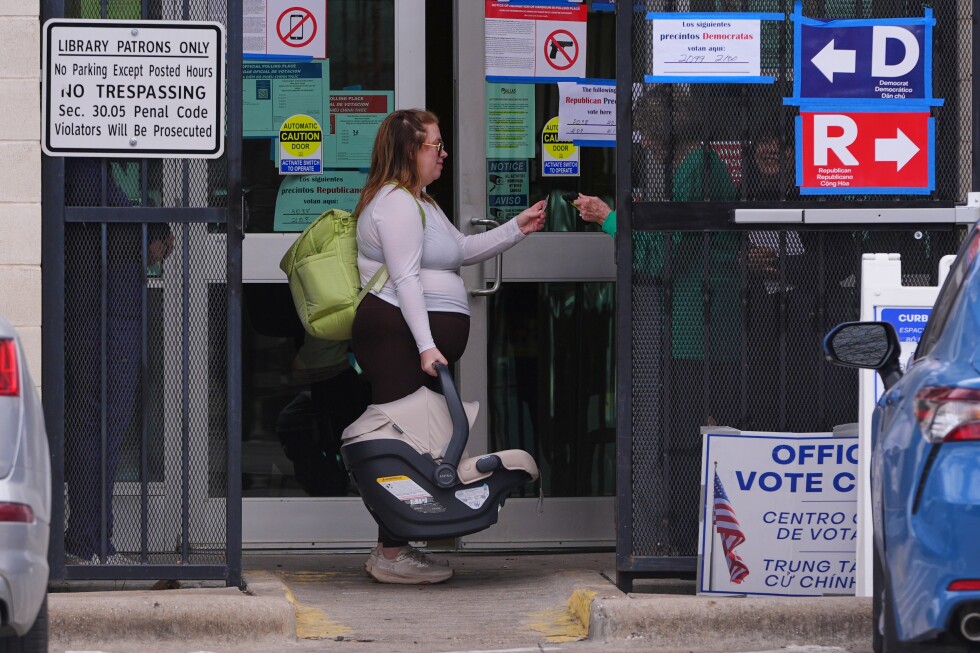
The extended hours were initially ordered in Dallas County after what a judge described as “voter confusion so severe” that it crashed the county election website. The confusion stemmed from a significant change in voting procedures — Dallas County voters were required to cast ballots at their assigned precincts rather than at any polling location in the county, as had been standard practice since 2019.
This procedural shift occurred because local Republicans opted against the countywide voting system, and under state law, Democrats were required to follow the same protocol. The result was widespread confusion, with many voters being turned away from polling places and redirected elsewhere.
“There is a case to be made, and we can document it, there were people who were disenfranchised,” said Terri Burke, executive director of the Texas Democratic Party. She expressed pessimism about the chances of the late ballots being counted, noting that Texas law makes it difficult to extend polling hours.
While the exact number of affected ballots remains unclear, Dallas County Elections Department data shows 2,316 in-person “provisional” ballots were rejected or pending. This figure includes ballots flagged for various issues, not just those cast during extended hours. By comparison, nearly 280,000 people voted in the county’s election overall, according to unofficial figures.
The legal challenge to the extended hours came from the office of Texas Attorney General Ken Paxton, who himself advanced to a runoff Tuesday against Senator John Cornyn for the Republican nomination for U.S. Senate. Shortly after Paxton’s challenge, the state Supreme Court issued orders for both Dallas and Williamson counties, instructing officials to separate ballots cast by voters who were not in line by the original 7 p.m. deadline.
Emily French, policy director for voting advocacy group Common Cause Texas, explained that setting aside ballots cast during extended hours is standard procedure. She cited El Paso as another example where voting was extended for an hour on Tuesday due to problems with voter check-in systems earlier in the day. French indicated these ballots would likely be counted if no one contests the extension.
The situation initially raised concerns about potential impacts on high-profile races, particularly the Democratic primary for U.S. Senate. Dallas is the home base for Congresswoman Jasmine Crockett, though she later conceded to state lawmaker James Talarico, making the ballot issue less consequential for that race.
Burke identified a deeper systemic issue beyond the immediate ballot controversy. She plans to push the legislature to repeal a 2006 law requiring both parties to hold joint primaries. “If one party wants to wreck their primary, they should be able to do that but they should not be able to wreck someone else’s,” Burke stated.
Anthony Gutierrez, executive director of Common Cause Texas, emphasized that the organization continues “to monitor this situation and will be weighing all options to ensure every Texan is able to have their vote counted.”
The situation highlights the ongoing tensions in Texas voting administration, where procedural changes and legal challenges can create significant confusion for voters and potentially affect electoral outcomes, particularly in closely contested races.
Fact Checker
Verify the accuracy of this article using The Disinformation Commission analysis and real-time sources.

22 Comments
The voting procedure changes in Dallas County seem to have caused significant disruption. I hope election officials can learn from this experience and work to improve the system for future elections.
Agreed. Maintaining consistent, well-communicated voting processes is key to preserving public trust in the integrity of elections.
This situation underscores the complexities of modern election administration. I’m curious to see how the courts resolve the issue of the extended voting hours ballots.
Yes, it’s a nuanced challenge. Careful consideration of all relevant factors will be crucial for reaching a fair and well-reasoned decision.
Voter access and integrity are both important principles that need to be balanced. I’m curious to see how the courts navigate this tricky situation in Texas.
Yes, it’s a delicate balance. Hopefully the final outcome upholds democratic values while providing clarity for future elections.
The voting procedure changes in Dallas County seem to have caused significant disruption and confusion for voters. I hope election officials can learn from this experience and work to improve the system going forward.
Absolutely. Maintaining consistent, well-communicated voting processes is key to preserving public trust in the integrity of elections.
This situation highlights the importance of clear and transparent election administration. Hopefully the courts can provide timely guidance to ensure all valid votes are counted.
Yes, it’s crucial that the electoral process is fair, accessible, and well-understood by all voters, regardless of their political affiliation.
The extended voting hours were intended to address voter confusion, but now the situation is further complicated by legal uncertainty. I hope the courts can provide a timely and impartial resolution.
Agreed. Voters should not be caught in the middle of these legal battles over election procedures.
The voting changes in Dallas County seem to have caused significant confusion for voters. I hope election officials can learn from this experience to improve processes going forward.
Agreed. Consistent and well-communicated voting procedures are essential for maintaining public trust in elections.
This situation highlights the importance of clear and consistent voting procedures. Hopefully the courts can provide timely guidance to ensure all eligible votes are counted fairly and accurately.
Agreed. Voting should be as straightforward and accessible as possible for all citizens.
Voter access is a fundamental democratic principle, but it must be balanced with electoral integrity. I hope the Texas courts can find a solution that upholds both of these crucial values.
Absolutely. Protecting the rights of all eligible voters while ensuring the security of the electoral process is a delicate but vital task.
It’s troubling to see these types of voting issues arise, especially in a major metropolitan area like Dallas County. Transparent and efficient election administration is critical for upholding democratic principles.
Absolutely. Voters deserve clarity and confidence in the electoral process, no matter their political affiliation.
Voting is a fundamental right, and it’s concerning to see uncertainties around the counting of ballots. I hope the courts can provide a swift and impartial resolution to this issue.
Agreed. Ensuring the integrity of elections while protecting the rights of all eligible voters is a delicate but vital task for our democracy.