


Listen to the article
Trump Administration Appeals Federal Ruling on National Guard Deployment to Portland
The Trump administration on Friday filed an appeal against a federal judge’s ruling that blocked its attempt to deploy National Guard troops to Portland, Oregon. The decision marks the latest development in an ongoing legal battle between the White House and state officials over federal authority in local jurisdictions.
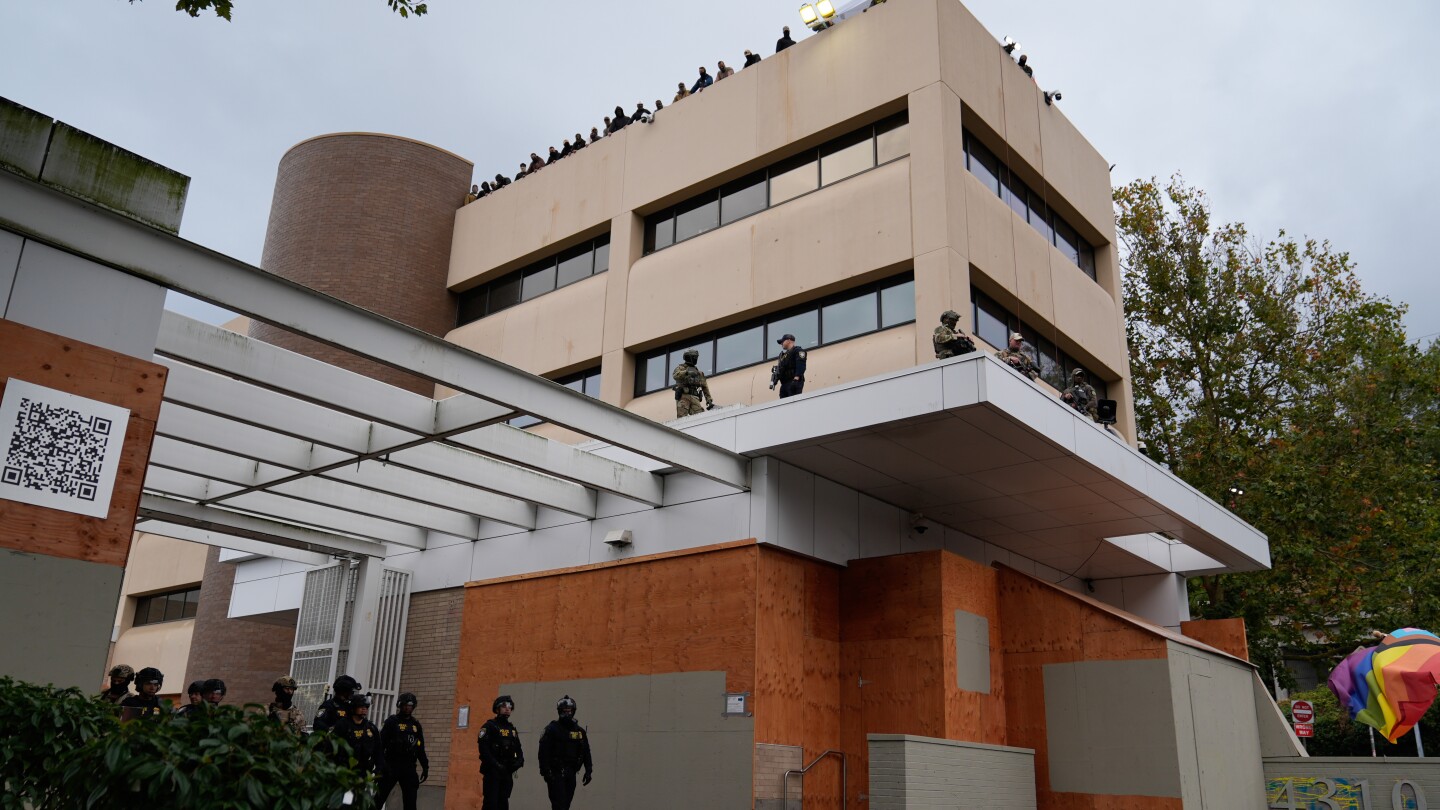
U.S. District Court Judge Karin Immergut, a Trump appointee, issued the original ruling last week following a three-day trial that examined whether protests at Portland’s U.S. Immigration and Customs Enforcement building justified military deployment under federal law. The city of Portland and the state of Oregon had filed the lawsuit in September seeking to prevent the deployment.
In her comprehensive 106-page opinion, Judge Immergut acknowledged that presidential decisions regarding National Guard activation deserve “great deference.” However, she ultimately determined that President Trump lacked legal justification for the deployment because he failed to establish either the existence of a rebellion or imminent danger of one, or that law enforcement could not be maintained with regular forces.
The administration has criticized the decision, maintaining that troops were necessary to protect federal personnel and property in Portland, a city Trump has characterized as “war ravaged” amid ongoing protests.
“The district court’s ruling made it clear that this administration must be accountable to the truth and to the rule of law,” Oregon Attorney General Dan Rayfield said in a statement responding to the appeal. “We will keep defending Oregon values and standing up for our state’s authority to make decisions grounded in evidence and common sense.”
The legal confrontation began escalating in early October when Judge Immergut issued two temporary restraining orders blocking the deployment. The first order specifically prevented Trump from deploying 200 members of the Oregon National Guard. When the administration attempted to circumvent this ruling by sending California troops instead, the judge issued a second order blocking the deployment of any state’s National Guard to Oregon.
The 9th U.S. Circuit Court of Appeals has already ordered that no troops be deployed while the appeals process moves forward.
This case represents part of a broader pattern of resistance from Democratic-led cities targeted by the Trump administration for military intervention. Chicago, for instance, has filed a separate lawsuit on similar grounds that is now before the U.S. Supreme Court. These municipalities argue that the president has failed to meet the legal threshold required for deploying troops and that such actions would violate states’ sovereignty.
The dispute highlights fundamental tensions between federal and state authority during periods of civil unrest. Federal law sets specific conditions under which military forces can be deployed domestically, requiring clear evidence that local authorities cannot maintain order through conventional means.
Legal experts note that this case could establish important precedents regarding presidential power and the circumstances under which federal military forces can be deployed within U.S. cities against the wishes of local and state governments.
The appeal will now proceed through the federal court system, with both sides preparing to argue their positions before the appellate court in the coming weeks. If either party remains dissatisfied with the outcome, the case could potentially join Chicago’s at the Supreme Court, setting the stage for a definitive ruling on presidential authority to deploy military forces domestically.
For Portland residents, the legal battle represents more than abstract constitutional principles, as the city continues to navigate tensions between protesters, local police, and federal authorities that have periodically escalated over the past year.
Fact Checker
Verify the accuracy of this article using The Disinformation Commission analysis and real-time sources.

12 Comments
The judge’s comprehensive ruling seems to have carefully weighed the legal factors involved. I appreciate the detailed analysis that went into determining the president lacked justification for the troop deployment under federal law.
You’re right, the 106-page opinion indicates a thorough examination of the issues. It will be important for the appeals court to give the matter similar rigorous consideration.
The judge’s ruling that the president lacked legal justification for the troop deployment is an interesting development. I’m curious to see how the administration’s appeal fares and whether the higher courts uphold or overturn the decision.
You raise a good point. The appellate review process will be crucial in determining whether the initial ruling stands or if the administration’s arguments prevail. It’s an important case to follow.
This legal battle over federal troop deployment seems to highlight the ongoing tensions between the White House and state/local officials. I hope the appeals process can provide more clarity on the boundaries of presidential authority in such situations.
Absolutely, these types of disputes over the limits of federal power versus state/local control are often highly contentious. A definitive judicial ruling could help set an important precedent.
This is a complex legal battle over the limits of federal power and local authority. I’m curious to see how the appeal plays out and whether the courts will uphold the judge’s ruling against the troop deployment.
The administration’s decision to appeal suggests they believe they have a strong legal case for the deployment. It will be interesting to see the arguments made on both sides.
The administration’s decision to appeal suggests they believe they have solid legal grounds to deploy federal troops, despite the judge’s ruling. I’ll be closely following how this case progresses through the courts.
You’re right, the appeal indicates the administration is confident in their position. It will be interesting to see if the higher courts agree with the lower court’s reasoning or side with the federal government’s arguments.
This case touches on the delicate balance between federal authority and local governance. I have mixed feelings – I understand the administration’s concerns, but I’m also wary of federal forces being deployed without clear legal justification.
It’s a challenging situation without easy answers. Hopefully the appeals process can help clarify the scope of presidential powers in this type of scenario.