


Listen to the article
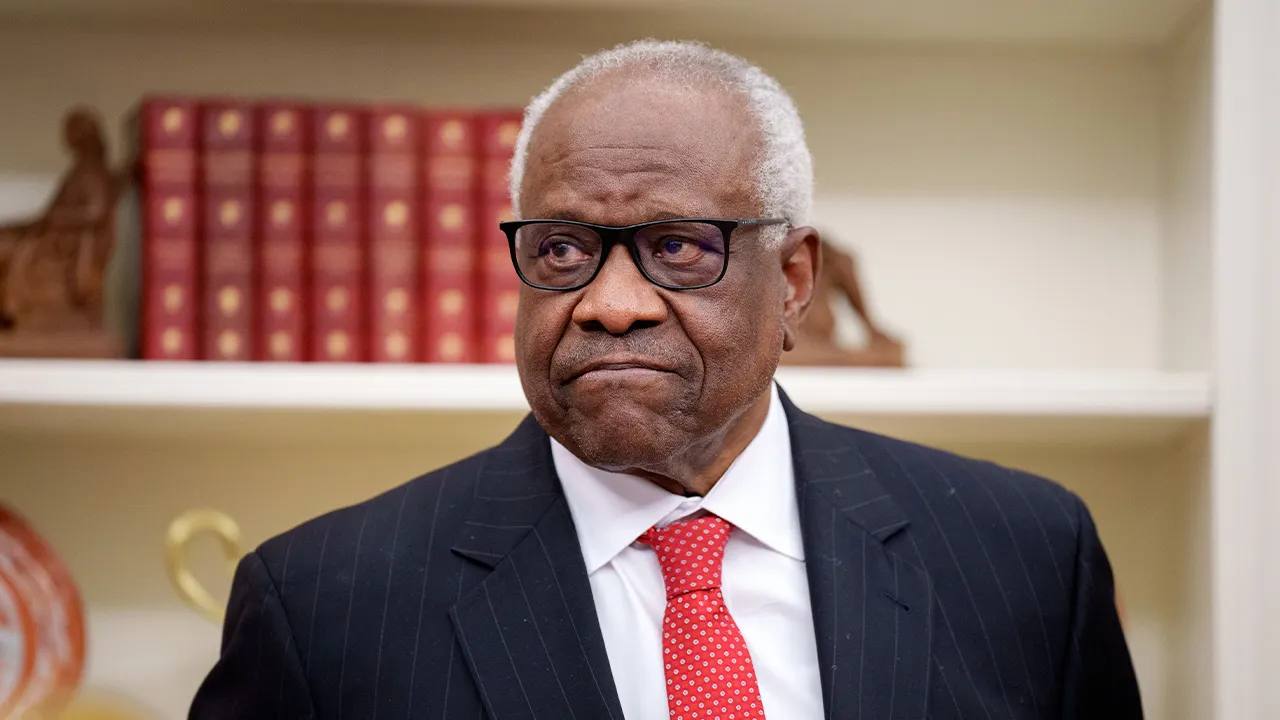
In a significant development at the Supreme Court, Justice Clarence Thomas has called for further restrictions on the Voting Rights Act, arguing that a key anti-discrimination provision should never apply to redistricting cases.
“As I explained more than 30 years ago, I would go further and hold that [section two] of the Voting Rights Act does not regulate districting at all,” Thomas wrote in a concurring opinion, joined by Justice Neil Gorsuch.
Thomas’s remarks came as part of the Supreme Court’s 6-3 ruling in Louisiana v. Callais, which upheld a finding that one of Louisiana’s majority-Black congressional districts constituted an unconstitutional racial gerrymander. The decision significantly narrows section two of the Voting Rights Act, a cornerstone civil rights-era law that prohibits voting policies from discriminating based on race.
While the majority opinion already restricted states’ ability to use race as a factor when drawing majority-minority districts, Thomas advocated for a more sweeping interpretation. He argued that section two should be completely removed from redistricting considerations, effectively limiting its application to ballot access and voting procedures only.
“Today’s decision should largely put an end to this ‘disastrous misadventure’ in voting-rights jurisprudence,” Thomas wrote, quoting himself from a 1994 concurrence.
Thomas, who was appointed by President George H.W. Bush and is the second Black justice in Supreme Court history after Thurgood Marshall, has consistently advocated for limiting the scope of the Voting Rights Act throughout his tenure. In the 1994 case Holder v. Hall, he argued that using section two to challenge district maps for allegedly diluting minority votes represented a misreading of the law.
“The assumptions upon which our vote dilution decisions have been based should be repugnant to any nation that strives for the ideal of a color-blind Constitution,” Thomas wrote at that time.
The majority opinion in the Louisiana case, authored by Justice Samuel Alito, didn’t go as far as Thomas proposed. Alito wrote that while compliance with the Voting Rights Act could sometimes involve racial considerations, Louisiana wasn’t required to create a second majority-Black district, making its map unconstitutional.
“Our acceptance of race-based state action has been rare for a reason,” Alito wrote, adding that Louisiana had “no compelling interest” in concentrating Black voters into the district in question.
The case originated from Louisiana’s redistricting efforts following the 2020 census, when the state added a second majority-Black district after a lower court ruled the Voting Rights Act required it. That map was subsequently struck down as a racial gerrymander, prompting the legal challenge that eventually reached the Supreme Court.
The three liberal justices on the court, led by Obama appointee Justice Elena Kagan, offered a sharp dissent. Kagan argued that the majority’s decision, and particularly Thomas’s more stringent view, effectively gutted protections against diluting racial minorities’ voting power.
“Under the Court’s new view of Section 2, a State can, without legal consequence, systematically dilute minority citizens’ voting power,” Kagan wrote. She further claimed the ruling “renders Section 2 all but dead letter.”
The decision represents another significant restriction on the Voting Rights Act by the court’s conservative majority. In recent years, the court has systematically narrowed the scope and application of the landmark civil rights legislation, including a 2013 ruling that struck down the formula determining which states needed federal approval before changing voting laws.
Voting rights advocates have expressed alarm at these developments, arguing they undermine decades of progress in ensuring equal access to the ballot box for racial minorities. Meanwhile, conservatives have celebrated the court’s moves as returning districting authority to state legislatures and promoting race-neutral policies in line with constitutional principles.
The ruling is expected to influence ongoing redistricting battles across the country, particularly in states with significant minority populations where questions of representation remain contentious.
Fact Checker
Verify the accuracy of this article using The Disinformation Commission analysis and real-time sources.

9 Comments
Justice Thomas’s call to limit the Voting Rights Act’s application to redistricting seems like a significant shift that could have major implications. I’ll be interested to see how this ruling is interpreted and implemented at the state level.
Agreed, the Supreme Court’s decision to narrow the Act’s scope in this area is quite impactful. It will be important to closely monitor the impacts on electoral districts and minority representation.
Racial gerrymandering is a serious issue that can distort election outcomes. While I respect the legal arguments, I’m concerned that further restricting the Voting Rights Act may make it harder to combat unfair districting practices.
That’s a valid concern. Ensuring fair and equitable political representation is crucial, so I hope the courts can strike the right balance as they interpret this ruling.
As a citizen, I’m concerned that further limiting the Voting Rights Act’s application to redistricting could make it harder to combat racial gerrymandering and ensure fair representation. This seems like an area where the courts will continue to grapple with complex tradeoffs.
This is a highly charged and politically divisive issue. I appreciate Justice Thomas laying out his legal reasoning, but I worry that his proposed interpretation could undermine hard-won civil rights protections.
You make a fair point. The Voting Rights Act has been a cornerstone of voting equality, so any significant changes to its scope deserve very careful consideration.
This is a complex and controversial issue around voting rights and redistricting. While I understand the legal arguments, I’m concerned that further restricting the Voting Rights Act could make it harder for minority communities to have fair representation.
You raise a fair point. Protecting voting rights for all Americans is critical for a healthy democracy. This will likely be an ongoing debate with strong views on both sides.