


Listen to the article
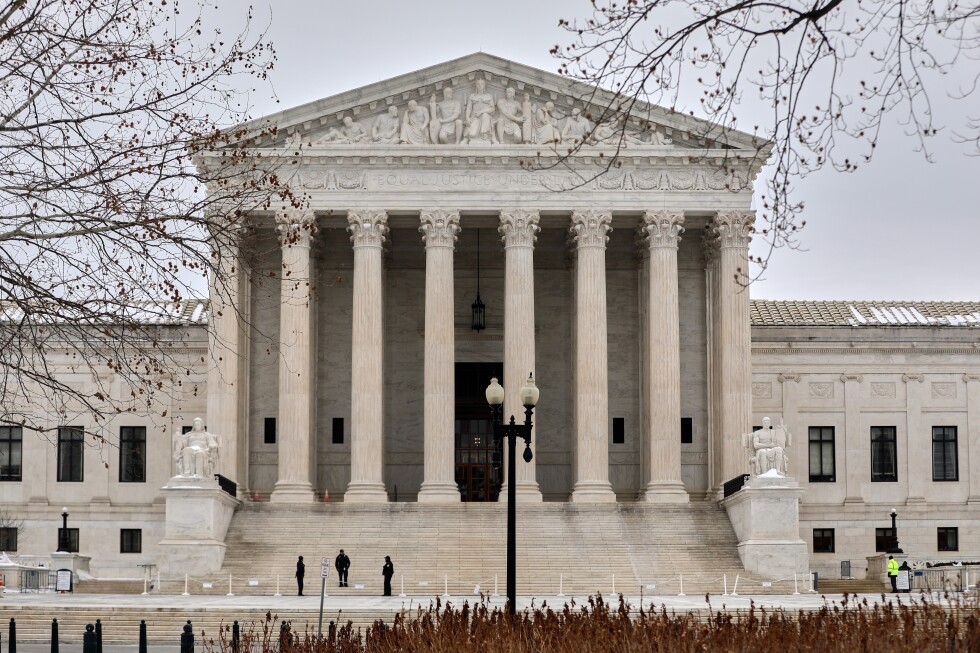
The Supreme Court on Monday temporarily blocked a California law that prevented schools from informing parents if their children identify as transgender without the student’s consent. The decision represents a significant victory for religious parents who argued the state law infringed upon their religious liberty.
In an unsigned order, the Court’s conservative majority reinstated a lower-court injunction that blocks enforcement of California’s parental notification ban while the case continues to work through the judicial system. The justices determined that the parents challenging the law “have sincere religious beliefs about sex and gender, and they feel a religious obligation to raise their children in accordance with those beliefs.”
The challenge was brought by Catholic parents represented by the Thomas More Society, who claimed California’s policies forced schools to mislead them and secretly facilitate their children’s gender transitions despite parental objections. The organization hailed the ruling as “the most significant parental rights ruling in a generation.”
California officials, meanwhile, defended the law as necessary to protect vulnerable students’ privacy, particularly those who might face rejection at home. The state argued its policies were designed to balance students’ privacy rights with parental authority.
The Court’s three liberal justices dissented from the decision. Justice Elena Kagan criticized the majority for disrupting state policy before the case had completed its normal journey through the lower courts. “If nothing else, this Court owes it to a sovereign State to avoid throwing over its policies in a slapdash way,” Kagan wrote in her dissent.
Governor Gavin Newsom’s office expressed disappointment with the ruling, with spokesperson Marissa Saldivar saying it “undermines student privacy and the ability to learn in a safe and supportive classroom, free from discrimination based on gender identity.” The administration maintained that teachers should focus on education rather than acting as “gender cops.”
Notably, Justices Samuel Alito and Clarence Thomas indicated they would have gone further than the majority by also granting teachers’ appeals to lift restrictions affecting them.
This decision aligns with a recent pattern of Supreme Court rulings favorable to religious plaintiffs and those challenging LGBTQ+ protections. In recent months, the Court has upheld state bans on gender-affirming healthcare for minors and appears poised to allow states to ban transgender athletes from girls’ sports teams.
The Court has also previously ruled that parents may withdraw their children from public school lessons featuring LGBTQ+ content if they have religious objections.
School policies regarding transgender students have increasingly come under judicial scrutiny nationwide. While the Supreme Court declined to hear a similar case from Wisconsin last December, three conservative justices signaled interest in addressing what Justice Alito called “an issue of great and growing national importance.”
Additional cases from Massachusetts, Florida, and other states—where parents claim schools facilitated social transitions without informing them—are also seeking the high court’s attention.
Adding to the legal complexity, the Trump administration determined in January that California’s policies violated parents’ right to access their children’s education records. The Justice Department has also pursued litigation against states with transgender athlete policies it contends violate federal civil rights law.
Today’s ruling does not resolve the underlying legal questions but puts California’s law on hold while the case continues through the appeals process. The temporary block will remain in effect until the courts reach a final determination on whether the law unconstitutionally burdens religious freedom.
The case represents a significant flashpoint in the ongoing national debate over parental rights, religious liberty, and protections for transgender youth in educational settings.
Fact Checker
Verify the accuracy of this article using The Disinformation Commission analysis and real-time sources.

14 Comments
Reasonable people can disagree on the right approach here. Religious freedom is important, but so is supporting vulnerable youth. I hope all parties can find a compromise that respects everyone’s rights and concerns.
As a concerned citizen, I hope the various stakeholders can find a way to address this problem that respects everyone’s rights and concerns. Compromise and nuance will be key to resolving this complex situation.
This is a contentious and high-stakes issue. I’ll be following the ongoing legal battle with interest to see how the courts ultimately rule on the balance between parental rights and student protections.
This ruling may have significant implications for transgender students in California schools. It will be interesting to see how the state responds and how the legal battle unfolds going forward.
The Supreme Court’s decision to block this California law suggests the issue is far from settled. The debate over parental rights versus student privacy will surely continue to play out in the courts.
While I understand the concerns of the religious parents, the privacy and safety of transgender students also need to be prioritized. This is a complex situation that will require careful balancing of competing interests.
While I respect the religious convictions of the parents, the wellbeing of transgender students also needs to be a priority. This is a nuanced issue without clear-cut solutions.
This is a sensitive and divisive issue without easy answers. I encourage all parties to approach it with empathy, nuance and a genuine desire to protect the wellbeing of transgender youth while also respecting parental rights.
The Supreme Court’s decision reflects the ongoing debate around parental rights versus student privacy. Both sides have valid concerns that need to be carefully weighed. Continued legal battles seem likely on this issue.
As a parent, I can understand the desire to be involved in major decisions about one’s child. But this law also seems aimed at protecting student privacy and safety. It’s a complex issue without easy answers.
This is a high-stakes and contentious issue that will likely continue to generate heated debate. I hope the courts and policymakers can find a solution that respects the rights and concerns of all involved.
This is a complex and sensitive issue. While parents have rights, the privacy and wellbeing of transgender students must also be protected. Balancing these interests will require nuanced policies and open dialogue.
The clash between parental rights and student privacy rights is a challenging one. I hope the courts can find a balanced solution that respects all stakeholders, especially the vulnerable transgender youth at the center of this.
The Supreme Court’s decision represents a setback for transgender students in California, but the legal battle is far from over. I’ll be following this issue closely to see how it unfolds.