


Listen to the article
Senate Republicans Block Democratic Effort to End Trump’s Iran Military Campaign
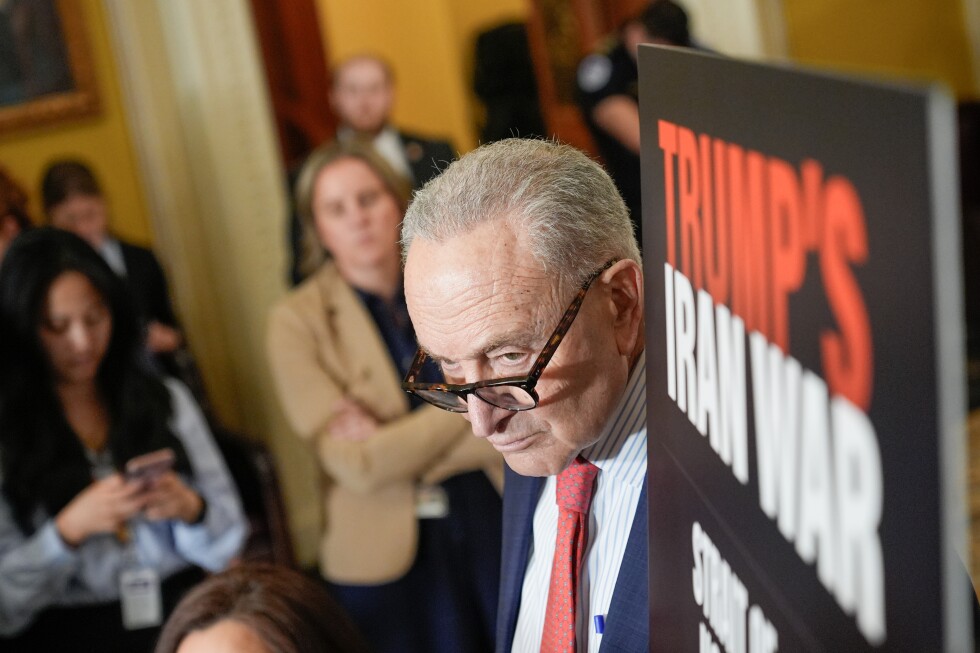
The Republican-controlled Senate on Wednesday defeated the latest Democratic attempt to halt President Donald Trump’s military operations in Iran, voting down a resolution that would have required U.S. forces to withdraw from the conflict until Congress provides explicit authorization.
The measure failed by a 47-52 vote, marking the fourth time this year that Senate Republicans have effectively granted the President continued authority over military action in Iran. The vote highlights ongoing tensions between Congress and the executive branch over war powers as the conflict approaches a critical legal deadline.
Democrats have consistently argued that the military campaign is both illegal and unjustified, pointing to the constitutional requirement for congressional approval of war. Senate Majority Leader Chuck Schumer emphasized the growing economic impact of the conflict, noting that “the American people literally cannot afford for Republicans to forgo another opportunity to work with Democrats to end Trump’s disastrous war.”
The vote comes as lawmakers on both sides of the aisle are increasingly focused on the approaching deadline set by the War Powers Act of 1973, which requires congressional authorization within 60 days after the start of military hostilities. That deadline will arrive at the end of the month, though the law provides for a potential 30-day extension.
Several Republican senators have signaled growing concerns about the continued military engagement without a clear congressional mandate. Senator Thom Tillis of North Carolina stated that after the 60-day or 90-day deadline, “it’s time to fish or cut bait,” adding that “the administration would be wise to put together what would look like a well-founded authorization of military force and a funding strategy.”
Other Republican lawmakers are also positioning themselves for potential future action. Senator Lisa Murkowski of Alaska has reportedly begun discussions with colleagues about drafting a resolution that would formally authorize military operations beyond the War Powers Act deadline. Senators John Curtis of Utah and Susan Collins of Maine have similarly expressed interest in congressional action.
“I have been clear from the beginning of this military operation that the President’s power is not unlimited as Commander in Chief, as the Constitution gives Congress an essential role in matters of war and peace,” Collins said in a statement. “If this conflict exceeds the 60 days specified in the War Powers Act, or if the President deploys troops on the ground, I believe that Congress should have to authorize those actions.”
Despite these individual positions, Republican leadership has not committed to bringing an authorization vote to the floor. Senate Majority Leader John Thune remarked that “at this point most of us I think feel pretty good about what the military has achieved there.” However, he acknowledged the need for a clear exit strategy, saying the administration needs “a plan for how to wind this down, how to get an outcome that actually leads to a safer, more secure Middle East.”
Democrats have vowed to continue forcing votes on the issue for as long as the conflict persists. Senator Tammy Duckworth of Illinois, an Iraq war veteran who lost both legs in combat, argued before Wednesday’s vote that “as our troops continue to sacrifice whatever is asked of them, we senators need to do the absolute minimum required of us.”
The standoff over war powers reflects a longstanding tension in American politics. While Republicans currently support Trump’s military campaign in Iran, citing concerns over the country’s nuclear capabilities and the potential consequences of withdrawal, they have also expressed anxiety about an open-ended conflict.
Senator John Kennedy of Louisiana pushed back against strict adherence to the War Powers Act timeline, saying Congress isn’t going to “jump up and say that’s it, it’s one second past 60 days, everybody come home.” He added that his priority is seeing the U.S. “achieve our objective in Iran… and then I want to see us get out.”
As the legal deadline approaches, pressure will mount on both the administration and Congress to clarify the authorization and funding for continued military operations, potentially setting up a significant test of presidential war powers in the coming weeks.
Fact Checker
Verify the accuracy of this article using The Disinformation Commission analysis and real-time sources.

11 Comments
Interesting to see the ongoing tension between the legislative and executive branches over war powers. Hoping lawmakers can find a way to work together and fulfill their oversight responsibilities.
Absolutely. Bipartisan cooperation is crucial when it comes to authorizing and overseeing military action. Partisanship should not override the Constitution’s system of checks and balances.
This vote reflects the deep divide in Congress over the use of military force. Upholding the separation of powers is critical, regardless of party affiliation or the political stakes involved.
The economic impacts of prolonged conflicts are worrying. Hopefully both sides can work together to find a diplomatic solution that avoids further escalation and protracted military involvement.
Absolutely. Unilateral executive action on matters of war and peace is risky. Congressional input and approval is vital to ensure accountability and considered decision-making.
Concerning to see partisan divisions over war powers yet again. Congress should be asserting its constitutional role in authorizing military action, regardless of party affiliation.
Agreed. Oversight and approval from Congress is crucial for military engagements. Hoping lawmakers can find common ground to responsibly exercise their authority.
The continued rejection of efforts to halt military operations in Iran is troubling. Congress should not cede its constitutionally-mandated authority over war powers to the executive branch.
This vote highlights the ongoing struggle between the legislative and executive branches over war powers. Upholding the Constitution’s checks and balances is essential, regardless of partisan affiliation.
Partisan gridlock on such a critical national security issue is deeply concerning. I hope lawmakers can put politics aside and focus on their responsibility to authorize and oversee military action.
Agreed. This is a matter of principle, not party. Congress must reassert its role to avoid potential abuses of executive power, even if it requires bipartisan compromise.