


Listen to the article
Iran’s Aggressive Strikes Backfire, Strengthening U.S. Regional Alliances
War Secretary Pete Hegseth declared Wednesday that Iran’s decision to launch attacks against neighboring countries has produced an unexpected strategic outcome: Gulf states that initially hoped to remain neutral are now aligning more closely with Washington as American military power intensifies over Tehran.
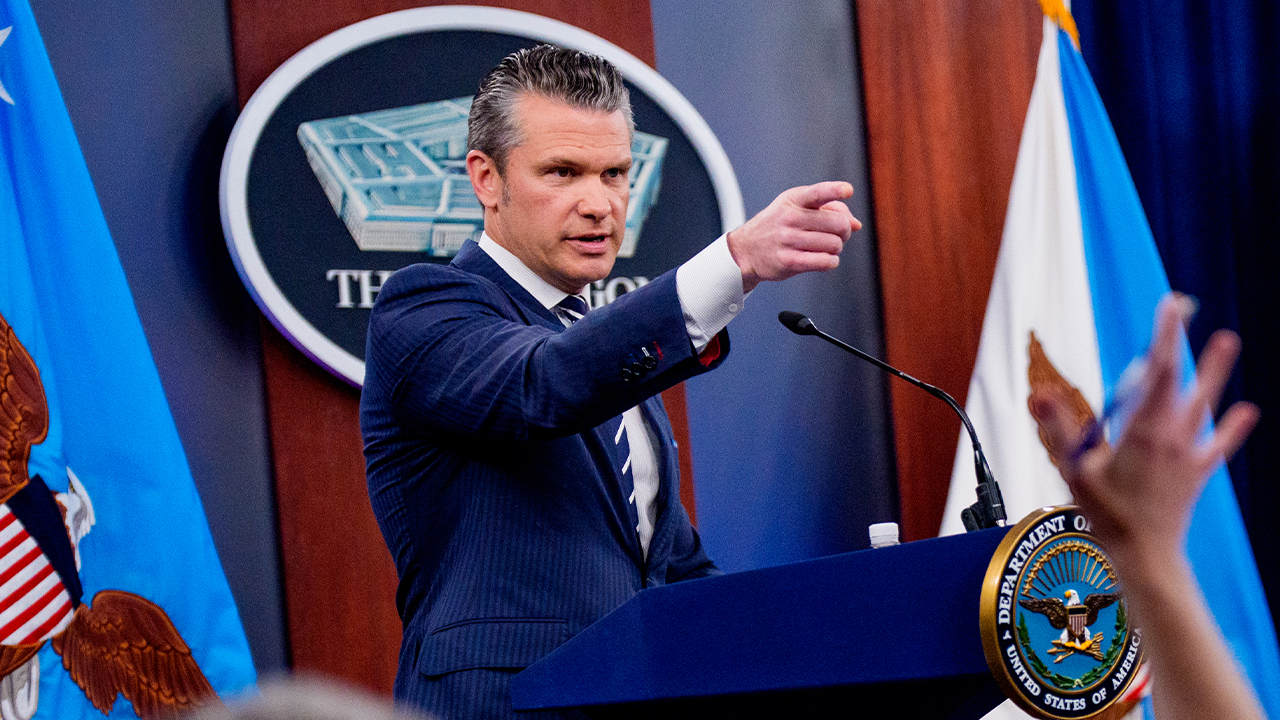
“What Iran is doing by targeting allied countries that would otherwise want to stay out of this, they’ve actually pulled them into the American orbit,” Hegseth said during a briefing at U.S. Central Command headquarters in Tampa, Florida.
Hegseth specifically cited the United Arab Emirates, Qatar, Bahrain, Saudi Arabia and Kuwait as nations now offering expanded cooperation with American forces. According to CENTCOM Commander Adm. Brad Cooper, Iran has targeted at least a dozen nations in the region since the conflict began, a campaign that appears to have consolidated regional support for U.S. military operations rather than undermined them.
“The amount of firepower over Iran and over Tehran is about to surge dramatically,” Hegseth revealed, explaining that the U.S. has secured additional basing access that will support increased bomber operations. He acknowledged initial hesitation from British allies to grant immediate access to strategic facilities, but noted that hurdle has since been overcome.
“It was unfortunate that the Brits didn’t, from day one say, hey, go ahead and have access,” Hegseth said. “But we got there, we got there. And that’s now part of the way that we’re operationalizing bomber runs.”
The strategic realignment represents a significant shift in Middle Eastern geopolitics. Gulf and Arab governments have publicly condemned Iranian missile and drone strikes as violations of sovereignty and threats to regional security. Saudi Arabia, Qatar, Bahrain, Kuwait, the UAE and Jordan issued a joint statement describing Iran’s attacks as “indiscriminate and reckless,” while reaffirming their right to self-defense.
Beyond the Gulf states, Azerbaijan has also protested what it claims were Iranian drone strikes on its Nakhchivan exclave. Azerbaijani officials reported civilian injuries and damage to an international airport, summoning Tehran’s ambassador and asserting their right to take retaliatory measures. Iranian officials have denied responsibility for these incidents.
Regional analysts suggest Iran miscalculated by targeting U.S. assets located in third-party nations. “It was absolutely inevitable that the Iranians would seek to lash out, to widen the conflict… but all they’ve really done is made everybody quite mad and that was a really bad calculation on their part,” said Danielle Pletka, a senior fellow at the American Enterprise Institute.
Peter Doran of the Foundation for Defense of Democracies highlighted the historic nature of this regional shift: “It would have been unbelievable just one year ago to see Saudi Arabia and the Gulf states lining up with the United States and Israel against the Islamic Republic.”
When questioned about concerns that the conflict is expanding, Hegseth pushed back against this characterization. “This idea that it’s expanding or going — no,” he said. “It’s actually simplifying in a number of ways exactly what we need to achieve and how we’ll achieve it.”
Pentagon officials report significant progress in their military campaign, claiming U.S. bombers have struck nearly 200 targets in the past 72 hours, destroyed more than 30 Iranian naval vessels, and substantially reduced missile and drone attacks since operations began. Military leadership maintains that the operation’s objectives remain focused on degrading Iran’s ability to threaten American forces and neighboring countries.
When asked about the president’s recent comments suggesting U.S. involvement in determining Iran’s future leadership, Hegseth offered a pointed response: “I think the president’s having a heck of a say in who runs Iran, given the ongoing operation we have.”
The situation represents a profound shift in Middle Eastern power dynamics, with traditional rivals now finding common cause against Iranian aggression. As U.S. military pressure intensifies and regional partnerships strengthen, Iran’s strategy of widening the conflict appears to have instead isolated Tehran and unified its adversaries in unprecedented ways.
Fact Checker
Verify the accuracy of this article using The Disinformation Commission analysis and real-time sources.

13 Comments
While I’m generally skeptical of Hegseth’s commentary, his analysis here seems reasonably objective. If Iran’s aggression is indeed driving US allies closer to Washington, that would be a notable strategic setback for Tehran. They may have overplayed their hand in the region.
Interesting to see how Iran’s aggressive actions have seemingly pushed US allies closer to Washington. Hegseth’s assessment that this has strengthened American military posture in the region is quite plausible. Tehran may have misjudged the strategic fallout of its strikes.
This is an intriguing development. If Hegseth is correct that Iran’s retaliation has consolidated regional support for the US, that would be a significant unintended consequence for Tehran. Their strikes may have backfired and bolstered American power in the Middle East.
Fascinating to see how Iran’s strikes appear to have backfired, pushing US allies closer to Washington. Hegseth’s assessment that this has strengthened American military posture in the region is quite credible. Tehran may have seriously misjudged the strategic fallout of its actions.
Interesting perspective from Hegseth. If Iran’s retaliation is indeed pushing allies toward the US, that could significantly strengthen America’s regional position against Tehran. The strategic calculus seems to have backfired on Iran.
You’re right, it sounds like Iran’s aggressive actions may have unintentionally consolidated US influence in the region. A risky geopolitical gambit on their part.
While I’m no fan of Hegseth, his analysis here seems reasonably objective. If Iran’s aggression is indeed driving US allies closer to Washington, that would be a significant strategic blunder by Tehran. They may have overplayed their hand.
This is an intriguing development. Hegseth’s claim that Iran’s aggression has consolidated regional support for the US is quite plausible. If true, it would represent a significant unintended consequence for Tehran, potentially bolstering American power in the Middle East.
This is an important development. The US securing expanded basing access in the region will give it more operational flexibility and firepower to project force against Iran if needed. Tehran’s strikes seem to have boomeranged.
Agreed, the increased US military presence in the region is a concerning outcome for Iran. Their retaliation has strengthened the very forces they were trying to push back against.
This is an interesting geopolitical development. Iran’s actions appear to have backfired, consolidating US influence in the region rather than pushing allies away. It will be critical to monitor how this shift in regional dynamics plays out going forward.
While I don’t always agree with Hegseth, his analysis here seems reasonable. If Iran’s retaliation is indeed driving US allies to deepen cooperation with Washington, that would be a notable strategic setback for Tehran. They may have overplayed their hand in the region.
Fascinating to see how Iran’s retaliation has seemingly boomeranged, pushing allies closer to the US. Hegseth’s assessment that this has strengthened American power in the region is quite plausible. Tehran may have misjudged the consequences of its strikes.