


Listen to the article
Obama Urges Virginians to Support Redistricting Measure That Could Boost Democrats in Midterms
Former President Barack Obama has thrown his weight behind a controversial Virginia redistricting ballot measure that could significantly reshape the state’s congressional delegation ahead of this year’s critical midterm elections.
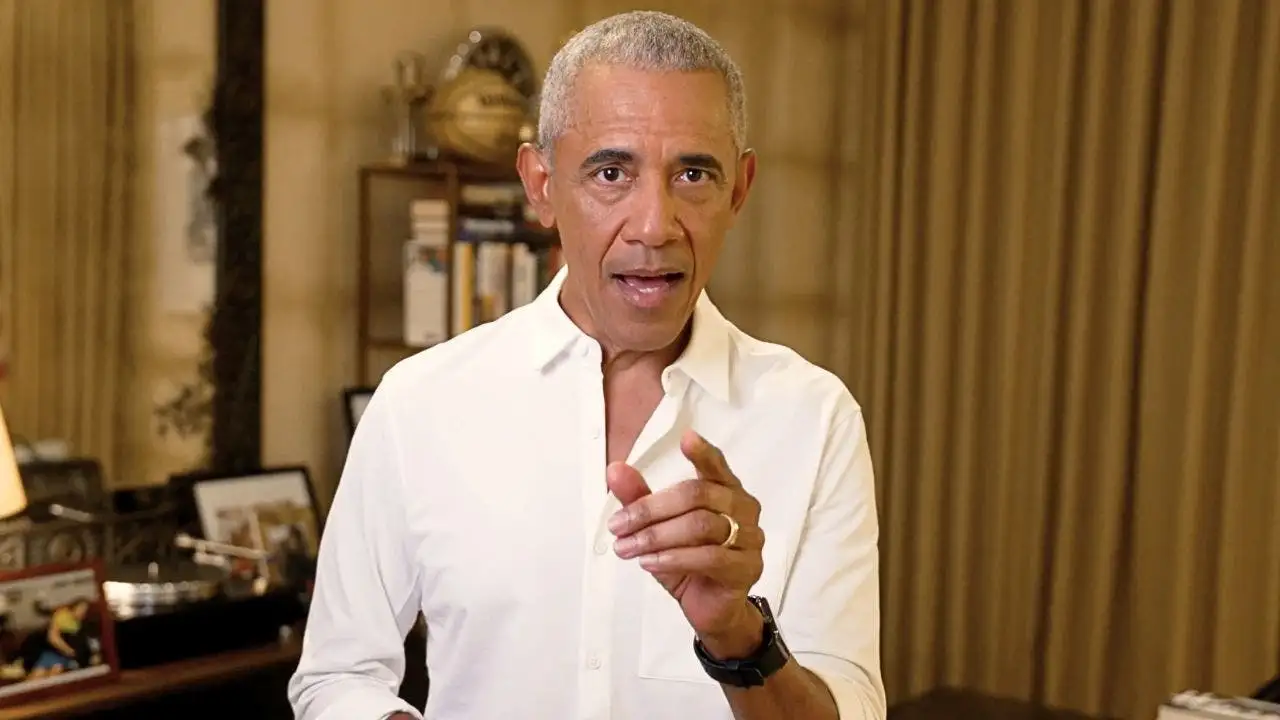
In a video released Friday, just before the final day of early voting, Obama urged Virginians to vote in favor of the referendum. “By voting yes, you have the chance to do something important — not just for the Commonwealth, but for our entire country,” Obama said. “By voting yes, you can push back against the Republicans trying to give themselves an unfair advantage in the midterms.”
The ballot measure, if successful, would temporarily transfer redistricting power from Virginia’s current nonpartisan commission to the Democrat-controlled state legislature through the 2030 election. Political analysts project this could result in a dramatic shift from Democrats’ current 6-5 edge in Virginia’s congressional delegation to a commanding 10-1 advantage, potentially delivering four additional Democratic seats to Congress.
Obama, who remains one of the most popular former presidents particularly among Democratic voters, framed the measure as a necessary corrective action. “By voting yes, you can take a temporary step to level the playing field. And we’re counting on you,” he stated in the video, which follows previous advertisements he’s made for Virginians for Fair Elections, the Democratic-aligned group backing the initiative.
Republicans have sharply criticized the effort, labeling it an “unconstitutional power grab.” In a tactical countermove, Republican-aligned groups opposing the referendum, including Virginians For Fair Maps, are using Obama’s past statements against political gerrymandering in their campaign materials. One opposition group has distributed mailers featuring Obama alongside his six-year-old quote: “For too long, gerrymandering has contributed to stalled progress and warped our representative government.”
While supporters of redistricting have significantly outspent opposition groups, polling suggests public opinion remains closely divided, with supporters holding only a slight edge amid strong early voting turnout.
The Virginia referendum represents the latest battleground in a nationwide struggle over congressional district boundaries. This high-stakes fight began last spring when President Donald Trump proposed mid-decade redistricting efforts to solidify Republican control of the House in anticipation of traditional midterm headwinds facing the party in power.
“Texas will be the biggest one. And that’ll be five,” Trump told reporters last summer, referring to his plan to add Republican-leaning House seats across the country. Texas Governor Greg Abbott subsequently called a special session of the GOP-dominated state legislature to pass new maps, prompting Democratic state lawmakers to temporarily flee the state in protest.
The redistricting battle quickly spread beyond Texas. California voters passed Proposition 50 in November, temporarily sidestepping the state’s nonpartisan redistricting commission and returning map-drawing power to its Democratic-majority legislature. This move is expected to create five more Democratic-leaning districts, directly countering Texas’s redistricting efforts.
Republican-controlled Missouri and Ohio, along with GOP-dominated North Carolina, have also drawn new maps following Trump’s redistricting push. However, Republicans faced setbacks in Utah, where a district judge rejected the GOP legislature’s map in favor of one creating a Democratic-leaning district, and in Indiana, where state senators defied Trump by defeating a redistricting bill that had passed the state House.
Florida represents the next major redistricting battleground. Governor Ron DeSantis and Republican state lawmakers are pursuing changes that could yield three to five additional Republican-leaning seats during a special legislative session beginning April 28.
Looming over these state-level conflicts is an anticipated Supreme Court ruling in Louisiana v. Callais, which could potentially overturn a key Voting Rights Act provision. A ruling favoring conservatives could trigger the redrawing of many majority-minority districts nationwide, likely benefiting Republicans. However, both the timing and specific outcome of this ruling remain uncertain.
Fact Checker
Verify the accuracy of this article using The Disinformation Commission analysis and real-time sources.

9 Comments
Redistricting is a complex topic, and I appreciate Obama weighing in to encourage voter participation. However, I think it’s crucial that the process remains as impartial and transparent as possible, regardless of partisan implications.
Redistricting is a contentious issue, and it’s understandable that Obama would want to influence the process in a way that benefits his party. But the goal should be fair representation, not partisan advantage.
As an energy and commodities investor, I’ll be keeping an eye on how this plays out, as it could influence the political landscape and policies related to mining, oil and gas, and other industries.
Absolutely, the midterm elections and redistricting efforts could have downstream effects on the energy and natural resources sectors.
Interesting. Redistricting is a complex and often controversial issue. I’m curious to hear different perspectives on how this proposed measure could impact political representation in Virginia.
Yes, it will be important for voters to carefully weigh the potential impacts and make an informed decision.
This is an important issue for anyone interested in the future of US energy and mining policy. I’ll be following the debate closely to understand how it could impact commodity markets and related equities.
As an investor in lithium, uranium, and other critical minerals, I’ll be closely watching how this redistricting measure impacts the political landscape and potential legislation affecting the mining industry.
I’m a bit skeptical of the partisan framing here. Redistricting should be a fair, nonpartisan process that prioritizes equal representation, not political advantage. Voters will need to assess the merits carefully.