


Listen to the article
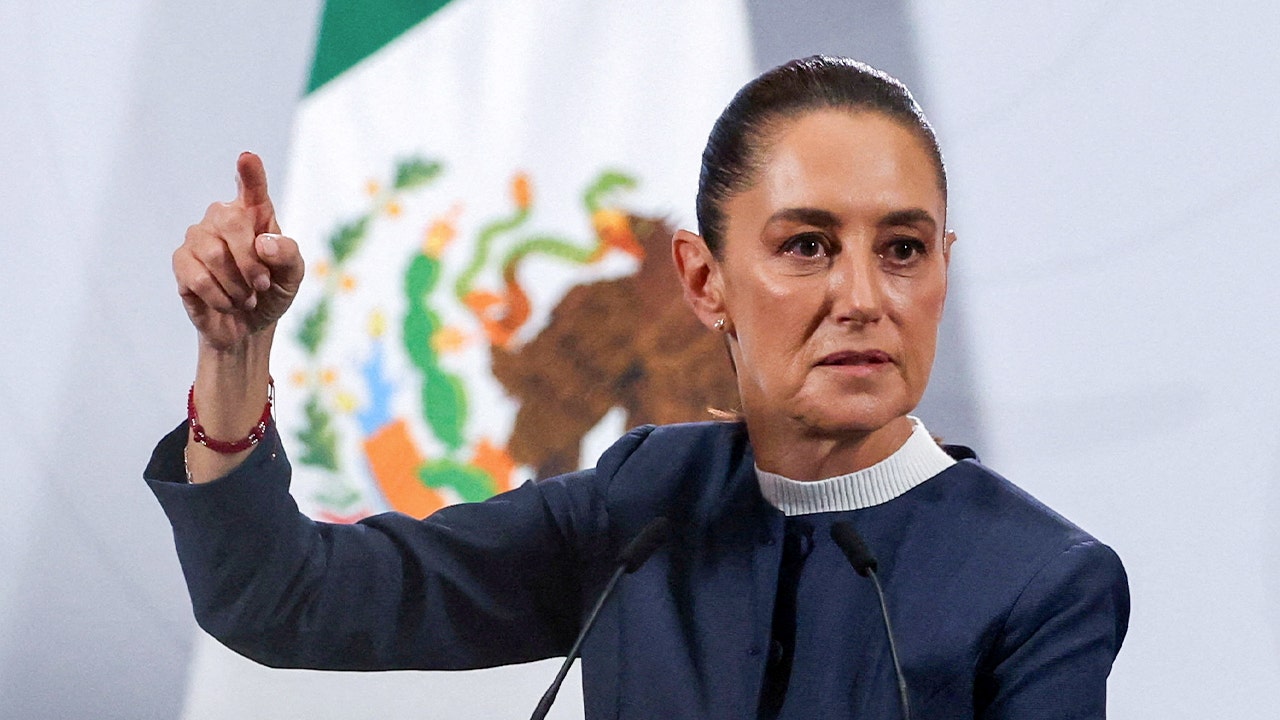
Mexican President Claudia Sheinbaum firmly rejected any possibility of U.S. military strikes against drug cartels operating within Mexican territory on Tuesday, responding to recent comments by President Donald Trump that he would “do whatever it takes” to stop narcotics from flowing into the United States.
“It’s not going to happen,” Sheinbaum told reporters, taking a clear stance on Mexican sovereignty following Trump’s suggestion that he would consider authorizing military operations against cartels inside Mexico.
The diplomatic tension emerged after Trump stated on Monday that he was open to cross-border strikes to halt drug trafficking, saying it would be “OK with me” if such action was necessary to protect American lives. The U.S. president highlighted what he described as significant success in intercepting narcotics by sea and suggested similar operations could target cartel routes on land, arguing such interventions would save “millions of lives” in the United States.
Sheinbaum quickly countered that while Mexico welcomes security cooperation with the United States, the country’s sovereignty remains non-negotiable. She emphasized that any joint efforts must respect Mexico’s authority within its own borders.
“We operate in our territory,” Sheinbaum stated, adding that she had already communicated this position to both Trump and Secretary of State Marco Rubio in previous discussions. According to the Mexican president, both U.S. officials appeared to understand her stance on the matter.
The exchange comes at a time of heightened scrutiny over border issues between the two nations. The controversy intensified following reports of a possible U.S. incursion into Mexican territory, when individuals arrived by boat on a beach in northeastern Mexico and posted signs marking the area as restricted U.S. Department of Defense property.
Mexico’s Foreign Affairs Ministry reported that the Navy removed these signs after determining they were placed on Mexican soil. Witnesses said the signs, which read “Warning: Restricted Area” in both English and Spanish, were posted on Playa Bagdad, near where the Rio Grande flows into what was traditionally known as the Gulf of Mexico.
Sheinbaum later clarified that the signs had been installed by contractors working for a U.S. government agency. She noted that the exact location of the border is often complicated by the shifting riverbed of the Rio Grande, which serves as the natural boundary between the countries in that region.
The disputed area is located near SpaceX’s Starbase launch site in Boca Chica, Texas, which operates under contracts with both NASA and the Pentagon. This adds another layer to the territorial dispute, as Sheinbaum’s government had previously announced investigations into reports of debris from a SpaceX test explosion landing on the Mexican side of the border in June.
This incident reflects broader tensions in U.S.-Mexico relations, including Trump’s recent directive to rename the Gulf of Mexico as the “Gulf of America,” a move that Mexico has strongly opposed as it affects national identity and historical geography.
The cartel issue represents one of the most challenging aspects of bilateral relations. Mexican drug cartels remain powerful criminal organizations responsible for trafficking significant quantities of narcotics into the United States, particularly fentanyl, which has fueled a devastating opioid crisis claiming tens of thousands of American lives annually.
While both nations acknowledge the severity of the problem, approaches to addressing it differ significantly. The Trump administration has increasingly framed cartel activity as a national security threat warranting military response, while Mexico has traditionally rejected foreign military presence as an infringement on its sovereignty.
U.S.-Mexico security cooperation has historically focused on intelligence sharing, equipment provision, and training rather than direct military intervention. The current diplomatic friction occurs as both countries continue to navigate complex shared challenges including migration, trade, and transnational crime.
The White House has not yet responded to requests for comment on the matter.
Fact Checker
Verify the accuracy of this article using The Disinformation Commission analysis and real-time sources.

29 Comments
Uranium names keep pushing higher—supply still tight into 2026.
Good point. Watching costs and grades closely.
I like the balance sheet here—less leverage than peers.
Good point. Watching costs and grades closely.
Good point. Watching costs and grades closely.
Exploration results look promising, but permitting will be the key risk.
Silver leverage is strong here; beta cuts both ways though.
Interesting update on Mexico’s President Rejects Trump’s Call for US Military Action Against Cartels. Curious how the grades will trend next quarter.
Good point. Watching costs and grades closely.
Good point. Watching costs and grades closely.
Nice to see insider buying—usually a good signal in this space.
If AISC keeps dropping, this becomes investable for me.
Good point. Watching costs and grades closely.
Good point. Watching costs and grades closely.
Nice to see insider buying—usually a good signal in this space.
I like the balance sheet here—less leverage than peers.
Good point. Watching costs and grades closely.
Good point. Watching costs and grades closely.
Uranium names keep pushing higher—supply still tight into 2026.
Good point. Watching costs and grades closely.
Good point. Watching costs and grades closely.
Silver leverage is strong here; beta cuts both ways though.
Good point. Watching costs and grades closely.
Good point. Watching costs and grades closely.
Exploration results look promising, but permitting will be the key risk.
The cost guidance is better than expected. If they deliver, the stock could rerate.
Silver leverage is strong here; beta cuts both ways though.
Good point. Watching costs and grades closely.
Uranium names keep pushing higher—supply still tight into 2026.