


Listen to the article
First Lady Melania Trump is establishing herself as a key advocate for artificial intelligence in education, hosting an innovative cross-cultural event at the White House this week that showcased cutting-edge technology in learning environments.
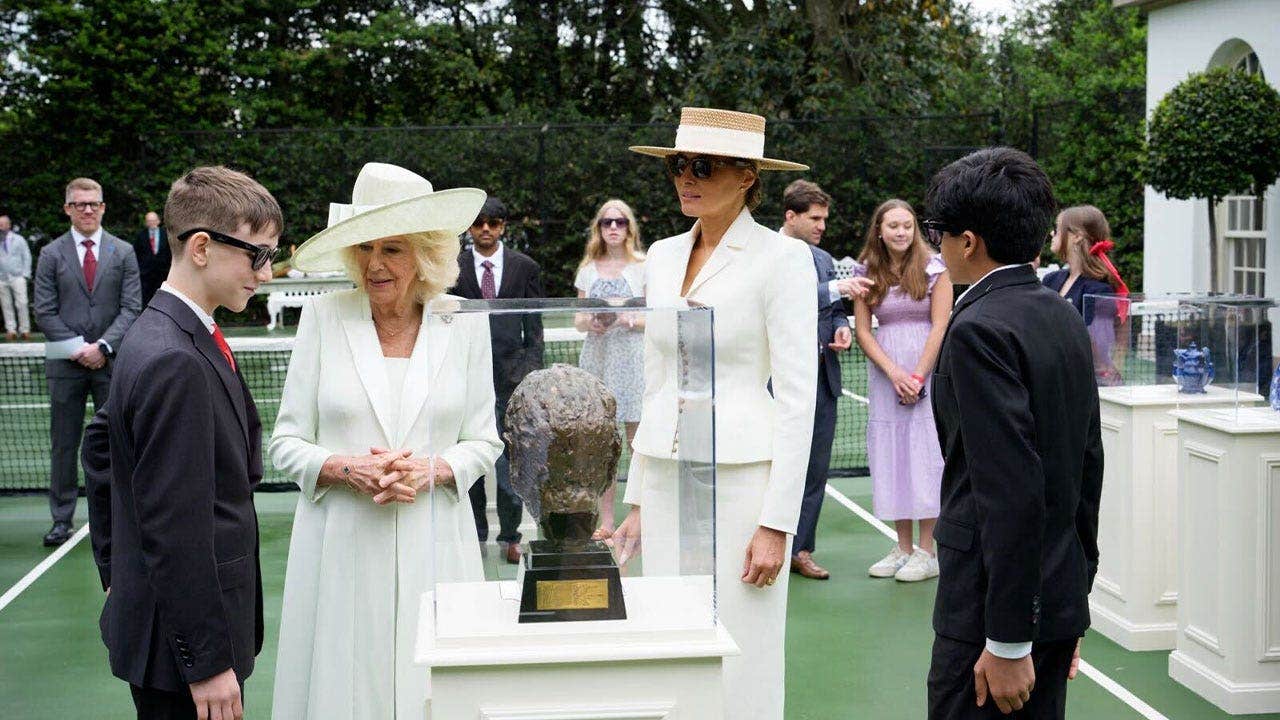
The event, held in the White House tennis pavilion that Mrs. Trump designed during her husband’s first term, featured students using Meta virtual reality headsets and AI-powered glasses to explore British landmarks and examine historical artifacts. The timing coincided with a visit from Queen Camilla, highlighting the first lady’s “Fostering the Future Together” initiative, a global effort focused on expanding access to technology and education for children.
“She wanted to create an innovative cross-cultural educational experience,” senior advisor Marc Beckman told Fox News Digital, describing the event as part of her ongoing push to integrate artificial intelligence into learning.
During the demonstration, students first used VR headsets to virtually visit prominent British sites including Buckingham Palace, Stonehenge, and the Giant’s Causeway before engaging directly with Queen Camilla. They later donned AI-enabled glasses to examine carefully selected artifacts from the White House collection and National Archives, with the technology providing real-time historical context about each item.
The artifacts included a portrait of John Adams, the first U.S. ambassador to the United Kingdom, a World War II-era map associated with President Franklin D. Roosevelt, and a bust of former British Prime Minister Winston Churchill. These items were specifically chosen to emphasize the historical relationship between the United States and the United Kingdom.
Beckman noted that this focus on technology and education has become a central theme of Mrs. Trump’s work during the administration. “She has been a champion of artificial intelligence and education for children,” he said.
The first lady’s interest in artificial intelligence predates her return to the White House. Before reentering public life, Melania Trump gained firsthand experience with AI technology while developing an AI-powered audiobook version of her memoir, which was released in multiple languages.
This background has informed her support for the Presidential AI Challenge, an ambitious program designed to engage students across all 50 states in technology-focused education and competition. The initiative aligns with the administration’s broader embrace of emerging technologies as tools for educational advancement.
Beckman also highlighted Mrs. Trump’s recent appearance at the United Nations Security Council, where she emphasized artificial intelligence’s potential role in expanding access to knowledge and education globally. Her UN address focused on how AI tools could help bridge educational gaps in underserved regions and communities worldwide.
“This theme just keeps going — children, education, technology,” Beckman explained, noting that the first lady’s commitment to these interconnected priorities has remained consistent throughout her public service.
Looking ahead, Mrs. Trump plans to continue expanding her AI-focused agenda in the coming months, with additional partnerships, regional initiatives, and research efforts already in development. These forthcoming programs aim to further integrate artificial intelligence into educational settings while ensuring the technology remains accessible to children from diverse backgrounds.
The first lady’s emphasis on AI in education comes as educational technology sees unprecedented growth globally, with the edtech market expected to reach over $400 billion by 2028, according to recent industry reports. Schools across America are increasingly incorporating virtual and augmented reality tools into classrooms, though access remains uneven across districts.
Through her initiatives, Mrs. Trump appears to be positioning herself at the intersection of education policy and technological advancement, areas that experts believe will be critical to maintaining American competitiveness in the decades ahead.
Fact Checker
Verify the accuracy of this article using The Disinformation Commission analysis and real-time sources.

10 Comments
I’m curious to learn more about the specifics of this initiative and how it aims to expand access to educational technology globally. Sounds like an innovative approach to fostering cross-cultural learning.
Yes, the global focus on expanding tech access for children is promising. It will be interesting to see what specific programs or partnerships come out of this White House initiative.
I have mixed feelings about AI in education. While the technology has potential, there are also concerns about privacy, bias, and over-reliance on tech. Careful implementation will be crucial.
That’s a fair point. The ethical considerations around AI in schools need to be thoroughly addressed. Oversight and clear guidelines will be important as this initiative moves forward.
The use of VR and AI-enabled glasses for virtual field trips and artifact examination sounds like an engaging way to bring learning to life. I’m curious to see how this type of tech could be scaled up to benefit more students.
As someone with a background in technology, I’m cautiously optimistic about the potential of AI to enhance education. But the implementation details will be crucial to get right.
This appears to be an interesting collaboration between the First Lady and Queen Camilla. I wonder how they plan to leverage their transatlantic partnership to drive this AI education agenda.
Yes, the cross-cultural element is an intriguing aspect. Engaging students from different backgrounds could lead to valuable cultural exchanges and learning opportunities.
Interesting to see the First Lady promoting AI in education. Integrating virtual reality and AI-powered tech into learning environments could really engage students and enhance their experiences.
Kudos to the First Lady for championing this initiative. Bringing more innovative tech into classrooms could really ignite students’ curiosity and prepare them for the digital future.