


Listen to the article
Congressional Republicans are racing to extend a controversial spying program before its expiration, with the House voting 235-191 to extend Section 702 of the Foreign Intelligence Surveillance Act (FISA) for the remainder of President Donald Trump’s term.
The bipartisan vote leaves the Senate little time to act before the April 30 deadline. More than 20 Republican privacy hawks opposed the three-year extension of the warrantless surveillance program, citing concerns about inadequate privacy safeguards.
Section 702, considered one of the government’s most powerful surveillance tools, allows U.S. intelligence agencies to gather information on foreigners abroad using American platforms, even when those communications involve U.S. citizens. Privacy advocates have long pushed for stricter protections, including requiring intelligence agencies to obtain a warrant before accessing Americans’ data.
“We should all be standing up for the Fourth Amendment,” said Rep. Chip Roy (R-Texas), a leading GOP privacy advocate, during Tuesday’s floor debate.
House leadership attempted to win over conservative holdouts by adding language that would permanently ban the Federal Reserve from issuing central bank digital currencies (CBDC). However, Senate Majority Leader John Thune (R-S.D.) warned that this addition would be viewed as a “poison pill” in the Senate, where Democrats strongly oppose such a ban.
“They know that,” Thune told reporters Tuesday, referring to House Republicans’ strategy that could complicate passage in the upper chamber.
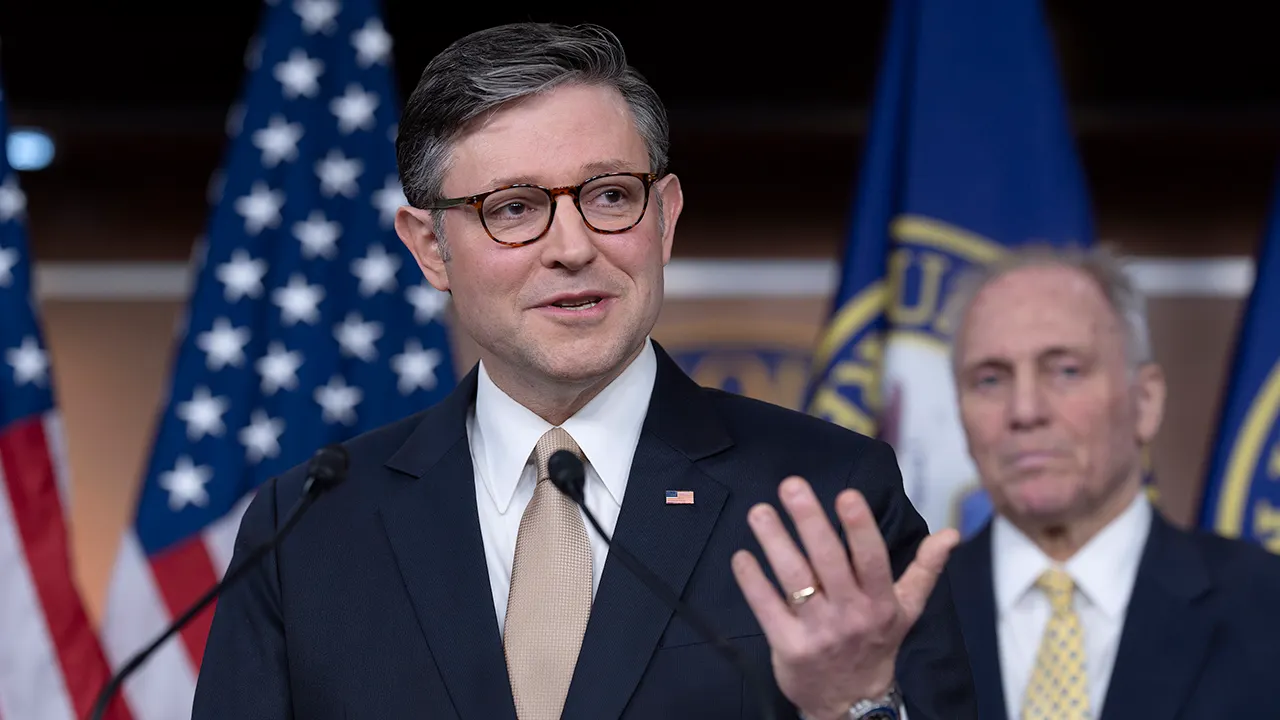
Despite these concerns, House Speaker Mike Johnson expressed optimism about the bill’s prospects in the Senate. “I speak with Leader Thune all the time. They’re watching this very closely, and hopefully they can process what we send them,” Johnson told Fox News. “No one on the Republican side anyway, wants to play around with letting these critical national security tools go unfunded or expire. So I think they’ll move it expeditiously.”
The Trump administration has been pressuring House Republicans for weeks to support extending the surveillance authority, arguing it is vital for national security.
War Secretary Pete Hegseth emphasized the program’s importance during testimony before lawmakers on Wednesday. “This department strongly supports the reauthorization of FISA 702,” Hegseth said. “It is not hyperbole to say many of the most important missions we have executed could not have happened without the intelligence gathered through FISA 702.”
House Democrats largely opposed the measure, with only 42 crossing party lines to support it. Many cited concerns about how the surveillance powers might be used under the current administration.
“I’m suspicious. The way it’s proposed right now, particularly under this administration,” Rep. Andre Carson (D-Ind.) told Fox News. “I was more comfortable when I voted for it in 2024. Under this administration, I’m not as comfortable.”
Rep. Jim Himes (D-Conn.), the top Democrat on the House Intelligence Committee, was among those who voted for the extension, emphasizing the program’s importance to national security.
“I’ve seen countless, countless instances where the intelligence obtained through section 702 quite literally saved lives,” Himes said. “So, given the binary choice between reauthorization and expiration, the responsible choice is reauthorization.”
The debate over FISA reauthorization highlights the ongoing tension between national security priorities and privacy concerns in American surveillance policy. Critics argue that without a warrant requirement, the program enables potential abuse and unconstitutional surveillance of American citizens. Supporters counter that the program contains sufficient safeguards and is essential for identifying and preventing terrorist threats and other national security risks.
If the Senate fails to pass the House version or a compromise bill before the deadline, intelligence agencies could temporarily lose a tool they describe as critical for counterterrorism and foreign intelligence operations.
Fact Checker
Verify the accuracy of this article using The Disinformation Commission analysis and real-time sources.

13 Comments
Interesting to see the bipartisan support for extending this controversial surveillance program. While national security is important, I hope the Senate can find a balanced approach that protects civil liberties as well.
You raise a fair point. Finding the right balance between security and privacy is always challenging, but it’s crucial that any surveillance powers have robust safeguards.
The bipartisan nature of the House vote suggests there’s broad recognition of the need to address this issue. However, the privacy concerns raised by some Republicans are worth taking seriously.
The bipartisan House vote reflects the difficulty of this issue. While national security is critical, the privacy advocates’ calls for stronger safeguards deserve serious consideration by the Senate.
Agreed. It will be interesting to see how the Senate reconciles the need for effective intelligence-gathering with the imperative to protect Americans’ constitutional rights.
This is a complex issue with valid concerns on both sides. I’m curious to see how the Senate navigates the deadline pressure and tries to address the privacy advocates’ calls for stronger protections.
Yes, the Senate will have its work cut out trying to find a compromise solution before the deadline. It’s a delicate balance they’ll need to strike.
While national security is a top priority, I share the concerns about the potential overreach of government surveillance powers. The Senate will need to carefully balance these competing interests.
Absolutely. Protecting civil liberties while also maintaining effective intelligence-gathering is a delicate balancing act that the Senate will have to navigate skillfully.
This is an important national security issue, but the concerns about inadequate privacy safeguards are valid. I’ll be watching closely to see how the Senate navigates this tricky situation.
Agreed. It’s crucial that any surveillance program has robust oversight and protections for Americans’ constitutional rights.
The House vote seems to reflect the ongoing debate around the appropriate scope of government surveillance powers. I hope the Senate can craft a thoughtful, bipartisan approach that upholds civil liberties.
This is a complex issue with valid arguments on both sides. I’m curious to see how the Senate approaches the deadline pressure and tries to find a solution that addresses the privacy concerns.