


Listen to the article
In a significant ruling that reshapes Utah’s political landscape, a district judge has rejected a congressional district map drawn by the state’s Republican-dominated legislature, instead approving an alternative that creates a Democratic-leaning district ahead of the 2026 midterm elections.
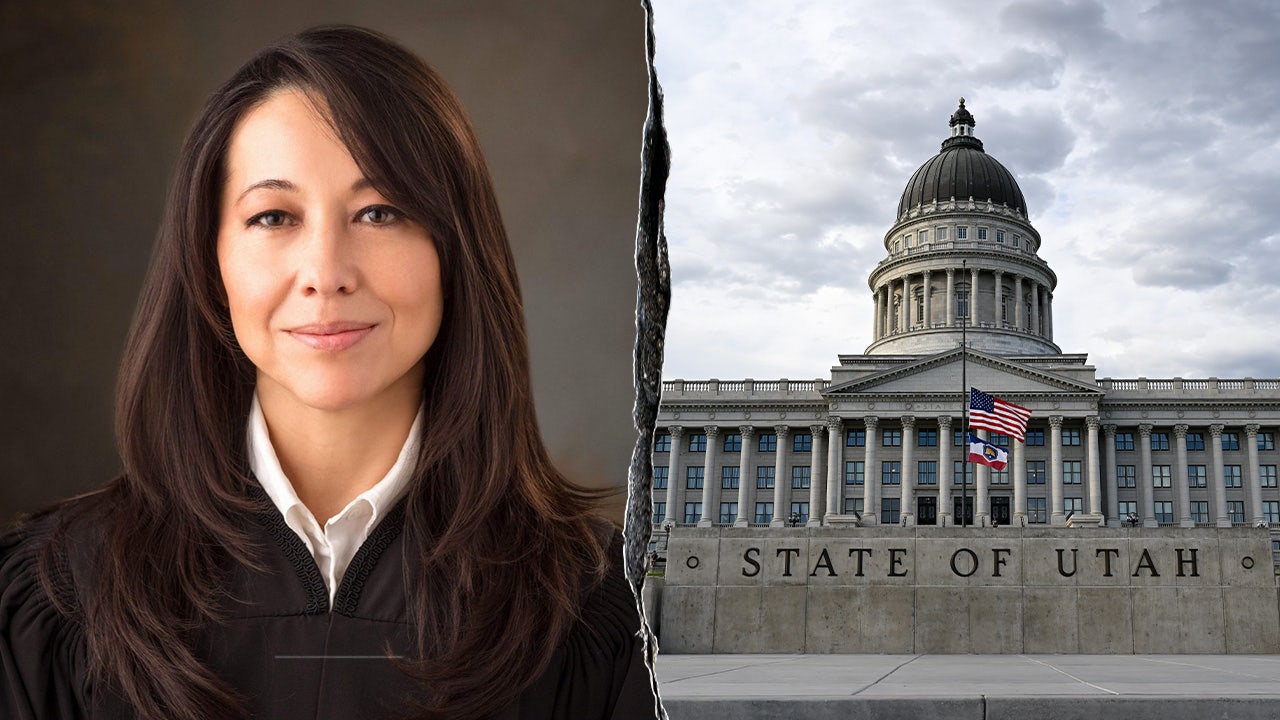
Utah District Judge Dianna Gibson ruled late Monday that the map drawn by GOP lawmakers “unduly favors Republicans and disfavors Democrats.” The decision marks a dramatic shift in a state where Republicans currently control all four congressional districts.
The ruling stems from a lawsuit filed by the League of Women Voters of Utah and Mormon Women for Ethical Government, which prompted Gibson to throw out the state’s current congressional map. The judge ordered lawmakers to draw a new map in compliance with a 2018 voter-approved ballot measure that reformed redistricting standards to prevent gerrymandering—the practice of drawing districts to favor a particular political party.
When state lawmakers approved a new map last month, Gibson rejected it and instead ruled in favor of one presented by the plaintiffs. The approved map keeps nearly all of the heavily populated Salt Lake County in one congressional district. The current configuration divides the Democratic-dominated county among all four of Utah’s districts.
The judge’s deadline for the decision was significant, as Utah Lt. Gov. Deidre Henderson had indicated that any new congressional map must be in place by Monday to be used in next year’s elections.
Democrats, who have not held a congressional seat in Utah since the current map went into effect at the beginning of the decade, celebrated the ruling. Democratic National Committee Chair Ken Martin praised the decision, stating it reflects “the diversity and ideological makeup of the state” and accused Utah Republicans of gerrymandering “because they knew they were losing power in the state.”
Republicans quickly condemned the decision, arguing that Gibson has overstepped her judicial authority. Utah Republican Party Chair Robert Axson charged that the judge “exceeded the constitutional authority granted to Utah’s judiciary” and described the ruling as “the arrogance of a judge playing King from the bench.”
The Utah decision comes amid a nationwide redistricting battle that has become a pivotal factor in the struggle for control of the House of Representatives. Just last week, California voters overwhelmingly passed Proposition 50, a ballot initiative that temporarily bypasses the state’s nonpartisan redistricting commission and returns map-drawing power to the Democrat-dominated legislature. This is expected to create five more Democratic-leaning congressional districts.
California’s move counters earlier redistricting efforts in Texas, where a new map approved earlier this year aims to create up to five right-leaning House seats. California Governor Gavin Newsom framed the effort as pushing back against what he characterized as President Trump’s “election rigging” through redistricting.
The redistricting conflicts are part of a broader strategy by Trump’s political team and Republicans to strengthen their narrow House majority before the 2026 midterms—when the party in power typically faces challenges and often loses seats. Missouri, North Carolina, and Ohio have already drawn new maps as part of this push, while Illinois, Maryland, Virginia, Indiana, Kansas, and Florida are either moving toward redistricting or seriously considering it.
For Trump, the redistricting effort represents an attempt to avoid what happened during his first term when Democrats reclaimed the House majority in the 2018 midterm elections.
Utah’s new map must now be implemented for the 2026 election cycle, potentially giving Democrats their first congressional seat in the state in years, despite Utah voting for Trump by nearly 22 percentage points in the most recent presidential election.
The ruling underscores the intensifying partisan battle over redistricting nationwide, with both parties seeking every advantage possible in the closely divided House of Representatives.
Fact Checker
Verify the accuracy of this article using The Disinformation Commission analysis and real-time sources.

17 Comments
If AISC keeps dropping, this becomes investable for me.
Good point. Watching costs and grades closely.
Nice to see insider buying—usually a good signal in this space.
I like the balance sheet here—less leverage than peers.
Good point. Watching costs and grades closely.
Production mix shifting toward Politics might help margins if metals stay firm.
Nice to see insider buying—usually a good signal in this space.
Nice to see insider buying—usually a good signal in this space.
Good point. Watching costs and grades closely.
Nice to see insider buying—usually a good signal in this space.
Uranium names keep pushing higher—supply still tight into 2026.
Good point. Watching costs and grades closely.
Silver leverage is strong here; beta cuts both ways though.
Good point. Watching costs and grades closely.
Silver leverage is strong here; beta cuts both ways though.
Good point. Watching costs and grades closely.
The cost guidance is better than expected. If they deliver, the stock could rerate.