


Listen to the article
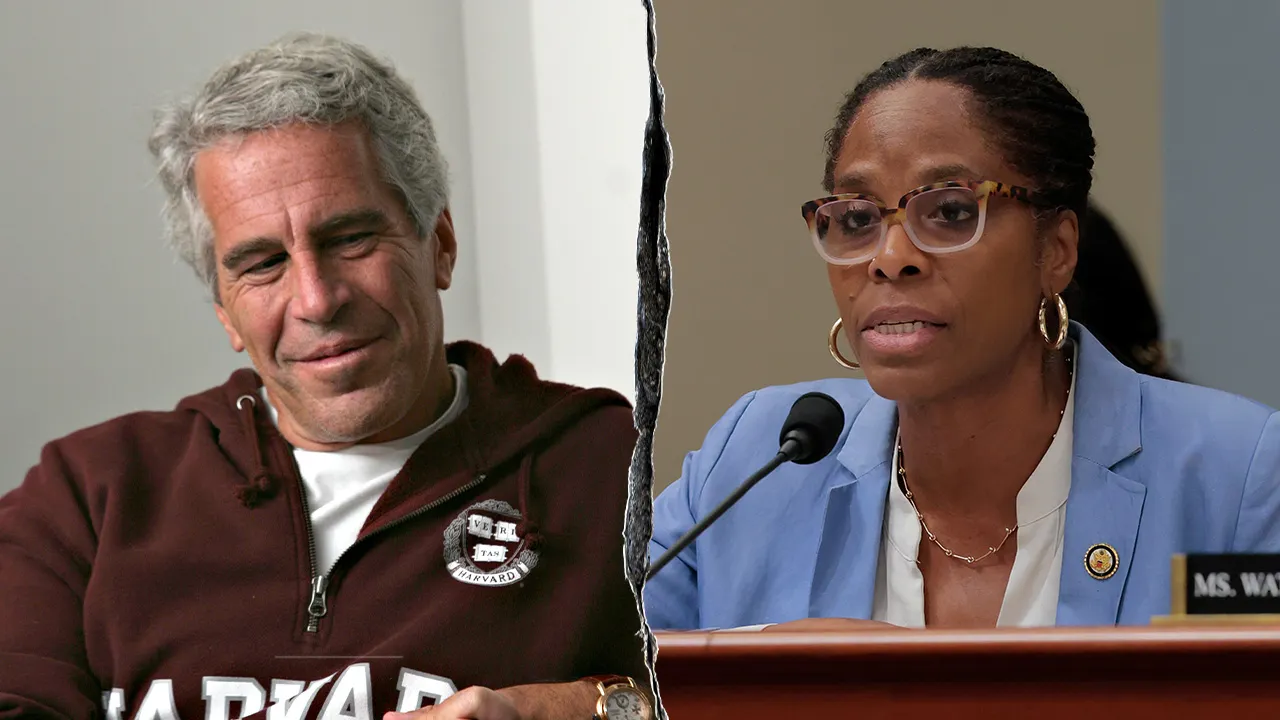
The House of Representatives narrowly defeated a controversial censure resolution against Virgin Islands Delegate Stacey Plaskett on Tuesday night, following revelations about her communications with convicted sex offender Jeffrey Epstein. The measure, which would have also removed Plaskett from the House Intelligence Committee, failed in a 209-214 vote.
The resolution, introduced by Rep. Ralph Norman (R-S.C.), sought to sanction Plaskett over text messages between her and Epstein during former Trump attorney Michael Cohen’s 2019 congressional testimony. Documents from Epstein’s estate revealed that the late financier appeared to guide Plaskett’s questioning of Cohen, who was testifying about alleged hush money payments made on behalf of former President Donald Trump.
Three Republicans—Reps. Lance Gooden (Texas), Don Bacon (Nebraska), and Dave Joyce (Ohio)—joined Democrats in voting against the censure. Three additional Republicans voted “present”: Homeland Security Committee Chairman Andrew Garbarino (New York), Dan Meuser (Pennsylvania), and Jay Obernolte (California).
During floor debate, Norman argued that the House had a responsibility to protect its institutional integrity. “What we learn from the documents released by Jeffrey Epstein’s estate is nothing short of alarming,” Norman said. “Those documents show that Delegate Stacey Plaskett, a sitting member of Congress, coordinated her questioning during an official Oversight hearing with a man who was a convicted sex offender.”
The texts in question showed Epstein actively engaging with Plaskett during Cohen’s testimony, with one message reading, “He’s opened the door to questions re who are the other henchmen at trump org.” Plaskett reportedly responded, “Yup. Very aware and waiting my turn.”
Rep. Jamie Raskin (D-Md.), who led opposition to the resolution, characterized the censure attempt as “one more pathetic effort to distract and divert attention” from potential connections between Epstein and Trump. Raskin repeatedly referred to Epstein as Plaskett’s “constituent,” noting his primary residence was in the Virgin Islands, and questioned the procedural fairness of the censure.
“Without even going to the Ethics Committee, much less a court, they want to arraign her on some charges based on a newspaper article, that she did something lawful—however ill-advised it may have been,” Raskin said. “Where is the ethical transgression? Where is the legal transgression?”
In her own defense, Plaskett acknowledged receiving texts from Epstein but emphasized that at the time, he was her constituent and it was “not public knowledge” that he was under federal investigation. She highlighted her experience as a prosecutor when arguing she wasn’t seeking advice on questioning strategies.
However, while the federal investigation into Epstein may not have been public in 2019, his legal troubles related to exploitation of underage girls dated back to 2006, raising questions about the appropriateness of their communications.
The failed censure vote came after an earlier Democratic attempt to refer Plaskett’s case to the House Ethics Committee instead of proceeding with censure narrowly failed in a 213-214 vote.
The controversy surrounding Plaskett emerges amid broader congressional scrutiny of Epstein’s connections to powerful figures. Earlier this year, the House overwhelmingly voted 427-1 to force the Department of Justice to release all unclassified Epstein files, showing bipartisan interest in transparency on the matter.
Republicans have accused Democrats of employing a double standard regarding Epstein’s associations—vigorously investigating potential connections to Trump while remaining largely silent about Plaskett’s communications with the disgraced financier. Neither Trump nor Plaskett has been accused of direct involvement in Epstein’s criminal activities.
The incident highlights ongoing partisan tensions in Congress and the politically sensitive nature of any connection to Epstein, whose 2019 death in federal custody while awaiting trial on sex trafficking charges continues to fuel public interest and speculation about his extensive network of high-profile relationships.
Fact Checker
Verify the accuracy of this article using The Disinformation Commission analysis and real-time sources.

12 Comments
Interesting to see the House narrowly defeat this censure motion. It’s a complex issue with valid concerns on both sides. Curious to hear more details on the allegations and evidence against Rep. Plaskett.
Yes, this seems like a politically charged situation. I hope the House can find a balanced and transparent way to address any potential ethical issues without resorting to partisan censure tactics.
It’s good to see some bipartisan opposition to this censure motion. Maintaining institutional integrity is important, but that requires impartiality and due process, not partisan attacks.
Absolutely. The House must uphold its standards and principles, not just political agendas. I hope this incident leads to constructive dialogue and reforms, not further division.
While the allegations against Rep. Plaskett are serious, I’m not sure a censure is the appropriate response here. The House should focus on proper investigations and fact-finding rather than rushing to judgment.
Agreed. Rushing to censure without a thorough review of the evidence could set a dangerous precedent and undermine the integrity of Congress.
This seems like a complex issue without clear-cut answers. I respect the House’s decision to defeat the censure, as it allows for a more thorough examination of the facts before taking disciplinary action.
Agreed. Rushing to censure without solid evidence could undermine the credibility of Congress. A measured, fact-based approach is warranted here.
While the allegations against Rep. Plaskett are concerning, I’m not sure a censure is the right solution. The House should focus on proper investigations and upholding ethical standards, not partisan posturing.
Well said. Maintaining institutional integrity requires impartiality and due process, not knee-jerk political reactions. I hope this incident leads to constructive reforms, not further division.
It’s good to see bipartisan opposition to this censure motion. Congress should be setting an example of civil, fact-based discourse, not engaging in partisan attacks. Hopefully this leads to a more thorough review of the issues at hand.
Agreed. The House must uphold its standards and principles, not just political agendas. A measured, impartial approach is crucial here, rather than rushing to judgment.