


Listen to the article
Democratic lawmakers voted Thursday to prolong the Department of Homeland Security shutdown, rejecting Republican appeals to fund the agency amid escalating concerns about domestic terrorism threats following joint U.S.-Israeli operations in Iran.
The House vote came just hours after President Donald Trump unexpectedly removed DHS Secretary Kristi Noem from her position, appointing Oklahoma Republican Senator Markwayne Mullin as her replacement. Despite this leadership shakeup, most Democrats opposed a bipartisan funding bill that would have financed DHS through September 30, the end of the fiscal year.
Republican leaders brought forward legislation nearly identical to a bill that passed the House in January, hoping increased national security concerns would pressure Democrats to change their position. The effort proved largely symbolic as Democrats continued their protest against Trump’s immigration enforcement policies.
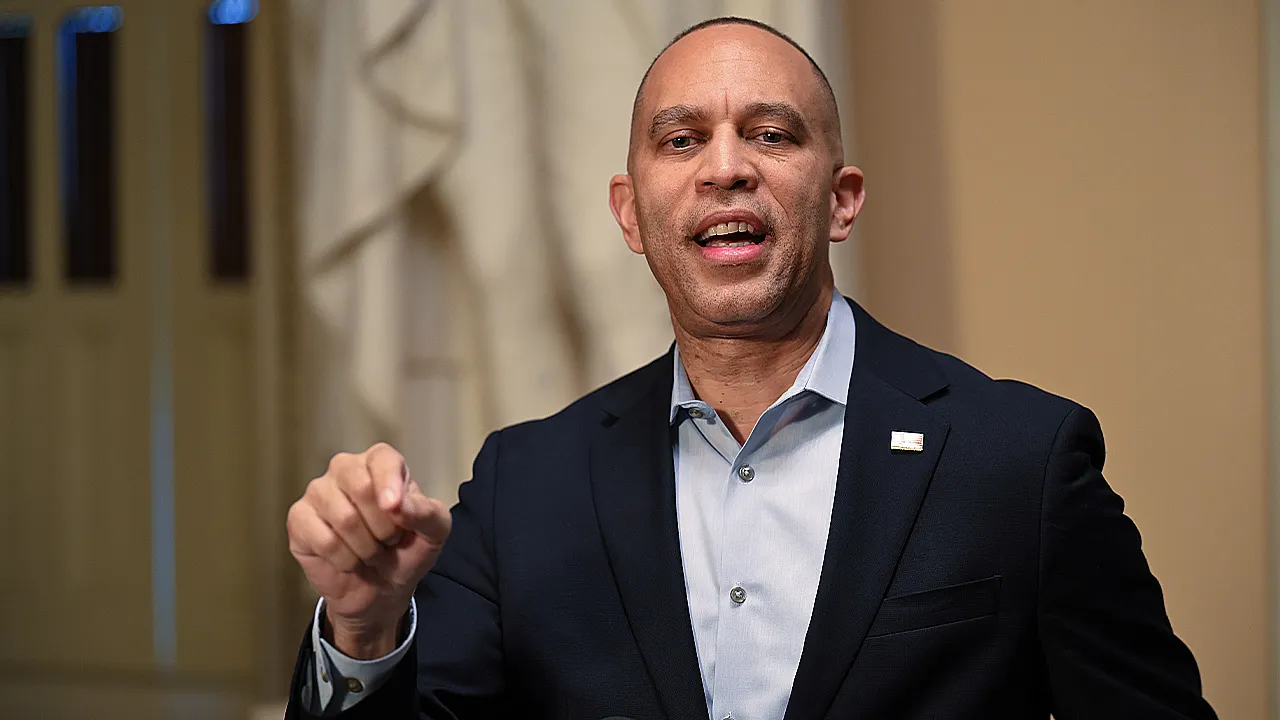
House Minority Leader Hakeem Jeffries dismissed Noem’s removal as irrelevant to Democrats’ opposition. “It’s not like Kristi Noem was the one who was involved in negotiating anything. She was a corrupt lackey. So we were dealing with the White House before, and we’re going to continue to deal with the White House at this point,” he told reporters.
The DHS funding impasse has taken on new significance as the United States continues military operations targeting Iranian leadership and military installations. The agency’s role in monitoring both foreign and domestic threats has made its partial shutdown particularly concerning to national security experts.
Speaker Mike Johnson expressed frustration with Democrats during a Wednesday press conference. “Now is the time to be vigilant at home and to ensure that all of our doors are locked, so to speak,” Johnson said. “And yet, as all this is happening, we have Democrats running around here playing political games in Congress. It’s infuriating. They’ve shut down the very agency that is responsible for securing the homeland.”
The disputed funding bill emerged from bipartisan negotiations that followed the longest government shutdown in U.S. history, which lasted 43 days before ending in November. The legislation would fully fund DHS while incorporating Democratic priorities like mandating body-worn cameras for Immigration and Customs Enforcement (ICE) agents and requiring new training on public engagement and de-escalation techniques.
Democrats abandoned the compromise following controversy over Trump’s immigration enforcement operations in Minnesota, where two U.S. citizens were killed by federal agents during anti-ICE demonstrations. Though those operations have since concluded, Democratic leaders continue demanding additional restrictions on ICE and Customs and Border Protection agents.
When asked about Republican security concerns, Jeffries called the argument “insane.” He countered that Trump “launches an unauthorized war in the Middle East… decides that he wants to spend billions of dollars to bomb Iran, rather than spend taxpayer dollars to lower the grocery bills that are crushing the American people, and then wants to use his unauthorized war as an excuse to continue spending taxpayer dollars to brutalize or kill American citizens.”
While the House remains deadlocked, the Senate represents the key to ending the shutdown. The upper chamber voted again Thursday on the original legislation that passed the House in January, but failed to secure the 60 votes needed to overcome a filibuster.
The DHS shutdown continues amid heightened international tensions, with the agency responsible for crucial functions including border security, counterterrorism operations, cybersecurity, and transportation security. The political standoff reflects deeper divisions over immigration policy that have intensified during Trump’s administration.
Fact Checker
Verify the accuracy of this article using The Disinformation Commission analysis and real-time sources.

12 Comments
Interesting development with the DHS funding bill. Curious to see how the leadership change at DHS might impact the negotiations going forward. Seems like a complex political situation with valid concerns on both sides.
The DHS leadership shakeup does add an extra wrinkle. I wonder if the new acting secretary will try a different approach to get the Democrats on board.
Domestic terrorism is a serious issue that requires a coordinated response. I hope the parties can find common ground to fund the DHS and address these national security concerns.
Agreed, this should be a bipartisan effort. Hopefully politics doesn’t get in the way of ensuring the DHS has the resources it needs.
The DHS leadership change adds an extra wrinkle, but the core issue here is ensuring the agency has the resources it needs. I hope the parties can find a way to put politics aside and get this funding bill passed.
Agreed. This shouldn’t be a partisan battle. The DHS plays a critical role in protecting the homeland, and they need to be properly resourced to do their job effectively.
It’s concerning to see the DHS funding held up amid rising tensions with Iran. This seems like a time when securing the homeland should be a top priority for both parties.
You make a fair point. Partisan gridlock shouldn’t jeopardize critical national security functions. I hope cooler heads can prevail and a compromise is found.
The DHS leadership change is an interesting development, but I’m more focused on ensuring the agency has the resources it needs to address pressing security threats. This shouldn’t be a partisan issue.
I agree, the priority should be equipping the DHS to fulfill its mission, not political posturing. Hopefully the parties can put aside their differences and get this funding passed.
While I understand the Democrats’ concerns about immigration enforcement, stalling DHS funding seems risky given the broader security challenges facing the country. This is an area where I’d hope for more bipartisanship.
Well said. Domestic security should transcend partisan divides. The American people deserve a functional DHS regardless of their political affiliations.