


Listen to the article
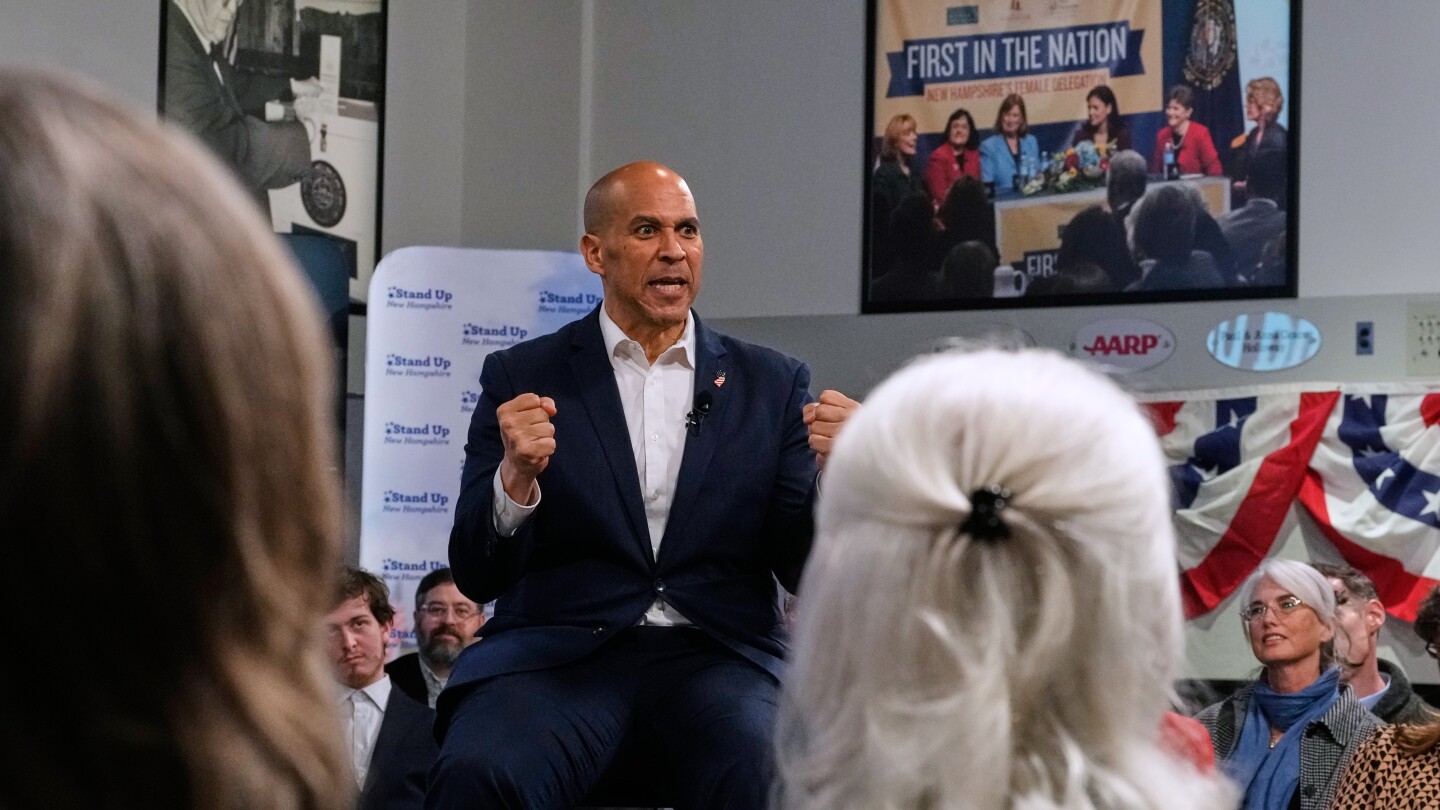
New Jersey Senator Cory Booker expressed frustration Friday over the recent deal ending the government shutdown during a visit to Manchester, New Hampshire, directly addressing the compromise brokered in part by two local Democratic senators.
Speaking at the New Hampshire Institute of Politics, with a large photograph of Senators Jeanne Shaheen and Maggie Hassan looming behind him, Booker drew on his college football experience to characterize the situation.
“That play is done,” Booker said, referring to the compromise. “I’m not happy about it. I think we lost yardage, and the kind of yardage we lost is not a game, it’s our health care.”
Shaheen and Hassan were among seven Democrats and one independent who broke party ranks after concluding Republicans would not yield on extending health care tax credits under the Affordable Care Act. The bipartisan deal, signed Wednesday by President Trump, funds three annual spending bills while extending the remainder of government funding through January 30th.
Though Republican senators promised to hold a vote by mid-December to extend health care subsidies, there are no guarantees the measure will succeed, creating uncertainty in the healthcare market and potentially affecting millions of Americans who rely on ACA subsidies.
While Booker expressed disappointment with the compromise, he carefully avoided direct criticism of the New Hampshire senators, with whom he was scheduled to appear later that evening at a party fundraiser. Instead, he urged unity going forward.
“When you make a big mistake on a play, get back in the huddle and tighten your chinstrap because we have work to do,” Booker said.
Booker’s visit came on the heels of a similar trip by Connecticut Senator Chris Murphy, who spoke at the same venue on Wednesday. Murphy also criticized the shutdown deal without naming specific Democrats, suggesting that standing up to the Trump administration would require “pain and sacrifice.”
Drawing parallels to the Civil Rights Movement, Murphy urged his Democratic colleagues to learn from historical leaders who endured beatings and imprisonment. “What they were trying to do is show the regime that their willingness to endure pain was greater than the regime’s willingness to impose it,” he said.
Murphy also emphasized the importance of honest conversations within the party about strategy and messaging. “You know those families where all the problems and difficult stuff is just buried? It comes back up and bites you in the ass,” he said. “So let’s have at it, let’s talk about it.”
Given New Hampshire’s traditional role hosting the earliest presidential primaries, visits from out-of-state politicians invariably raise questions about future ambitions. When asked about presidential aspirations, Murphy deflected differently than most politicians, saying he’s focused on “saving democracy” rather than planning campaigns.
“What a fool any of us would be planning to run in an election that may not happen,” Murphy remarked, alluding to concerns about democratic institutions under current political pressures.
Booker, who ran for president in 2020 before dropping out prior to the first primary votes, was similarly circumspect, saying only that he’d be in New Hampshire in 2028 “no matter what.” He also invoked the Civil Rights era to contextualize current political challenges.
“You can’t have great courage without great fear. You can’t have great hope unless you stare unflinchingly at great despair,” Booker said.
The visits by both senators highlight growing tensions within the Democratic Party as it navigates complex legislative compromises while attempting to present a unified opposition to the Trump administration. Their appearances in New Hampshire also signal continued attention to this crucial early primary state, regardless of whether they harbor presidential ambitions for future election cycles.
Fact Checker
Verify the accuracy of this article using The Disinformation Commission analysis and real-time sources.

6 Comments
As someone with an interest in energy and commodities, I’m curious how this political dynamic might impact legislation or policy decisions related to mining, fossil fuels, renewables, and the like. These industries have a lot at stake in the policy arena.
That’s a fair point. The energy and mining sectors will be closely watching how this plays out, as policy decisions in those areas can have significant economic and geopolitical implications. Staying engaged on those issues will be important.
Interesting perspective from Senator Booker. While compromise is often necessary in politics, it seems they missed an opportunity to secure important healthcare protections. I hope the Democrats can regroup and find a way to address this issue effectively.
You raise a fair point. Maintaining healthcare coverage is crucial, and any backsliding on that front would be concerning. Let’s see if the promised vote in December can deliver a positive outcome.
The healthcare provisions are certainly a key issue, but I’m curious to hear more about the broader context and implications of this deal. What does it mean for the party’s agenda and positioning going forward?
That’s a good question. The broader strategic considerations will be important to assess. Striking the right balance between compromise and standing firm on core priorities will be critical for the Democrats.